
Philippines Earthquake Kills 38 and Leaves Four Million Children Without School
The Philippines earthquake struck offshore near Sarangani in southern Mindanao on June 8, 2026, with a magnitude of 7.8, killing at least 38 people, injuring more than 470, displacing over 40,000, and leaving four million children without access to school as search and rescue operations continue. [1]
Overview of the Magnitude 7.8 Earthquake
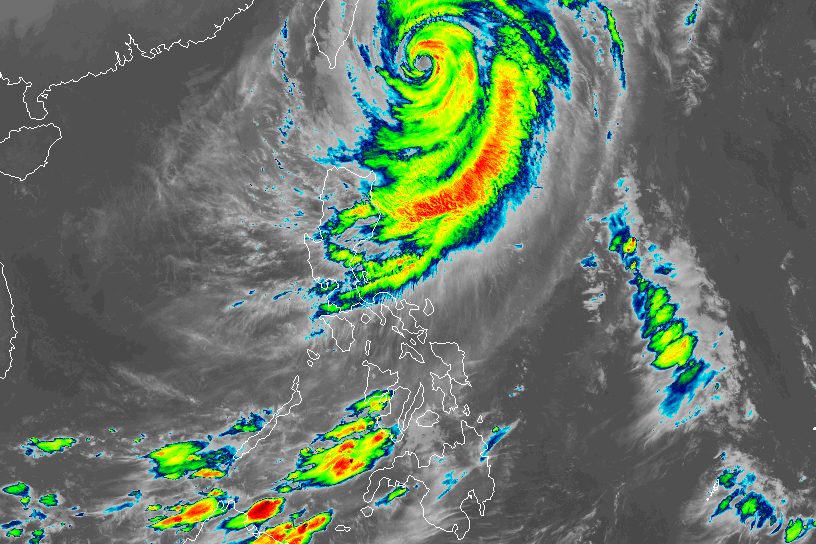
The quake struck at 7:37 a.m. local time about 24 kilometers southwest of Burias island or 32 kilometers west of Maasim, Sarangani, at a depth of 33 to 55 kilometers along the Cotabato Trench. [1] [3] The event originated in a purely tectonic movement caused by subduction-related activity at the Cotabato Trench, one of the country’s major earthquake-generating structures. [3] The Philippine Institute of Volcanology and Seismology confirmed that the magnitude 7.8 earthquake was tectonic in origin and not expected to trigger volcanic activity at nearby volcanoes such as Matutum and Parker. [3] The tremor generated widespread shaking across Mindanao, with the highest recorded intensity reaching PEIS VII in General Santos City, while weaker tremors were felt as far as Leyte. [3] The earthquake occurred the same day millions of children were returning to school to begin the new academic year. [1]
Casualties and Human Impact
Authorities confirmed the deaths of 38 people from the earthquake, with four people remaining unaccounted for and more than 470 injured. [1] The quake directly affected about 145,000 citizens or nearly 33,000 families, leaving 40,674 people displaced. [1] In the mountainous town of Glan in Sarangani province, a massive landslide buried several homes and killed 13 villagers. [2] The powerful tremor brought down buildings and triggered deadly landslides that contributed to the overall toll. [2] Four million children were left without access to school after classrooms were reduced to rubble, with no certainty on when they might return. [1] Search and rescue operations remain underway while authorities continue evaluating damages across the affected areas. [1]

A 7.8 magnitude earthquake struck offshore near Sarangani in southern Mindanao on June 8 2026 killing at least 38 people. — Source: gdelt
Damage Assessment in General Santos and Mindanao
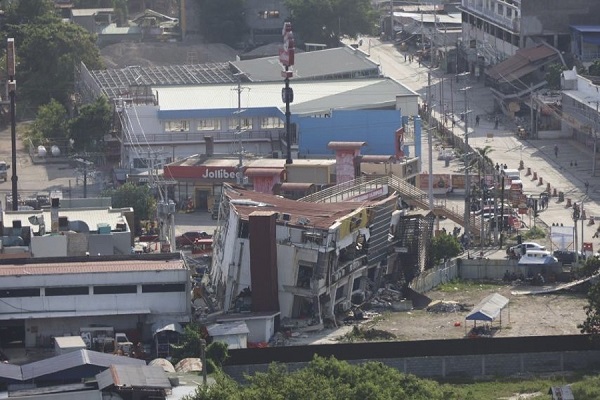
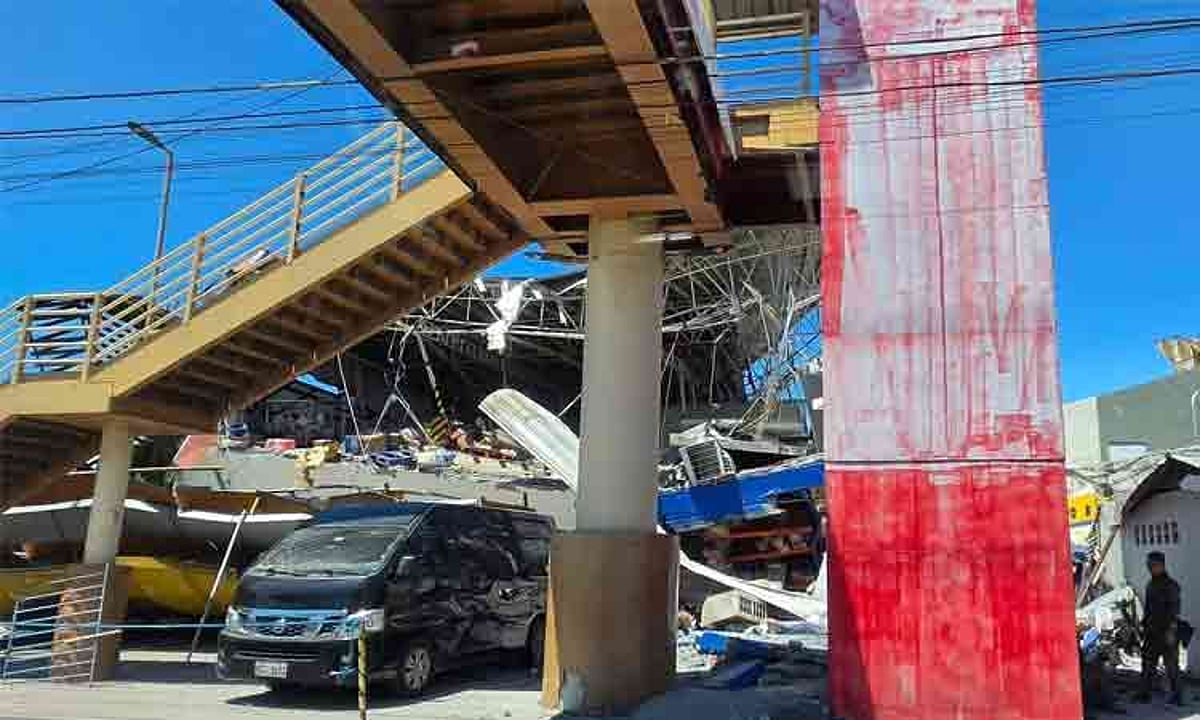
General Santos City was the hardest hit area and was declared in a state of calamity, with widespread damage to buildings, infrastructure, roads, and bridges. [1] [3] A total of 2,505 homes sustained damage, of which 460 were completely destroyed in Mindanao. [1] Video footage showed structures crumbling, including the upper floor of a popular fast-food restaurant that collapsed and the outer walls of commercial complexes that gave way. [2] In Davao del Sur, a high school building partially collapsed just as students were gathering outside for their morning flag ceremony. [2] Numerous zones across Mindanao continue without electric supply or access to potable water following the event. [1] The shaking was so intense in General Santos City that people could barely stand as buildings swayed violently. [2]
Tsunami Warnings and Coastal Effects
The offshore quake generated tsunami waves along portions of Sarangani and Sultan Kudarat, with sea level monitoring stations recording waves of about one meter in Kiamba, Maasim, and Kalamansig. [3] Smaller wave disturbances were observed in Mati City and Zamboanga City. [3] The earthquake displaced a significant amount of ocean water and prompted urgent tsunami alerts for the southern Philippines, Indonesia, and Malaysia. [2] Residents in coastal villages watched as the ocean rapidly receded before surging back toward the shore, with waves measuring around one meter slamming into the beaches of Sarangani and General Santos. [2] Local authorities ordered immediate evacuations, urging people to move to higher ground or further inland. [2] The Pacific Tsunami Warning Center lifted the threat a few hours later after monitoring showed no damaging waves, though officials continued to advise caution and warned people to stay away from the shoreline. [2] [3]
Phivolcs confirms the magnitude 7.8 Mindanao earthquake was purely tectonic in origin. — Source: gdelt
Aftershocks and Secondary Hazards
Phivolcs recorded 1,055 aftershocks in the first 24 hours, with magnitudes ranging from 1.3 to 6.7. [1] [3] Of those aftershocks, 301 had been located and 21 were felt in affected communities. [3] The agency warned communities to remain alert for secondary hazards such as landslides, rockfalls, liquefaction, ground fissures, and coastal inundation, particularly in low-lying and water-saturated areas. [3] Powerful aftershocks, some measuring up to 6.5 magnitude, continue to rattle the region and pose risks to already damaged structures. [2] Phivolcs urged the public to avoid damaged structures until cleared by engineers, inspect slopes for cracks that could lead to landslides, and stay vigilant for natural tsunami warning signs such as strong ground shaking, sudden changes in sea level, or unusual roaring sounds from the ocean. [3]
Government and Emergency Response
President Ferdinand Marcos Jr. ordered the immediate suspension of all public school classes in the affected regions, stating that the safety of children and residents must come first. [2] He added that the national government is moving and will not leave Mindanao behind. [2] Rescue teams, including the Philippine Red Cross, are working around the clock to clear debris from blocked roads, restore downed power lines, and search for anyone still trapped under collapsed structures. [2] Medical teams have set up triage centers outside damaged hospitals to treat the sudden influx of injured victims. [2] Phivolcs director Teresito Bacolcol warned residents not to return to damaged homes or buildings, as they could easily collapse during aftershocks. [2] The agency reminded residents to rely only on official advisories from government authorities and avoid spreading unverified information as response and recovery efforts continue. [3]
What to watch next: International allies including the United States, Japan, and France have expressed readiness to support relief efforts, while focus shifts to providing food, clean water, and temporary shelter to displaced residents in the coming days. [2]