Venezuela Earthquake Leaves 5,300 Dead and 18,000 Displaced One Month Later
One month after the Venezuela earthquake struck on 24 June 2026, the official death toll stands at 5,300 with nearly 18,000 people displaced and economic damage estimates ranging from USD 6.7 billion to USD 37 billion.
Current Casualty and Displacement Figures
Three weeks after the twin earthquakes struck Venezuela’s coastal region, the official death toll has risen to nearly 5,000, while close to 18,000 people remain displaced. [1] One month after the 24 June earthquakes that struck north-central Venezuela, human impact figures show 5.3K people dead. [3] More than 5,300 people are confirmed to have died in the quakes and more than 16,500 were injured, according to a tally updated almost daily by the government. [4] The government has not said how many people are still missing, but the figure is estimated to be in the tens of thousands. [4]
Economic Damage and Loss Assessments
Initial assessments have largely concentrated on estimating the direct physical damage to buildings, infrastructure, and other tangible assets. [1] Just two days after the twin earthquakes struck, the United Nations Development Programme (UNDP) released a preliminary assessment of the direct physical damage to housing and other assets, using satellite imagery and artificial intelligence-powered Geographic Information Systems (GIS) through its Rapid Digital Analysis (RAPIDA) methodology. [1] The assessment estimated direct losses to be USD 6.7 billion, with a range of USD 4.7–8.7 billion, equivalent to approximately six percent of Venezuela’s GDP. [1] Venezuelan economist Asdrúbal Oliveros argues that the damage could be more extensive, estimating direct losses at USD 7-9 billion. [1] He further suggests that the total cost of reconstruction could reach USD 12-15 billion, reflecting not only the replacement of damaged assets but also the broader costs of economic recovery and rebuilding. [1] In contrast, the United Nations Office for Disaster Risk Reduction (UNDRR) has produced a significantly higher estimate. [1] Its analytical assessment places direct physical damage at approximately USD 37 billion — nearly 40 percent of Venezuela’s GDP. [1] Around two-thirds of these losses are attributed to damage to residential, commercial, educational, healthcare, government and industrial buildings, while the remaining third applies to critical infrastructure, including telecommunications networks, roads, ports, airports, and other public assets. [1]

Map shows weekly situation summary for Latin America and the Caribbean as of 24 July 2026. — Source: reliefweb
Geographic Concentration of Impacts
While six states were impacted, most of the physical damage caused by the twin earthquakes is concentrated in the state of La Guaira, as well as parts of Caracas, the capital. [1] According to a policy brief published by ThinkAnova in collaboration with the Microsoft AI for Good Research Lab, approximately seven out of every ten damaged buildings in La Guaira are located in Catia La Mar, while the severity of damage and the number of affected households in Caraballeda are particularly high. [1] These impacts have also disrupted one of the region’s main economic activities: tourism. [1] Oliveros identifies housing, infrastructure, commerce, transportation, and logistics as the sectors most severely affected. [1] Damage to the main runway at Simón Bolívar International Airport in Maiquetía — the country’s principal international gateway — forced its temporary closure. [1] Although operations have partially resumed, the airport has yet to return to full capacity, prompting airlines to reroute flights through Valencia and Barcelona, and reshaping economic activity in these regions. [1] The Venezuelan government claims that more than 2,000 pieces of infrastructure were severely damaged, satellite images from NASA show that the figure is closer to 30,000. [1]
Human Stories from Ground Zero
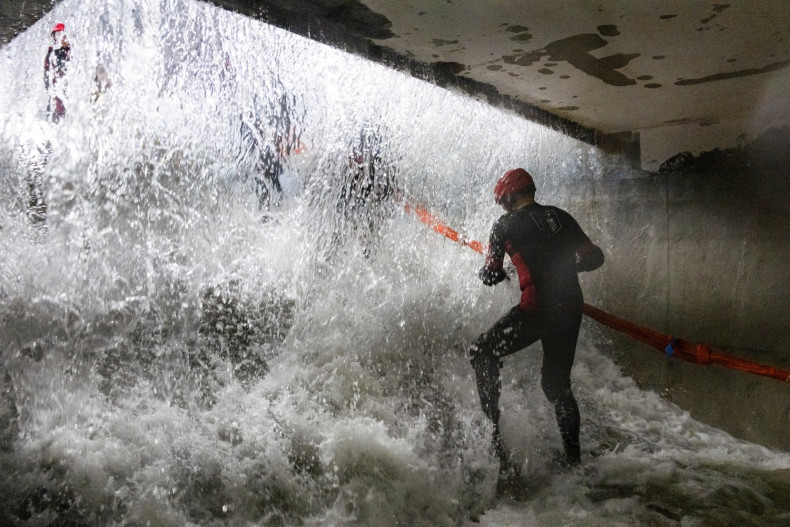
The worst day in Victor Calderón's life – a month ago to the day – unfolded while he was at sea. [4] When the powerful twin earthquakes devastated Venezuela's northern coastline, the 49-year-old fisherman had been on the boat for 18 days and was told by radio that the building he and his family lived in had collapsed. [4] When he got back to shore, a staggering 26 members of his family were gone. [4] They include his sisters, their children and grandchildren, as well as his stepfather and nine cousins. [4] Their ages ranged from two years old to their late 70s. [4] Victor's entire family lived in a public housing complex known as OPPE 26, located in Caraballeda. [4] The town in La Guaira state is considered the Ground Zero of the tragedy. [4] His daughter and granddaughter thankfully survived and their much-reduced family now lives in a tent on a golf course. [4] One month on from the disaster, he is not the only one still searching for, and finding, loved ones. [4] As the afternoon sun went down at OPPE26, three bodies were pulled from beneath the rebar and rubble, including that of an 11-year-old girl. [4] Rescue workers downed tools or said a prayer as the child's body was delicately removed in black plastic sheeting, her father's howls piercing the air and drowning out the sound of earthmoving equipment working nearby. [4] At one of the pancaked private buildings, in the coastal town of Catia La Mar, an unlikely rescue took place eight days after the earthquakes struck. [4] From beneath the concrete slabs, a security guard, Hernán Gil, was pulled out alive from an underground car park. [4] Today, Laura Barrios continues to search in the same building for her brother-in-law, whose body remains trapped in the same subterranean car park. [4] The news that Laura's family are searching on their own again came a day after they located the bodies of her sister-in-law and the children, aged 10 and three, huddled together in their bedroom. [4]

Venezuela earthquake one month later leaves 5,300 dead and 18,000 displaced. — Source: reliefweb
Financial and Reconstruction Challenges
Following a contraction of roughly 75 percent in economic output and a period of hyperinflation that exceeded 300,000 percent annually, the collapse in the value of the Venezuelan bolívar has severely eroded household incomes while dramatically shrinking both the banking sector’s lending capacity and the insurance market. [1] These structural weaknesses significantly constrain the country’s ability to finance recovery and reconstruction. [1] Access to external financing is also limited. [1] Since 2017, Venezuela and the state-owned oil company PDVSA have remained in default on their external debt, which The Financial Times has estimated at approximately USD 240 billion. [1] This has effectively closed access to international capital markets. [1] Although Calixto Ortega, Vice President for the Economic Area, President of Banco de Venezuela and Venezuela’s Governor to the International Monetary Fund, has stated that negotiations to restructure the country’s external debt continue despite the emergency, Venezuelan economist Leonardo Vera argues that debt restructuring alone will not provide the resources required for reconstruction. [1] Instead, he points to alternative financing mechanisms, including dedicated reconstruction funds, multilateral financial assistance, and both international and domestic donations. [1] The government has announced several initial funding initiatives. [1] Interim President Delcy Rodríguez unveiled a reconstruction fund with an initial allocation of USD 200 million drawn from Venezuelan assets held at the IMF. [1] This week, the government of Delcy Rodríguez donated 200 homes to affected families. [4] The overall need, though, may be 100 times higher. [4] Reconstruction will take years and billions of dollars in investment. [4]
Methodology for Estimating Disaster Impacts
The internationally recognized standard for estimating the economic impact of disasters is the Disaster Assessment Methodology developed by the Economic Commission for Latin America and the Caribbean (ECLAC), a pioneer in this field. [1] The framework has since been adopted by major international institutions, including the World Bank (WB) and the Inter-American Development Bank (IDB). [1] Its third edition, published in 2014 in collaboration with the Pan American Health Organization (PAHO), provides a comprehensive approach for estimating not only the direct effects of disasters but also their socioeconomic impacts at both the macroeconomic and household levels, as well as the financial resources required for recovery and reconstruction. [1] Under this methodology, disaster impacts are classified into three categories: damage, losses, and additional costs. [1] Damage refers to the destruction of physical assets such as buildings, facilities, machinery, equipment, infrastructure, and inventories. [1] These are valued according to their estimated replacement cost at pre-disaster prices. [1] Losses represent the value of goods and services that are no longer produced or delivered from the moment the disaster occurs until full recovery is achieved. [1] Estimating these losses requires comparing the post-disaster trajectory of economic sectors with a hypothetical scenario in which the disaster had not occurred. [1] As a result, these estimates depend on a range of assumptions and are inherently subject to uncertainty. [1] Additional costs include extraordinary expenditures incurred by governments and the private sector in response to the disaster, such as emergency medical supplies, humanitarian assistance, and other essential goods and services. [1] Finally, the methodology estimates recovery and reconstruction financing needs, which encompass the costs of the public policies and investments required to restore normal economic and social conditions. [1]
What to watch next: As more comprehensive information becomes available, the estimated total economic impact of the disaster is therefore expected to increase substantially.