
Philippines Earthquake Death Toll Rises to 55 With 38 Still Missing
The death toll from the Philippines earthquake that struck off the southern coast of Mindanao on Monday has risen to 55, with 38 people still missing and search and rescue operations continuing.
Overview of the Earthquake
The tectonic earthquake occurred at 7:37 a.m. local time at a depth of 33 km, with the epicenter 32 km southwest of the coast of Maasim town in Sarangani province on Mindanao Island [2]. The magnitude 7.8 event struck off the southern coast of Mindanao [2]. The Philippine Institute of Volcanology and Seismology identified the event as a tectonic earthquake [2]. This location placed the mainshock near Sarangani Province, where subsequent assessments documented widespread effects across affected communities [2].
Casualties and Missing Persons
At least 55 people were killed, 38 missing and 1,120 injured after the magnitude 7.8 earthquake struck off the southern coast of Mindanao [2]. The National Disaster Risk Reduction and Management Council reported the updated figures on Friday [2]. Search and rescue operations remain active for the 38 missing individuals [2]. Philippine officials noted that the confirmed death toll reached 55 while emergency responders continued efforts to reach isolated communities [4]. Years of disaster preparedness drills helped prevent a larger casualty toll when the powerful quake left 55 people dead [3].
Disaster drills in the southern Philippines helped limit deaths after a magnitude 7.8 earthquake struck Mindanao. — Source: newsmax
Impact on Population and Infrastructure
The disaster affected more than 86,000 families involving over 390,000 people [2]. Some 19,000 houses were damaged, and power supplies in 48 cities and municipalities were disrupted [2]. Roads, bridges, airports, and seaport facilities sustained damage and were hampered in their operations [2]. General Santos International Airport can accommodate military and humanitarian assistance flights while remaining closed to commercial flights [2]. These infrastructure effects compounded challenges for residents across the impacted region of Mindanao [2].
Response and Relief Operations
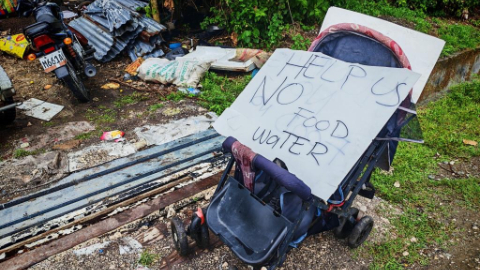
A total of more than 3,700 personnel have been dispatched for search and rescue operations in hard-hit areas [2]. General Santos International Airport remains available for military and humanitarian assistance flights [2]. Residents affected by the earthquake receive relief supplies in Sarangani Province [2]. Staff members and volunteers distribute relief supplies to residents affected by the earthquake near a temporary shelter in Sarangani Province [2]. Thousands displaced and housed in temporary shelters continue to receive support while responders work to assist isolated communities [4].
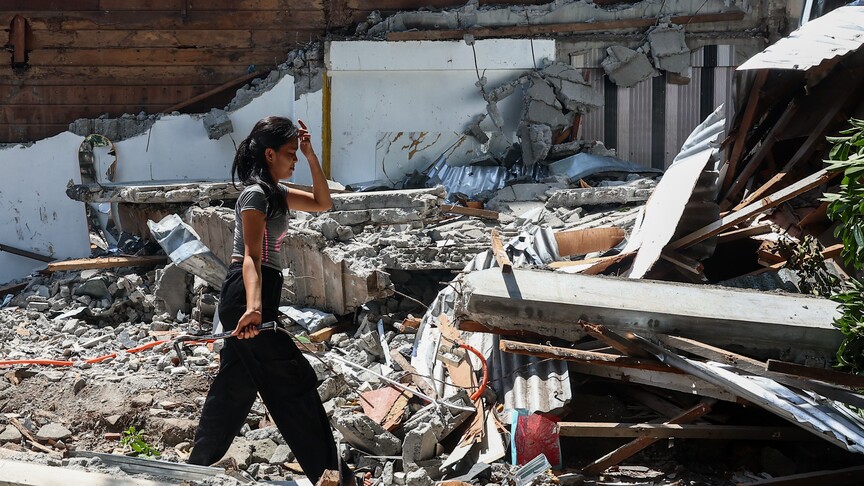
Death toll from magnitude 7.8 earthquake off Mindanao rises to 55 with 38 still missing. — Source: anadolu
Role of Preparedness Drills
Philippine officials said years of disaster preparedness drills helped prevent a larger casualty toll when one of the strongest earthquakes in 50 years struck the south [3]. The drills contributed to limiting the overall impact despite the scale of the magnitude 7.8 event [3]. Officials credited the repeated exercises with reducing what could have been a higher number of fatalities in the affected provinces [3].
Aftershocks and Seismic Context
The Philippine Institute of Volcanology and Seismology recorded more than 3,860 aftershocks from the major tremor [2]. The Philippines experiences frequent seismic activity due to its location along the Pacific "Ring of Fire," a zone of major tectonic plate boundaries known for earthquakes and volcanic eruptions [2]. This positioning continues to shape the country's exposure to seismic events, including the recent mainshock and its aftershock sequence [2].
What to watch next: Search and rescue operations continue for the 38 missing while relief supplies reach residents near temporary shelters in Sarangani Province.