
Philippines Earthquake Death Toll Climbs to 46 With 17 Still Missing
The Philippines earthquake that struck off the coast of Mindanao has driven the death toll to 46, with the number of missing people rising to 17 as rescuers search through rubble.
Rising Death Toll and Missing Persons
Rescuers pulled a body from the rubble of a collapsed supermarket in General Santos City on Wednesday, bringing the confirmed fatalities from the Philippines earthquake to 46. [2] The national disaster agency had raised the death toll to 45 earlier that day, but the latest recovery of Joey Deluvio, 39, a supermarket employee found pinned between two beams, was not yet included in that count. [2] The number of missing individuals jumped from four to 17. [1] Most of the additional dead came from Davao Occidental province, where landslides and collapsing buildings caused the majority of fatalities. [2] In Sarangani province, a landslide in Glan killed 13 villagers, with four more deaths reported in other incidents there. [3] Additional victims were recorded in South Cotabato and on the island of Balut. [3] One victim was recovered from a damaged mosque in the affected region. [3]
Earthquake Details and Tsunami Impact
The Philippines earthquake registered a magnitude of 7.8 and struck at 7:37 a.m. local time on Monday, with its epicenter located off the coast of Mindanao. [3] The depth was recorded at approximately 33 kilometers by the Philippine Institute of Volcanology and Seismology and around 55 kilometers by the United States Geological Survey. [3][5] This event is the strongest recorded in the Philippines this year. [3] Tsunami warnings were issued for the Philippines and neighboring countries including Indonesia and Japan, but alerts were lifted after waves reached up to 1.4 meters in Kiamba and 1.48 meters in the same coastal area. [3][5] These waves caused only minor damage to six coastal homes in Zamboanga del Sur province. [3] Smaller waves were measured elsewhere, including 83 centimeters in Indonesia, 30 centimeters in Palau, and up to 20 centimeters in parts of Japan. [3] The Pacific Tsunami Warning Center confirmed the maritime threat had passed approximately five hours after the main shock. [3]
Rescuers recover a body from the rubble of a collapsed supermarket in General Santos City after the earthquake. — Source: channelnewsasia
Injuries, Displacement and Structural Damage
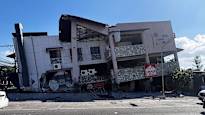
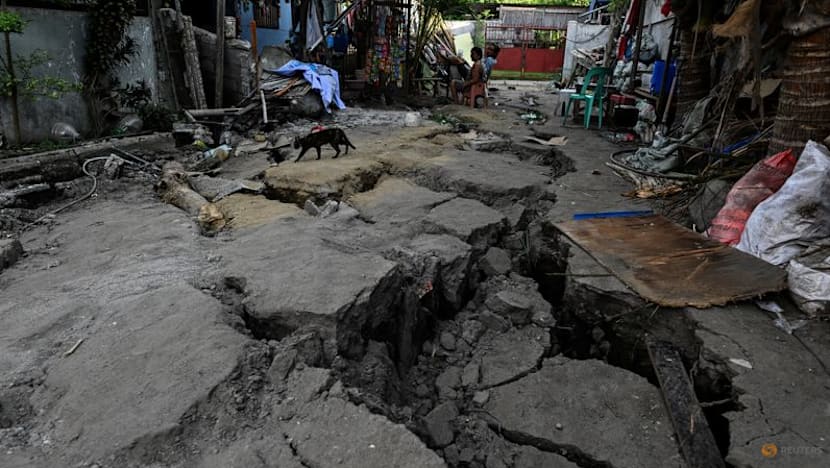
Nearly 500 people sustained injuries in the Philippines earthquake, with one report placing the figure above 470. [4][5] More than 40,000 individuals were displaced, including over 31,000 people housed in 54 emergency shelters and around 9,000 others staying with relatives or friends. [5] Approximately 2,500 homes suffered damage, of which 460 were completely destroyed. [4] Over 100 buildings and facilities were affected, including schools, a supermarket, a warehouse, a mosque, and a radio station building in General Santos City. [3][4] The General Santos international airport remained closed for a second day, resulting in the cancellation of dozens of flights. [4] In Davao Occidental, a primary school and a shed sustained damage during the shaking. [3]
Aftershocks, Safety Warnings and Response Efforts
More than 1,000 aftershocks have followed the Philippines earthquake, with magnitudes ranging up to 6.7. [5] Officials warned residents not to re-enter buildings showing cracks or structural damage because aftershocks could trigger further collapses. [3] Search and rescue teams continued operations in General Santos to locate the missing. [3] Classes were canceled in affected provinces on the orders of President Ferdinand Marcos Jr., who directed immediate disaster response measures. [3] Authorities must inspect around 6,000 public school buildings before resuming lessons. [4] The United States offered coordination and support, while France, Japan, and New Zealand also expressed willingness to provide assistance. [3]
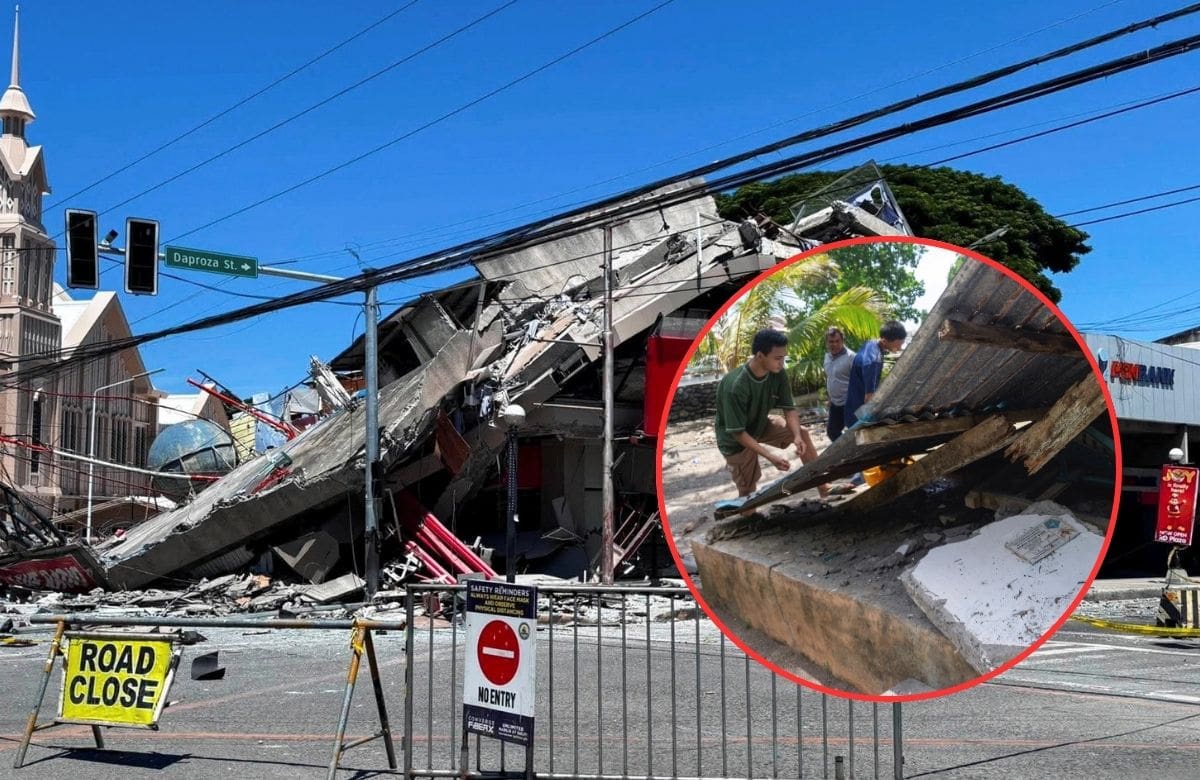
Rescuers recover a body from the rubble of a collapsed supermarket in General Santos City after the earthquake. — Source: gdelt
Philippines' Seismic Vulnerability
The Philippines lies within the Pacific Ring of Fire, a zone of intense seismic and volcanic activity that produces frequent earthquakes and roughly 20 typhoons each year. [3][4] The recent Philippines earthquake matches the magnitude of a 1990 event that killed more than 1,000 people and injured thousands more. [4] It is also comparable to the 1976 magnitude 8.1 quake and tsunami that claimed around 8,000 lives with waves reaching 8 to 10 meters. [4] The 1976 disaster originated from movement in the Cotabato Trench, the same feature linked to the current event. [4] Philippine authorities plan to commemorate the 1976 tragedy in August by installing markers to remind vulnerable communities of the need for constant vigilance. [4]
International Aid Offers and Ongoing Coordination
International partners responded quickly to requests following the Philippines earthquake. The United States, as a treaty ally, offered coordination and logistical support for relief operations. [3] Japan, France, and New Zealand separately signaled their readiness to supply aid, equipment, or personnel as assessments continued. [3] These offers arrived while local teams focused on search-and-rescue work amid repeated aftershocks that complicated efforts in General Santos and surrounding provinces. [2]
What to watch next: Officials will continue inspecting damaged structures and school buildings before any return to normal activities, while the Institute of Volcanology and Seismology prepares markers to mark sites affected by the 1976 disaster.