
Venezuela Earthquake Leaves More Than 5,300 Dead and Tens of Thousands Missing One Month Later
One month after the Venezuela earthquake of magnitude 7.2 and 7.5 struck on June 24, more than 5,300 people are confirmed dead, over 16,500 injured, and tens of thousands remain missing as families continue searching rubble for loved ones in La Guaira and Caracas. [1] [2]
Twin Earthquakes Strike Venezuela
The Venezuela earthquake sequence began on June 24 at 18:04 local time with a magnitude 7.2 tremor whose epicenter lay in Yaracuy state roughly 200 kilometers west of Caracas. [2] Thirty-nine seconds later a second quake of magnitude 7.5 struck the same region. [1] [2] The double event occurred on a public holiday marking the anniversary of the Battle of Carabobo and the Fiesta of San Juan, when streets, hotels and tourist apartments in coastal La Guaira were filled with visitors. [2] The first shock originated about 200 kilometers west of the capital while the second followed immediately, collapsing 190 buildings and damaging 856 others across La Guaira and Caracas. [2] A total of 1,405 aftershocks have been recorded since the initial pair. [2]
Casualties and Missing Persons
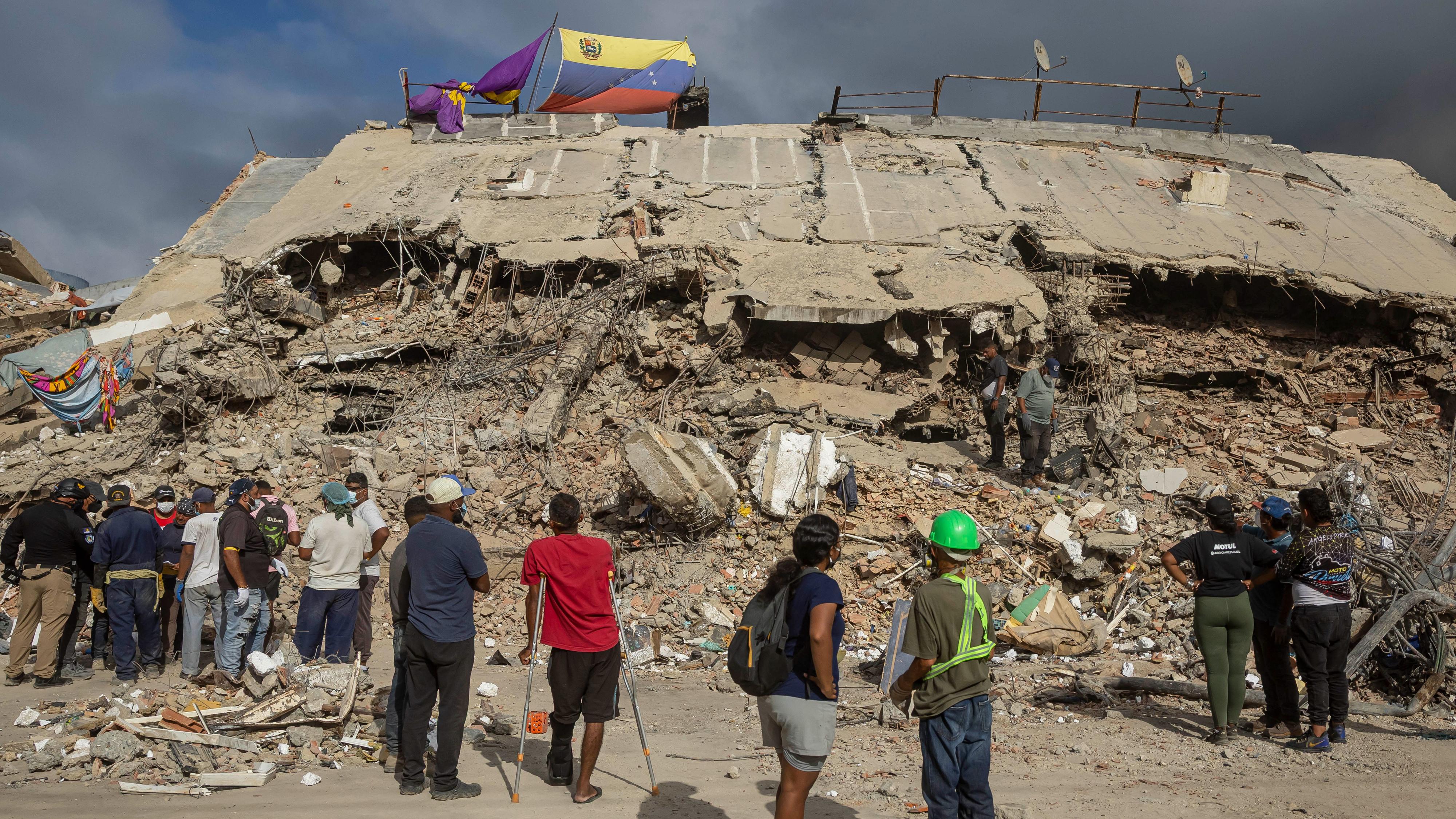
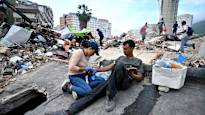
Rescue teams search rubble for missing people one month after the twin earthquakes in La Guaira Venezuela. — Source: gdelt
Official tallies updated almost daily by the government list at least 5,346 fatalities, 16,740 injuries and 6,462 rescues, the majority in La Guaira and Caracas. [2] Citizen platforms tracking the missing estimate the figure could reach almost 41,300 according to Venezuela Reporta or 44,295 according to Desaparecidos Terremoto Venezuela. [2] One month later families continue to sleep beside rubble in the hope of recovering relatives, while the National Service of Forensic Medicine and Forensic Sciences has appealed for blood relatives to provide voluntary DNA samples at the morgues of Los Silos de Bolipuerto in La Guaira and Bello Monte in Caracas. [2]
Ground Zero: Caraballeda and La Guaira
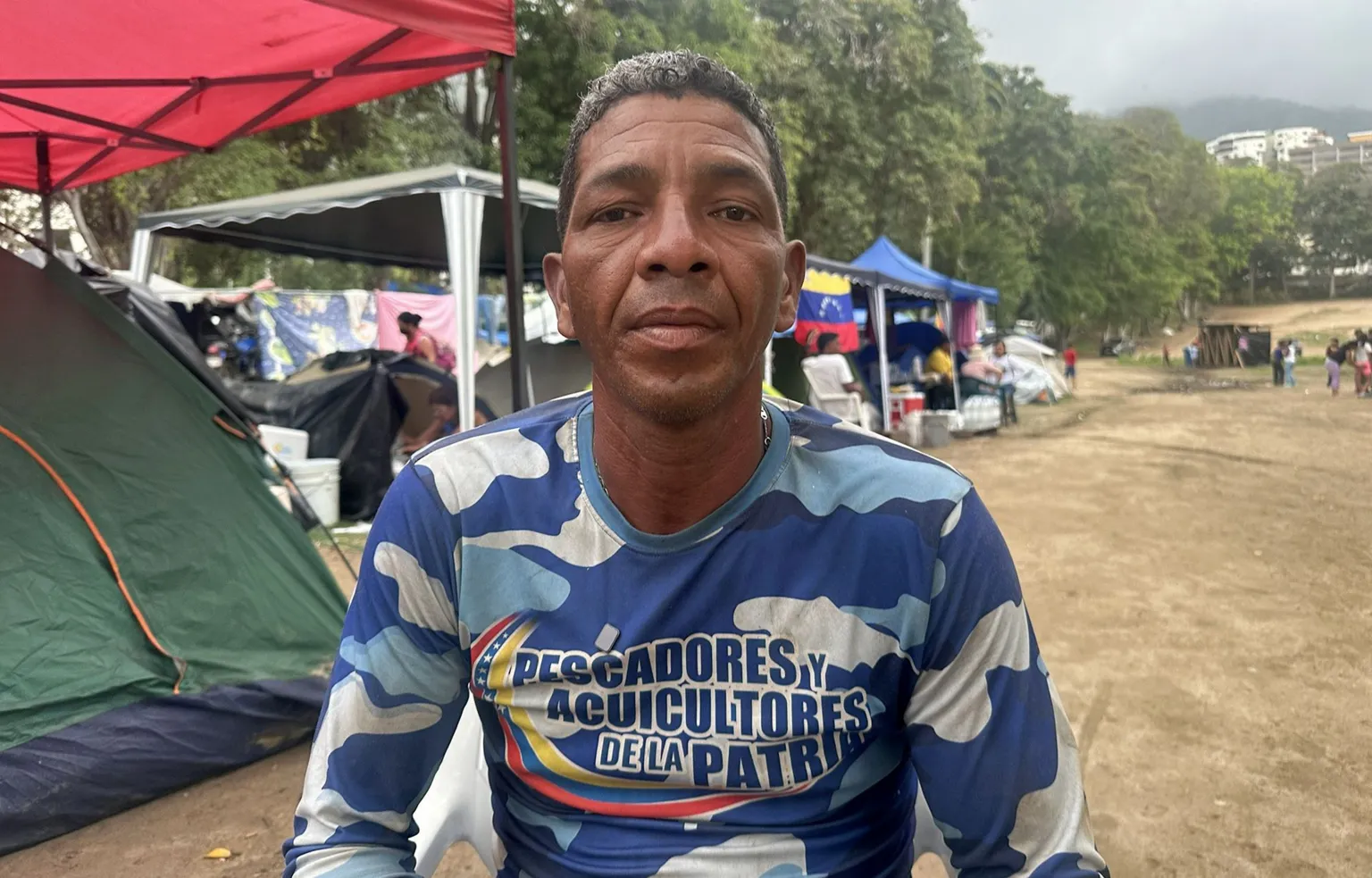
Caraballeda in La Guaira state is regarded as the ground zero of the disaster. [1] In the OPPE 26 public housing complex at least ten of twelve blocks collapsed, claiming the lives of 26 relatives of fisherman Victor Calderón, whose ages ranged from two years to the late seventies. [1] Calderón, who had been at sea for 18 days when the quakes struck, returned to find his entire extended family gone except for his daughter and granddaughter, who now live with him in a tent on a golf course. [1] On one recent afternoon three bodies were recovered from the rebar and rubble at OPPE 26, including that of an 11-year-old girl whose father wept as her remains were placed in black plastic sheeting. [1] Rescue workers paused or prayed while earth-moving equipment continued nearby. [1]
Survivor Anger and Questions of Negligence
Survivors express deep anger toward authorities and question whether building plans were flawed, corners were cut or inadequate materials were used. [1] Public Works Minister Juan José Ramírez toured the site and insisted the structures had been sound, arguing that no nation could have withstood two almost simultaneous quakes moving in different directions. [1] He noted that both public and private buildings collapsed and that the earthquake did not discriminate. [1] In Catia La Mar an unlikely rescue of security guard Hernán Gil occurred eight days after the quakes, yet most international crews have since departed and even the earthmover clearing debris has been reassigned, leaving families such as Laura Barrios to search alone for her brother-in-law. [1]
Humanitarian Conditions and Temporary Camps
More than 23,000 people are sheltered in 107 temporary camps, while thousands more sleep in improvised settlements or curbside tents in Maiquetía and along Caracas’s Avenida Bolívar. [2] Immediate needs include clean water, sanitation and hygiene to prevent disease, primary healthcare, continuation of vaccination schedules, mental-health support and protection for unaccompanied minors, women, the elderly and people with disabilities. [2] International agencies such as World Central Kitchen provide hot meals and bottled water, yet many survivors return each night to cheap nylon tents pitched on streets or open ground. [1] The Comité de Emergencia español stresses that coordination of information about the missing remains essential and that long-term shelter solutions must replace temporary camps to avoid overcrowding and related health risks. [2]
Reconstruction Challenges and Government Response
The World Bank estimates direct material damage at 19.6 billion dollars, with 47 percent of the destruction affecting housing. [2] The Venezuela Renace project is evaluating 11,794 dwellings across seven states, classifying them green, yellow or red to determine repair, rehabilitation or demolition. [2] In La Guaira 3,947 homes and in Caracas 3,178 homes are under assessment. [2] So far the government has relocated 240 families to new units in Fuerte Tiuna and donated 200 homes, far short of the estimated 20,000 needed. [1] [2] Reconstruction is expected to require years and billions more in investment, with authorities inspecting potential sites in La Guaira for future housing while international partners urge sustained aid for the longer recovery phase. [2]
What to watch next: continued DNA identification work at the morgues, further classification of damaged homes under the Venezuela Renace program, and efforts to secure long-term housing that allows families to leave temporary camps.