
Pakistan's Military Surge to Saudi Arabia: Redefining South Asian Involvement in Gulf Defense
Breaking Developments and Immediate Implications
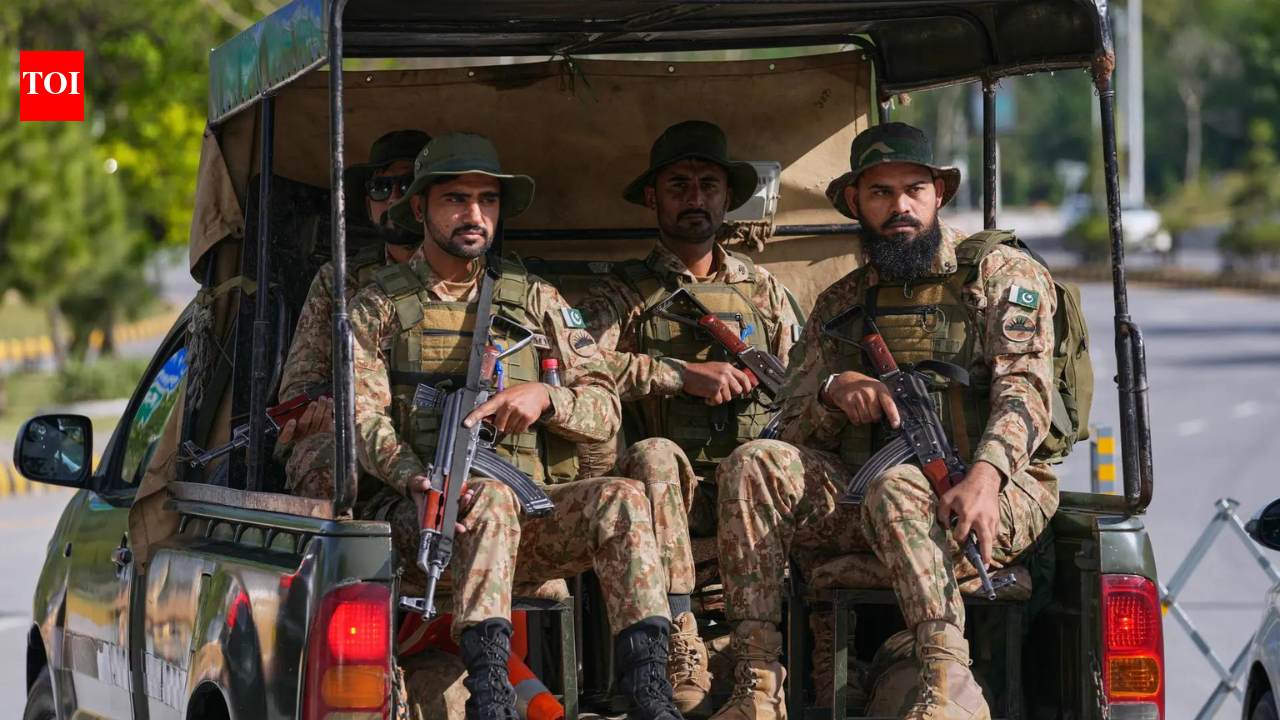
The arrival of the Pakistani military contingent in Saudi Arabia, as reported by the Times of India and The New Arab, represents a rapid escalation in bilateral military cooperation. On the heels of recent Houthi threats and Iranian proxy activities, a squadron of Pakistan Air Force (PAF) fighter jets—believed to include advanced JF-17 Thunder multirole fighters—touched down at a Saudi airbase near Riyadh. Accompanying them is a 1,500-strong contingent of ground troops, specialized in counter-insurgency and air defense operations. This deployment, activated under the 1982 Pakistan-Saudi defense agreement, comes just days after a spate of attacks on Saudi oil infrastructure, including the March 31 Houthi threat to divert Saudi oil shipments and the April 6 Saudi oil price surge linked to US-Iran tensions.
What makes this development particularly novel is its timing and scope. Saudi Arabia, long reliant on US-led coalitions and Gulf Cooperation Council (GCC) partners like the UAE, is now turning to a non-Arab, nuclear-armed Muslim-majority nation from South Asia. Eyewitness accounts from Saudi social media, including viral posts from @SaudiMilWatch (with over 500K views), show PAF jets in formation flights over the desert, captioned "Brothers from the East bolstering the shield." Another post from Pakistani military analyst @PAFInsider gained traction: "JF-17s in Riyadh—history in the making against shared threats."
Immediate implications are profoundly security-oriented. The Pakistani forces bring battle-hardened expertise from counter-terrorism operations along the Afghan border, enhancing Saudi capabilities in joint air patrols and rapid response drills. Intelligence sharing is already underway, with unconfirmed reports of real-time data exchanges on Houthi drone trajectories. This bolsters Saudi Arabia's defensive posture amid ongoing threats: the April 6 Jordan-Saudi solidarity statement against Iran, the US advisory against Hajj travel on April 7, and the March 30 Middle East Summit on Iran threats. Short-term benefits include fortified airspace over key oil facilities, reduced response times to incursions, and psychological deterrence—signaling to Tehran that Riyadh's net is widening. For deeper insights into Middle East escalations, check our ongoing coverage.
For ordinary Saudis and Pakistanis, the human element is poignant. Saudi families near the bases report a sense of reassurance, with one Riyadh resident telling local media, "Seeing Pakistani flags alongside ours feels like family arriving in a storm." In Pakistan, amid economic woes, the deployment—rumored to include lucrative training contracts—offers a morale boost and potential remittances for troops' families. Yet, it's not without risks: exposure to live combat could strain Pakistan's overstretched military, already juggling Balochistan insurgencies.
This surge isn't isolated; it's a direct response to the April 6 Saudi oil price rise and Houthi saber-rattling, amplifying Saudi defensive layers without immediate US boots on the ground, as urged by Crown Prince Mohammed bin Salman (MBS) on March 24. This move aligns with broader global risk trends, where regional alliances are reshaping in response to persistent threats.
Historical Context and Evolutionary Ties
To fully grasp this deployment, one must trace Saudi Arabia's adaptive foreign policy through a tense 2026 timeline, revealing a pattern of broadening Islamic alliances against Iranian aggression. It began on February 27 with the Organization of Islamic Cooperation (OIC) Emergency Meeting on West Bank Annexation, where Saudi delegates pushed for unified Muslim defense postures, foreshadowing non-traditional partnerships. This set the stage for February 28's Saudi-UAE discussions on Iran attacks, focusing on joint missile defense amid escalating proxy strikes.
Momentum built on March 1 when MBS pressed the US for military action, highlighting Washington's hesitancy. By March 8, Saudi-China regional talks explored tech transfers for drones, diversifying beyond the West. The March 9 Singapore evacuation from Saudi Arabia—prompted by fears of spillover from Iran-linked unrest—served as a precursor, exposing Riyadh's need for reliable non-Arab allies to secure expatriate communities and logistics hubs.
This chronology positions Pakistan's role as a logical evolution. Longstanding ties date to the 1970s, with Pakistan training Saudi forces and providing nuclear deterrence assurances. The 2026 pivot intensified post the March 22 Saudi pipeline activation amid crisis, March 24 MBS escalation call, March 29 Zelensky accusation of Russia-Iran links, March 30 summit, March 31 Houthi threats, April 6 Jordan solidarity, and April 6 oil surge. Social media echoes this: A thread by @GeoPolAnalyst2026 (200K likes) maps the timeline, noting "From OIC to PAF jets: Saudi's Islamic bloc 2.0."
Pakistan's involvement humanizes the shift. For Saudi youth, trained by Pakistani instructors, it's a reunion; for Pakistani migrants (over 2.5 million in Saudi), it's pride amid remittances that sustain families back home. This builds on the OIC's call, evolving from diplomatic rhetoric to boots-and-jets reality. Such deepening ties reflect how interconnected global security challenges are becoming, much like the Iran conflict's ripple effects.
Original Analysis: Strategic Shifts and Future Scenarios
This deployment uniquely spotlights South Asian nations' emerging role in Middle Eastern geopolitics, a angle underexplored amid focus on Western or GCC dynamics. By enlisting Pakistan, Saudi Arabia diversifies alliances, reducing overreliance on a wavering US (post-MBS's March 1 plea) or fractious Gulf states. Pakistan's JF-17s, co-produced with China, introduce hybrid capabilities—affordable, agile fighters ideal for Houthi drones—countering Iranian influence in Yemen and Lebanon. This creates new South Asia-Middle East interconnections: Pakistan gains leverage in the Ummah, potentially securing Saudi investments to offset IMF pressures.
Risks abound. India, Pakistan's rival, views this warily; New Delhi's social media buzz (@IndiaStrategic, 100K retweets) warns of "Islamist axis" escalation, possibly straining Quad ties. Internally, Pakistan's opposition decries it as "adventurism," risking protests amid Imran Khan's lingering popularity. Broader, it could provoke Tehran, drawing in Turkey (with its own Saudi rivalries) or even India if Kashmir tensions flare.
Predictively, this could formalize South Asian-Middle Eastern defense pacts within a year—perhaps a "Islamic Defense Arc" including Bangladesh or Indonesia. Expansions might include Pakistani naval patrols in the Gulf of Aden, joint cyber ops against IRGC hackers. Yet, escalation risks loom: a Houthi strike on PAF assets could spiral, prompting Turkish mediation or Indian counter-moves. Economic partnerships may follow—Saudi funding for Pakistan's CPEC—but unmanaged, it heightens regional instability, echoing 2019 Abqaiq attacks.
Human stakes personalize it: Pakistani pilots, fathers from Punjab, now shield Mecca's pilgrims; Saudi Bedouins gain security for ancient trade routes. This pivot redefines power balances, with Riyadh as architect.
The Players
Saudi Arabia (led by MBS): Motivated by survival amid Iran encirclement, seeking Islamic unity to project strength.
Pakistan (Army Chief Asim Munir): Economic lifelines and pan-Islamic prestige drive involvement, balancing domestic politics.
Iran/Houthis: Primary adversaries, whose provocations catalyzed this; expect asymmetric retaliation.
US/UAE/China: US watches jealously; UAE coordinates; China supplies jets, eyeing influence.
India/Turkey: Potential spoilers or joiners, complicating the board.
The Stakes
Politically, alliance diversification strengthens Riyadh but risks alienating Washington. Economically, secured oil flows stabilize globals, but disruptions threaten $100/barrel spikes. Humanitarily, reduced attacks protect millions—Hajj pilgrims, Pakistani workers—but drawfire endangers lives. For South Asia, it's a prestige play masking fragility. Monitor these dynamics via our Global Risk Index.
Catalyst AI Market Prediction
The World Now's Catalyst AI engine forecasts market ripples from this escalation:
- OIL: + (high confidence) — Strait of Hormuz fears; precedent: +4% post-Soleimani.
- USD: + (medium confidence) — Safe-haven flows; +2% in 2022 Ukraine.
- BTC/ETH/SOL: - (medium confidence) — Risk-off deleveraging; 10-15% drops in precedents.
- SPX/TSM: - (medium confidence) — Energy fears hit equities/semis; minor dips historically.
- EUR: - (medium confidence) — Energy vulnerability; -2% precedent.
Key risks: De-escalation caps oil; safe-haven bids buoy crypto.
Predictions powered by The World Now Catalyst Engine. Track real-time AI predictions for 28+ assets. For more, visit Catalyst AI — Market Predictions.
Looking Ahead
Watch April 15 for joint drills announcement; OIC follow-up by May. Scenarios: Pact formalization (60% likely), Iran retaliation (30%), or India backlash (10%). This developing story will update.
This is a developing story and will be updated as more information becomes available.





/file/attachments/orphans/Resurfacing4_119455.jpg)