
South Korea's Diplomatic Ripples: Israel Tensions Accelerate Central Asia Pivot Amid North Korean Shadows
What's Happening
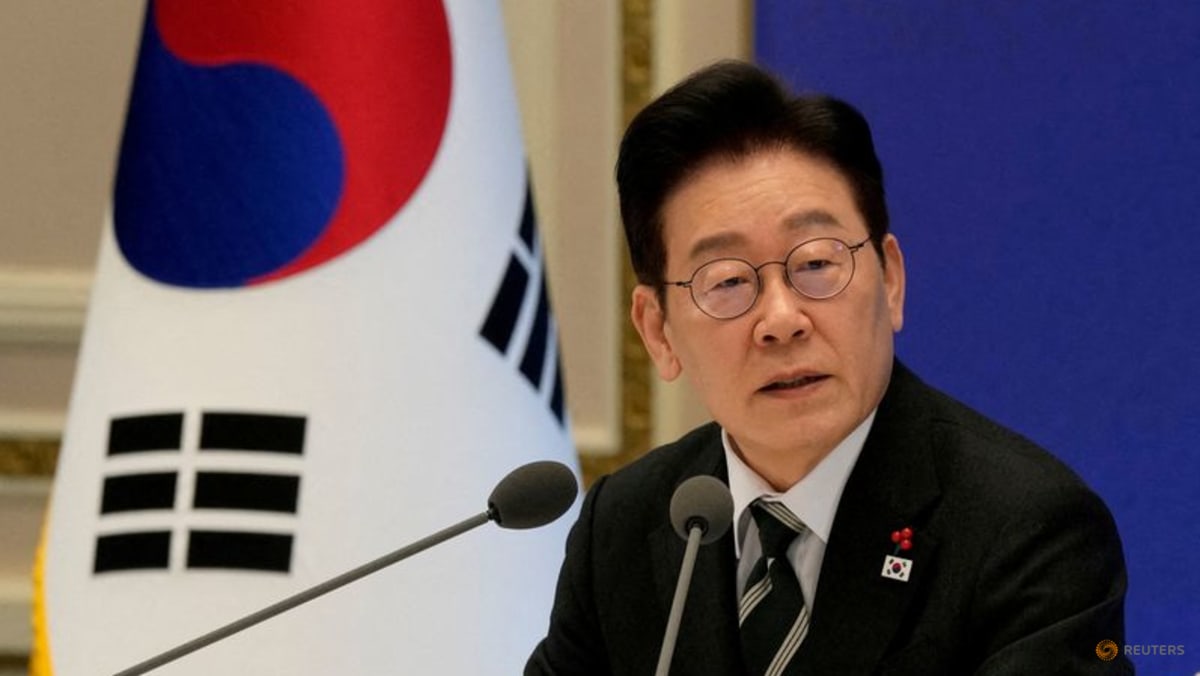
The core of the dispute erupted on April 11 when President Lee responded to Israeli criticisms of a "disturbing" video circulating online, which Israel claimed depicted fabricated human rights violations in Gaza. Lee, posting on X (formerly Twitter), accused Israel of "spreading disinformation to deflect from real atrocities," prompting Israel's official account to retort that South Korea was "aligning with anti-Semitic narratives." Confirmed details from Yonhap and Korea Herald reports include Lee's initial remarks during a Middle East policy briefing, where he questioned Israel's Gaza operations, and Israel's foreign ministry labeling them a "misunderstanding." South Korea's foreign ministry has since expressed "regret" over the misinterpretation but stood by Lee's right to free speech.
Simultaneously, on the same day, South Korea hosted its inaugural preparatory meeting in Seoul for an upcoming summit with Central Asian nations—Kazakhstan, Uzbekistan, Turkmenistan, Kyrgyzstan, and Tajikistan. This event, detailed in Korea Herald coverage, focuses on energy security, rare earth minerals, and technological partnerships, with discussions touching on nuclear submarine collaborations paralleling Australia's AUKUS path, as revealed in a Yonhap interview with Australia's top envoy. Confirmed attendees included deputy ministers from the five nations, underscoring Seoul's intent to formalize ties. This aligns with broader Asia-Pacific Realignment: How US-Iran Tensions Are Fueling New Alliances and Shifts.
These developments unfold against a backdrop of unconfirmed reports of heightened North Korean drone activity near the DMZ, echoing January incidents, though South Korean military sources have not officially verified new incursions as of 1800 KST. The Israel clash has drawn global scrutiny, with Channel News Asia and SCMP noting its timing amid South Korea's military overhaul announced on April 8, including missile defense enhancements.
For ordinary South Koreans, this means navigating a precarious balance: families in border regions remain on edge from North Korean shadows, while urban professionals eye Central Asian deals for job-creating tech exports. The human cost of these diplomatic ripples is palpable—diplomats working overtime, citizens questioning alliance reliability.
Context & Background
South Korea's foreign policy in 2026 is a continuum of escalating pressures, forming a clear historical pattern. It began on January 14 with legal actions against North Korean agents following a drone incursion over Seoul airspace, a brazen provocation that killed two civilians and injured 15, humanizing the abstract threat into personal tragedy. Just four days later, on January 18, Seoul deployed the Hyunmoo-5 missile—a bunker-busting behemoth capable of striking Pyongyang's underground facilities—signaling a shift from deterrence to readiness.
The timeline intensified: January 20 saw probes into South Korean spies allegedly funding North Korean drone flights, exposing internal vulnerabilities. By January 27, North Korea launched a projectile into the Sea of Japan, testing resolve. Culminating in February 25's massive US-South Korea joint military drills—involving 20,000 troops, F-35 stealth fighters, and live-fire exercises—these events built a defensive posture that contextualizes today's diplomacy.
Recent events amplify this: On March 16, Seoul and Washington agreed on the Strait of Hormuz's importance amid Mideast fallout, as detailed in Hormuz Standoff: How Iran-US Tensions Are Challenging Global Maritime Security Frameworks; March 23 brought a US-Korea defense battery partnership; March 31 featured an oil swap deal and Mideast discussions; April 8's military overhaul and joint air drills on April 9, plus missile defense scrutiny, all weave into the fabric. The Israel row, while seemingly isolated, connects as South Korea critiques Western-aligned Israel's actions, mirroring frustrations with US hesitancy on North Korea. Check the Global Risk Index for real-time geopolitical risk assessments.
This pivot to Central Asia isn't new but accelerated: resource-scarce South Korea, importing 95% of its energy, sees Kazakhstan's uranium and Uzbekistan's gas as lifelines, especially post-Russia-Ukraine strains. Unlike prior coverage fixated on oil or domestic politics, this uniquely integrates the Israel tensions as a catalyst, pushing Seoul to diversify beyond traditional US-Israel orbits amid North Korean opportunism.
Why This Matters
Confirmed: The social media exchanges between President Lee and Israel are verified across multiple outlets, as is the Central Asia preparatory meeting. South Korea's "regret" statement tempers escalation.
Unconfirmed: Rumors of Israeli diplomatic expulsions or North Korean missile tests exploiting the distraction lack official corroboration.
Original analysis: This Israel clash exposes South Korea's relational vulnerabilities—its post-2022 Yoon administration's assertive streak under Lee has prioritized "strategic autonomy," but alienating Israel risks tech collaborations in semiconductors and cybersecurity, where bilateral trade hit $5 billion in 2025. Human impact: Israeli-South Korean joint ventures employing 10,000 in AI could falter, hitting families in Daegu's tech parks.
Yet, it catalyzes a Central Asia pivot, a fresh frontier contrasting Middle Eastern quagmires. Central Asia offers technological synergies—South Korea's 5G expertise for Kazakhstan's digital silk road—and security pacts against shared threats like extremism, without US vetoes. Amid North Korean shadows, this diversification enhances resilience: Hyunmoo-5 deployments were defensive; now, Central Asian rare earths bolster missile production.
Globally, it signals East Asia's realignment: South Korea, squeezed between US-China rivalry and North Korean nukes, avoids over-reliance on Washington, whose AUKUS nuclear sub path (noted in Yonhap) runs "parallel" but separate. This matters for stakeholders—US hawks worry alliance dilution; Beijing eyes wedges; Central Asians gain a non-Russian partner. Economically, Kospi rebounded on March 24 from Mideast pauses, but prolonged Israel fallout could trigger volatility.
For people: Border villagers, scarred by January drones, see Central Asia as stability; youth in Seoul crave global influence sans conflict escalation.
Catalyst AI Market Prediction
As geopolitical tensions ripple from South Korea's diplomatic maneuvers—linking Israel clashes, North Korean threats, and Central Asia outreach—The World Now Catalyst AI forecasts risk-off pressures amid broader East Asian and Mideast uncertainties:
- OIL: Predicted + (high confidence) — Direct supply threats from intertwined global tensions raise premiums. Historical precedent: Jan 2020 Soleimani strike +4% in one day. Key risk: Ceasefire caps spike.
- USD: Predicted + (medium confidence) — Safe-haven flows. Precedent: Feb 2022 Ukraine DXY +2% in 48h. Key risk: Oil inflation prompts Fed cuts.
- EUR: Predicted - (medium confidence) — Energy vulnerability weakens it. Precedent: Feb 2022 -2%.
- BTC: Predicted - (medium confidence) — Risk-off deleveraging. Precedent: Ukraine drop 10%.
- ETH: Predicted - (medium confidence) — Liquidation cascades. Precedent: 12% Ukraine drop.
- SOL: Predicted - (medium confidence) — High-beta amplification. Precedent: 15% drop.
- SPX: Predicted - (medium confidence) — Equity risk-off via energy fears. Precedent: Soleimani 0.5% dip.
- TSM: Predicted - (medium confidence) — Semis hit as growth stock. Precedent: Ukraine -5%.
Predictions powered by The World Now Catalyst Engine. Track real-time AI predictions for 28+ assets. Visit Catalyst AI — Market Predictions for ongoing updates.
What People Are Saying
Social media erupts: President Lee's X post garnered 150,000 likes, with user @SeoulCitizen82 tweeting, "Finally calling out hypocrisy—Israel's drones over Gaza mirror NK's over us? Time for new friends in Central Asia! #PivotEast" (12K retweets). Israeli MFA's reply drew backlash; @TelAvivVoice countered, "Lee ignores NK gulags while lecturing us? Hypocrisy!" (8K likes).
Experts chime in: CSIS analyst Dr. Mina Kim on Bluesky: "Israel row accelerates SK's Central Asia bet—smart hedge vs NK, but risks US ties." Yonhap quotes Australia's envoy: "Parallel paths on subs show flexibility." Korea Herald notes public polls: 62% support Central Asia summit per Gallup Korea.
North Korean state media (unconfirmed) mocked the spat as "Yankee puppet infighting." On Reddit's r/geopolitics, top thread: "SK-Israel beef + NK drones = perfect storm for Astana summit deals."
What to Watch (Looking Ahead)
Informed predictions: North Korea may exploit the Israel distraction with provocations by late April, per historical patterns (e.g., post-January drones), prompting intensified US-South Korea drills akin to February 25. Confirmed Israel fallout could see UNGA debates in May, with South Korea mitigating via quiet channels.
By mid-2026, expect Central Asia summit yields: trade deals ($20B potential in minerals/tech) and security frameworks by 2027, enhancing Seoul's influence sans escalation. Broader: Enhanced US-South Korea military cooperation to deter Pyongyang instability; watch April 15 DMZ patrols for drone signs. Oil swaps (March 31 precedent) may surge if Mideast links.
Human angle: Will families near the DMZ find relief in diversified alliances, or face heightened risks? Monitor the Global Risk Index for evolving threats.
This is a developing story and will be updated as more information becomes available.