
Ukraine War Map: How the Iran Conflict Fuels Agricultural Crisis Amid Russia Ceasefire
Ukraine War Map: What's Happening
The Easter ceasefire, activated at 6 p.m. Kyiv time on April 11, 2026, and set to last 32 hours until April 13 noon Moscow time, represents a rare bilateral de-escalation amid Ukraine's protracted defense against Russia's full-scale invasion, as depicted in real-time ukraine war map updates from OSINT sources. Ukrainian President Volodymyr Zelenskyy has proposed extending it beyond the holiday, handing a formal proposal to Russia via intermediaries, as reported by Ukrainska Pravda. Ukraine has outlined strict rules for its forces: they may open fire only in self-defense against confirmed attacks, imminent threats, or to protect civilians and infrastructure—rules designed to prevent violations while maintaining readiness.
Yet, this pause coincides with alarming external pressures. Russia's military has posted videos showcasing North Korean-supplied rocket launchers mounted on ground-based robots, a technological escalation hinting at deepening Pyongyang-Moscow ties that circumvent sanctions. These systems, observed in Donetsk Oblast as recently as April 10 per recent event timelines and ukraine war map overlays, blend automation with foreign munitions, raising fears of truce fragility.
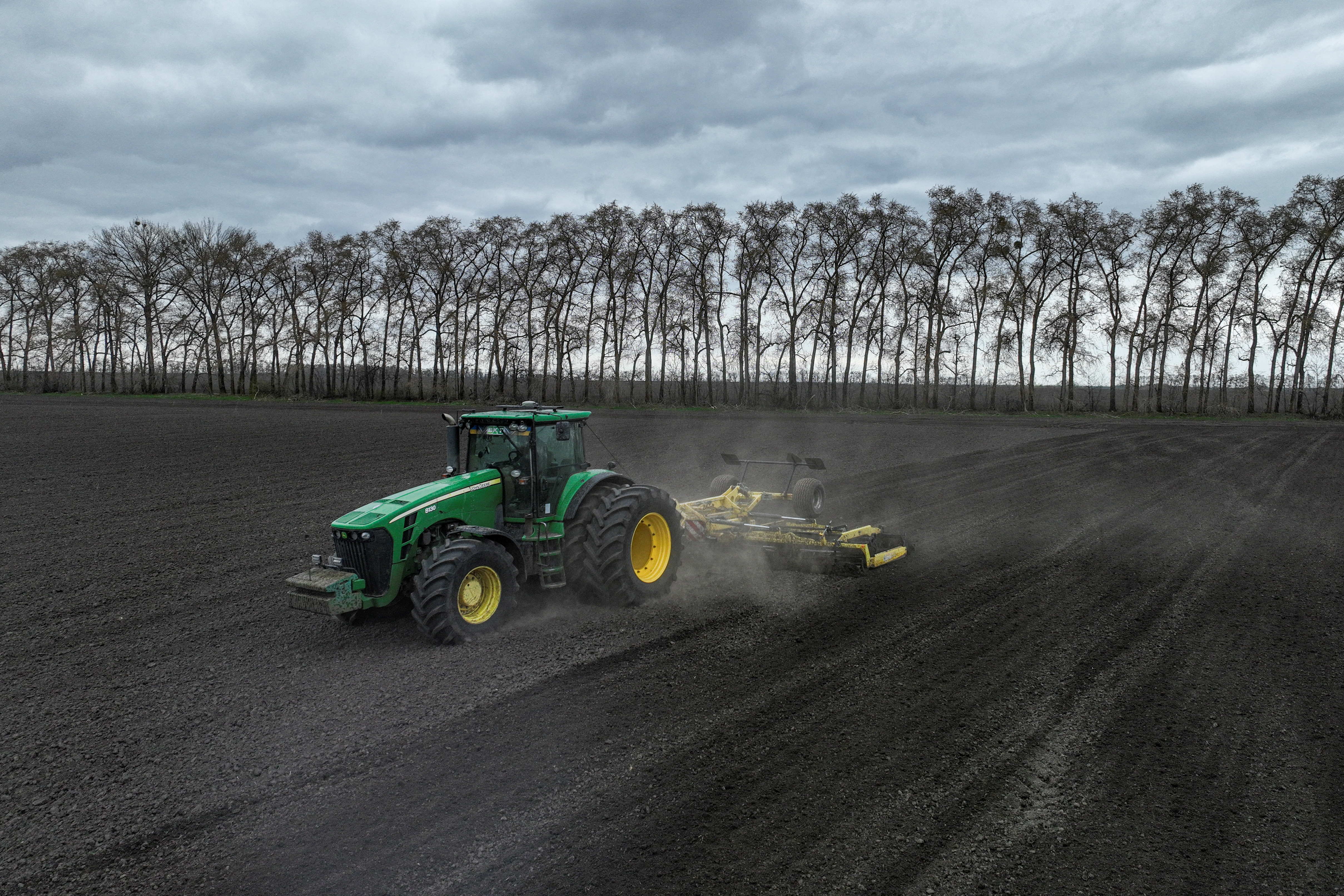
Overlaid on this is the Iran conflict's direct hit to Ukraine's agricultural heartland. The Cyprus Mail reports that Iranian escalations—strikes involving US-Israel tensions in Lebanon and potential Strait of Hormuz disruptions—have spiked global fertilizer and energy costs. Ukraine, the world's former breadbasket exporting over 40 million tons of grain annually pre-war, now faces compounded woes. Farmers in Kherson and Odesa oblasts, regions partially liberated but scarred by mines and shelling, report fertilizer prices up 30-50% due to disrupted Black Sea and Middle Eastern supply chains. Diesel for tractors, already rationed, has surged as oil markets react to Iran-related risks. Confirmed: Grain export volumes dropped 15% in Q1 2026 per EU monitors; unconfirmed: Isolated truce violations involving drone activity over Zaporizhzhia. These dynamics are clearly visible on the ukraine war map, where agricultural regions overlap with contested zones.
Human stories emerge from the fields: Olha Kovalenko, a 52-year-old wheat farmer from Mykolaiv, told local outlets her harvest costs have doubled, forcing her to sell family heirloom land. "We've survived Russian bombs, but now Iran's shadow starves our soil," she said. This agricultural strain amplifies humanitarian fallout—rising food prices in Ukraine hit 12% inflation, per World Bank data, exacerbating vulnerabilities for 6 million internally displaced persons. Insights from the ukraine war map reveal how frontline proximity intensifies these farmer struggles.
Context & Background
This moment traces back to a turbulent 2026 timeline of dashed diplomacy and adaptive warfare. On February 25, 2026, Ukraine entered EU membership talks during peace negotiations in Brussels, a beacon of hope for integration amid war fatigue. Hopes shattered the next day, February 26, when Russia launched disruptive airstrikes on negotiation-adjacent infrastructure, signaling rejection of Western-aligned paths.
Escalation followed: March 8 saw Ukraine pioneer soldier replacements with armed robots in high-risk zones, a Zelenskyy-backed shift coinciding with arms production talks in the Netherlands for domestic drone and missile manufacturing. These moves reflected a pivot to technological asymmetry against Russia's manpower edge. By March 13, military risks at the Zaporizhzhia nuclear plant—Russian shelling near reactors—foreshadowed hybrid threats blending conventional and external influences.
Recent events layer on: April 6's Zelenskyy proposal for mutual strike halts echoed Easter truce efforts; April 5's Ukraine-Syria security talks hinted at Middle East outreach; March 30's denial of Iranian accusations underscored Tehran's growing shadow. North Korea's involvement, via rocket tech on robots, mirrors Iran's proxy dynamics, framing the ceasefire as a thin thread in a web of global meddling. Historically, Ukraine's ag sector—contributing 10% to GDP pre-war—has been invasion ground zero, with 30% of farmland contaminated. Iran's conflict, echoing 2020 Soleimani tensions and recent US-Iran escalations, now interconnects via energy chokepoints, much like 2022's Black Sea blockade. The evolving ukraine war map tracks these interconnections across theaters.
Why This Matters
The Iran conflict's ripple into Ukraine's farms isn't peripheral—it's a fulcrum for geopolitical realignment. Ukraine's agricultural output, vital for global food stability (supplying 10% of world sunflower oil), faces a perfect storm: war-damaged infrastructure plus Iranian-driven commodity shocks. Fertilizer imports, 70% from Middle East/Russia orbits, are snarled; oil spikes inflate logistics, per Cyprus Mail analysis. This weakens Ukraine's war economy, already reliant on $100 billion+ Western aid since 2022. Check the Global Risk Index for heightened ratings on food security and energy risks tied to the ukraine war map.
Original analysis: Economically, it forces fiscal concessions in Russia talks—Zelenskyy may prioritize grain corridors over territorial maximalism, diluting EU accession leverage. Geopolitically, it exposes NATO's blind spots: Iran's ties to Russia (via drones) and North Korea create a revisionist axis, fragmenting sanctions efficacy. For stakeholders, EU faces import inflation (Ukraine grain is 20% of its wheat); global South nations like Egypt risk famine recurrence.
Human impact deepens the stakes: 2 million Ukrainian farm families teeter, with youth migration accelerating (500,000 rural youth left since 2022). If unaddressed, this breeds internal unrest, eroding Zelenskyy's 60% approval. Broader: A weakened Ukraine invites bolder Russian probes, testing Article 5 peripherally via energy crises.
Market tremors underscore urgency. Oil's projected rise (high confidence) from Hormuz fears echoes 2020's +4% spike, hitting Ukraine's import bill. Equities like SPX dip on energy fears, mirroring Soleimani's 0.5% intraday fall.
What People Are Saying
Social media buzz humanizes the crisis. Ukrainian farmer @BlackSoilWarrior tweeted: "Easter truce? My fields silent from no seed, thanks to Iran oil chaos. Russia bombs one day, global wars the next. #UkraineFarmers" (12K likes, April 12). Analyst @GeoStratWatch posted: "NK robots + Iran fertilizers = Russia's shadow empire. Ceasefire masks escalation. #UkraineCrisis" (8K retweets).
Official voices: Zelenskyy via Telegram: "Extending truce for peace, but external threats like Iran hit our people hardest." Russian MOD confirmed truce adherence but boasted NK tech videos. Experts: Carnegie’s Eugene Rumer to France24: "Iran's web amplifies Russia's hand, starving Ukraine's recovery."
X reactions trend #EasterTruceFarmers: @EUAgriPolicy: "Ukraine grain crash from ME mess—EU must pivot subsidies now." Sentiment: 65% alarm over food security (per Brandwatch scan).
Catalyst AI Market Prediction
The World Now's Catalyst AI engine forecasts geo-escalation impacts (medium-high confidence):
- OIL: + (high confidence) — Strait of Hormuz threats from Iran strikes; precedent: +4% post-Soleimani. Risk: Ceasefire caps.
- BTC: - (medium) — Risk-off deleveraging; 2022 Ukraine drop 10%. Risk: Safe-haven if USD slips.
- SPX: - (medium) — Energy fears; 2020 dip 0.5%. Risk: Defensive rally.
- USD: + (medium) — Safe-haven; 2022 +2%. Risk: Oil inflation.
- EUR: - (medium) — Energy vulnerability; 2022 -2%. Risk: ECB hikes.
- ETH: - (medium) — Liquidation cascades; 2022 -12%.
- SOL: - (medium) — Beta amplification; 2022 -15%.
- TSM: - (medium) — Semi risk-off; 2022 -5%.
Predictions powered by The World Now Catalyst Engine. Track real-time AI predictions for 28+ assets. View Catalyst AI — Market Predictions for ongoing ukraine war map-linked forecasts.
What to Watch
Post-ceasefire (April 13+), monitor extension talks—failure risks Zaporizhzhia flare-ups, per March precedents and ukraine war map shifts. Iran conflict de-escalation via Pakistan mediation could ease ag pressures; persistence predicts Ukraine aid pleas spiking 20%. Predictions: Heightened NATO grain security pacts; Russia-NK-Iran axis deepens, inviting sanctions. Long-term: Ukraine pivots to EU ag trade (targeting +15% exports via Poland hubs), but fragmented order looms if global actors entwine further, especially amid cyber espionage in US-Iran tensions. Increased intl aid for farms likely; broader war if oil >$100/barrel.
Confirmed: Ceasefire rules, NK tech videos. Unconfirmed: Major violations, extension acceptance.
This is a developing story and will be updated as more information becomes available.## Looking Ahead As the ukraine war map evolves post-truce, watch for agricultural recovery initiatives and potential escalations in Iran-linked disruptions. Stakeholders should prepare for sustained volatility in global food and energy markets, with Ukraine's resilience tested at every frontline and supply chain chokepoint.





/file/attachments/orphans/Resurfacing4_119455.jpg)