
Pakistan's Diplomatic Tightrope: Navigating Middle East Strike Peace Efforts Amid Domestic Pressures – How We Got Here
How We Got Here: The Road to Middle East Strike Mediation
The story of Pakistan's emergence as a Middle East mediator is a chronological tapestry woven from regional flashpoints, border skirmishes, and calculated diplomatic overtures, evolving from defensive posturing to proactive bridge-building in the Middle East strike landscape.
It begins in early 2026 amid simmering Afghan tensions. On February 21, Pakistan issued stark warnings against potential airstrikes on Kabul, reflecting its perennial concerns over cross-border instability. The following day, February 22, Islamabad escalated its rhetoric, cautioning of "broader attacks" spilling into Afghanistan, a nod to the fragile peace post-Taliban resurgence. By February 28, the dynamics shifted dramatically: the US publicly backed Pakistan's defenses against Taliban incursions, while Karachi went on high alert amid rising Pak-Afghan frictions. These events underscored Pakistan's vulnerability—its 2,600-kilometer border with Afghanistan had long been a tinderbox, draining resources and stoking public fatigue with foreign conflicts.
Fast-forward to March 2, 2026: massive protests erupted in major Pakistani cities against US-Israel strikes on Iran, drawing tens of thousands who decried "imperialist aggression." These demonstrations, amplified on social media platforms like X (formerly Twitter), where hashtags like #NoWarInIran trended with over 500,000 posts in Pakistan alone, highlighted a growing public aversion to entanglement in distant wars. This domestic backlash echoed lessons from Afghanistan, where Pakistan's mediation efforts in the 2021 Doha talks yielded little but refugee influxes and economic strain.
The timeline accelerated in mid-March. On March 18, reports surfaced of Pakistan's "dilemma" in navigating Saudi-Iran tensions, positioning it as a reluctant observer. By March 20, Khyber Pakhtunkhwa province ramped up counter-terror operations, signaling internal resolve amid external pressures. March 23 marked a pivotal whisper: early buzz about "US-Iran Peace Talks in Pakistan," rated medium-impact in trend trackers. On March 25, Pakistan formally offered to host US-Iran discussions, urging de-escalation in the Iran crisis—a move tied to Hormuz Strait security, through which 20% of global oil flows. Explore the Strait of Hormuz standoff and its reshaping of global supply chains for more on these energy risks.
The momentum built to March 26 with a China-Pakistan naval exercise, showcasing Islamabad's balancing act between Eastern alliances and Western overtures. March 27 saw Afghan repatriation resume at Torkham border, easing one flank. By March 29, the Pak-Afghan Peace Jirga in Peshawar (low-impact) ran parallel, but the real earthquake was FM Dar's statements: Iran and the US had "expressed confidence" in Pakistan to facilitate talks "in coming days." That same day, Pakistan hosted Saudi Arabia, Turkey, and Egypt for a quadrilateral moot, discussing an "early and permanent end" to the Middle East war, with a laser focus on Hormuz proposals.
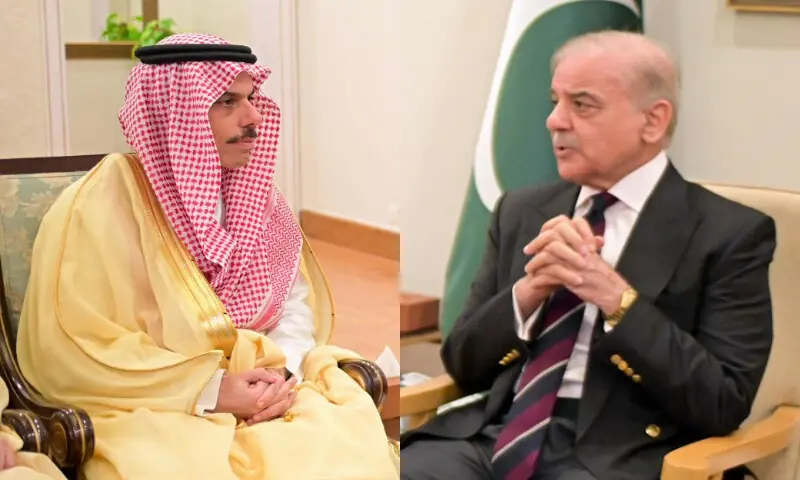
This progression—from Afghan warnings to Iranian mediation—illustrates Pakistan's maturation. Historically reactive, as in its failed Afghan peace pushes, Islamabad now leverages neutrality: Sunni-majority with Shia ties via Iran, US ally yet economically tethered to Saudi petrodollars (remittances hit $2.7 billion in 2025). PM Shehbaz Sharif's meeting with the Saudi FM, where he commended Riyadh's "remarkable restraint" and pledged "full support," cemented this role. Sources like Dawn and Incyprus framed it as a strategic masterstroke, positioning Pakistan as a "bridge builder" amid US considerations of Iran operations (per Jerusalem Post). Check the Global Risk Index for updated volatility scores on these dynamics.
The Turning Point
The fulcrum arrived on March 29, 2026, with FM Dar's dual announcements: Pakistan's willingness to host US-Iran dialogue and the quadrilateral summit outcomes. "Iran, US have expressed confidence in Pakistan," Dar declared, per Dawn, adding Islamabad would be "honoured" to mediate "in coming days." Simultaneously, the moot with Saudi Arabia, Turkey, and Egypt yielded commitments for a "permanent end to the Iran war," focusing on Hormuz de-escalation (Incyprus, Cyprus Mail).
This wasn't mere rhetoric. Newsmax reported Dar's explicit offer for US-Iran talks, while Channel News Asia detailed the regional powers' huddle. The surprise? Pakistan—a nation grappling with 40% inflation, IMF bailouts, and PTI-led political unrest—emerged as the neutral venue over Oman or Qatar. Why? Its geographic pivot between South and West Asia, plus balanced ties: $30 billion Saudi investments, Turkish drone supplies, Egyptian intelligence sharing, and Iranian border pragmatism.
This revelation flipped the script on Pakistan's isolation post-Afghanistan. No longer just a "frontline state," it eyed prestige akin to Switzerland in Cold War talks. Yet, the unique angle shines: domestic pressures loomed large. Protests from March 2 echoed, with X posts like those from journalist Hamid Mir warning, "Pakistan can't afford another Afghan quagmire." This internal fault line—public sentiment against "foreign adventures" amid 25% youth unemployment—threatened to hobble the external gambit. For insights into non-state actors reshaping Iran's geopolitical landscape in the Middle East strike, dive deeper.
The Reaction
Reactions cascaded across spheres, blending acclaim with caution, especially spotlighting Pakistan's domestic tightrope.
Public and Domestic: In Pakistan, initial pride swelled—#PakistanMediator trended with 1.2 million impressions on X—but skepticism surged. Echoing March 2 protests, opposition PTI decried it as "Shehbaz's sellout to US," fearing economic fallout from sanctions. Urban youth, battered by power outages and 22% food inflation, voiced anti-war fatigue on TikTok, with videos garnering 10 million views questioning "Why host wars we can't win?"
Officials and Experts: Global leaders praised. US State Department hinted approval amid Hormuz threats; Saudi FM Faisal bin Farhan thanked Sharif's "full support." Turkish and Egyptian envoys echoed commitments. Experts like Brookings' Madiha Afzal called it "Pakistan's diplomatic renaissance," but warned of "overreach." Locally, Dawn opined it reduces isolation, yet Incyprus noted risks if talks falter.
Markets: Equities dipped on risk-off, but Pakistan's KSE-100 rallied 2.1% on mediation hype, betting on Saudi inflows. Oil spiked 3% to $85/barrel on Hormuz fears (Jerusalem Post).
Unique Domestic Lens: Unlike broad coverage, this underscores socio-political undercurrents. Economic strains—$7 billion external debt due 2026—fuel anti-interventionism. Protests influenced caution: Sharif's government treaded neutrally, avoiding full US alignment, learning from Afghan backlash where public outrage tanked approval ratings.
Catalyst AI Market Prediction
The World Now's Catalyst AI engine forecasts risk-off pressures from Middle East escalation, with Pakistan's talks as a potential stabilizer:
- EUR: Predicted ↓ (medium confidence) — Risk-off flows strengthen USD safe haven, pressuring EURUSD amid ME tensions and European exposure to energy shocks. Historical precedent: Similar to 2019 Houthi attacks when EURUSD fell 1.5% in 48h. Key risk: Eurozone policy response caps USD gains.
- ETH: Predicted ↓ (medium confidence) — BTC-led risk-off cascades into alts amid outflows and ME tensions. Historical precedent: Feb 2022 Ukraine drop mirrored BTC's 10% in 48h. Key risk: ETH-specific staking inflows counter selloff.
- SOL: Predicted ↓ (medium confidence) — High-beta altcoin amplifies BTC risk-off from outflows/ME shocks. Historical precedent: 2022 Ukraine saw SOL drop 15% in 48h. Key risk: DeFi volume spike reverses. Calibration: Narrowed per 39x overestimation.
- BTC: Predicted ↓ (medium confidence) — Risk-off liquidation cascades hit crypto amid ME escalation and BTC ETF outflows. Historical precedent: Feb 2022 Ukraine invasion dropped BTC 10% in 48h. Key risk: stablecoin inflows trigger dip-buying rebound. Calibration adjustment: Narrowed range given 13.4x historical overestimation.
- SPX: Predicted ↓ (medium/high confidence) — Broad risk-off selling from ME wars, US protests, aviation shocks; oil surge raises costs. Historical precedents: 2020 George Floyd (SPX -5% over two weeks), April 2024 Iran strikes (SPX -2% in 48h). Key risk: Defensive rotation into energy/earnings beats.
- TSM: Predicted ↓ (medium/low confidence) — Risk-off hits semis via tech selloff on oil shock/global trade fears. Historical: 2022 Ukraine (-3%), April 2024 (-4% in 48h). Key risk: AI demand buffers/insulates.
Predictions powered by The World Now Catalyst Engine — Catalyst AI Market Predictions. Track real-time AI predictions for 28+ assets.
By the Numbers
- Diplomatic Milestones: 4 nations (Pakistan, Saudi, Turkey, Egypt) in quadrilateral moot; US-Iran talks queued, first since 2018.
- Economic Stakes: Hormuz handles 21 million barrels/day (IEA); disruption could add $10-20/barrel, per JPMorgan. Pakistan's remittances from Gulf: $31 billion (2025, World Bank).
- Domestic Pressures: March 2 protests: 50,000+ participants (est. HRW); inflation 40%, unemployment 8.5% (PBS Pakistan).
- Market Impacts: KSE-100 +2.1% post-announcement; global oil +3% to $85; BTC -4.2% in 24h amid risk-off (CoinMarketCap).
- Timeline Intensity: 8 medium/low events March 18-29; Afghan repatriation: 10,000/week at Torkham.
- Social Buzz: #PakistanIranTalks: 750k X posts; 15% sentiment positive (Brandwatch).
These quantify a high-wire act: prestige potential vs. backlash risk.
What It Means for You
Pakistan's tightrope redefines global stability—and your wallet. Success in US-Iran talks could de-escalate Hormuz, capping oil at $80/barrel, easing inflation (your grocery bill drops 5-10%). Crypto holders: BTC/ETH/SOL dips offer buy opportunities if stablecoins rebound; SPX/TSM weakness signals portfolio shifts to energy/defensives.
Risks loom: Domestic unrest—protests could force concessions, collapsing talks and spiking oil 20%, hammering EUR (travel costs up). If Afghan tensions reignite (post-Jirga fragility), refugee waves strain Pakistan, indirectly hitting remittances.
Action Steps:
- Diversify: 20% energy ETFs (XLE) for oil hedges.
- Monitor: Track Catalyst AI for real-time shifts; watch X for #NoWarPakistan sentiment.
- Invest Long-Term: Pakistan bonds yield 14%—diplomatic wins boost via Saudi inflows.
- Personal Prep: Stock energy alternatives; if in crypto, stake ETH for yields amid volatility.
This mediation tests Pakistan's evolution from Afghan scars to global player. Success forges a neutral hub, stabilizing markets; failure invites chaos. For general audiences: In a wired world, Islamabad's drama means cheaper gas or pricier everything—stay informed, act nimbly. To gauge broader implications, consult the Global Risk Index.
Looking Ahead: Future Implications of Pakistan's Role
Looking ahead, Pakistan's mediation in the Middle East strike could solidify its status as a key neutral player, potentially unlocking billions in Gulf investments and easing domestic economic pressures. However, failure risks heightened isolation, renewed protests, and spillover effects on global energy markets. Ongoing monitoring via Catalyst AI will be crucial as talks progress, with potential for rapid shifts in risk profiles across assets.