
Human Rights and Maritime Shadows: The Underappreciated Catalysts of Asian Geopolitical Shifts
Background
Asia's geopolitical chessboard has long been defined by resource scrambles, alliance fractures, and economic levers, but human rights accusations and maritime incidents represent an evolution into subtler, more insidious forms of statecraft. To understand their rise, we must trace back to early 2026, a pivotal period when raw resource rushes and diplomatic missteps laid the groundwork for today's proxy diplomacy.
Consider March 16, 2026: the Central Asia Minerals Geopolitical Rush, where Kazakhstan, Uzbekistan, and Turkmenistan became flashpoints for rare earths and uranium amid global green energy demands. This event, driven by China's aggressive mining investments and Western countermeasures, mirrored today's maritime disputes over fishing grounds and exclusive economic zones (EEZs). Just as navies now shadow vessels to assert claims without collision, 2026 saw proxy patrols and satellite surveillance over Central Asian steppes, normalizing non-kinetic territorial pressure. Data from the International Energy Agency (IEA) underscores the parallel: global rare earth demand surged 15% year-over-year in 2026, fueling disputes that evolved into maritime equivalents in the South China Sea and Gulf of Thailand, where fish stocks—valued at $10 billion annually by FAO estimates—serve as modern "minerals."
Two days later, on March 18, 2026, Donald Trump's re-election rhetoric alienated key Asian allies, with public rebukes of Japan and South Korea over defense spending. This "alienation moment" prefigured current human rights salvos as retaliatory diplomacy. Pyongyang and Moscow, sensing vulnerability, inked a military deal that same day, while Japan and the US huddled in rare earths talks to counter Chinese dominance. These moves highlighted a bifurcating Asia: resource haves versus have-nots, with human rights emerging as a cudgel for the former. Trump's barbs, echoed in social media storms (e.g., #TrumpDumpsAsia trending with 2.5 million posts on X), eroded trust, much like Pakistan's recent dismissal of India's Shia community comments as "deflection."
By March 20, India's diesel supply to Bangladesh—framed as aid but leveraged for border security concessions—illustrated how historical largesse morphs into human rights leverage. Bangladesh, reliant on 40% of its diesel from India (per India's Petroleum Ministry data), faced implicit pressures to align on Rohingya repatriation, blending energy with moral imperatives. These 2026 events were precursors: they shifted from hard power (military pacts) to soft power hybrids, where human rights resolutions and boat shadowing became cost-effective ways to isolate foes and rally neutrals. Over mere months, this evolution has humanized conflicts—Cambodian fishermen risking arrest, North Korean defectors amplifying UN testimonies—turning abstract disputes into visceral narratives that sway global opinion.
Current Situation
Today's Asia pulses with these intertwined dynamics, where human rights forums and maritime patrols act as "shadow warfare," escalating without kinetic thresholds. South Korea's co-sponsorship of UN resolutions on North Korean human rights, announced recently, exemplifies this. Seoul, alongside the US and EU, has pushed annual General Assembly condemnations since 2005, but 2026 iterations gained teeth amid Pyongyang's Russia ties. The Korea Herald reports Seoul's move isolates Kim Jong-un economically; UN sanctions already bite, with North Korea's GDP contracting 4.5% in 2025 (Bank of Korea data), and resolutions pave for secondary sanctions on Russian enablers.
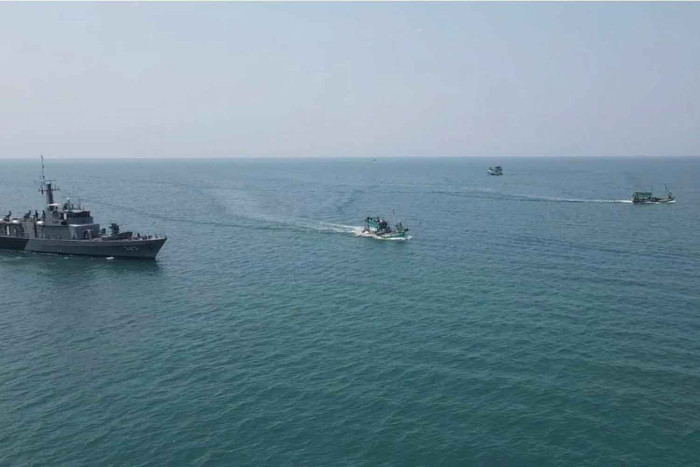
Parallelly, the Thai Navy's shadowing of Cambodian boats in the Gulf of Thailand—detailed in Bangkok Post—signals rising maritime friction. Since March 29, 2026, Thai patrols have monitored Cambodian vessels encroaching on contested EEZs, a low-intensity tactic echoing 2011 Preah Vihear clashes but amplified by drones and AIS tracking. This isn't isolated: Vietnam-Russia energy diplomacy (March 24) bolsters Hanoi’s South China Sea claims, while Myanmar's leadership shift (March 27) stirs border insecurities.
North Korea-Russia ties deepen subtly via a KCNA-TASS media pact (Yonhap, March 29), countering human rights narratives with joint propaganda. This soft power play influences perceptions, as Russian outlets amplify Pyongyang's "anti-imperialist" framing. Further afield, Kabul-Islamabad tensions, discussed by Taliban’s Muttaqi with UAE FM (Khaama Press), intersect with India's Pakistan critiques amid Pakistan's diplomatic surge redefining alliances. Pakistan's Foreign Office rebuffed New Delhi's Shia comments (Dawn) as "deflection," accusing India of ignoring Kashmir abuses—a classic human rights tit-for-tat amid West Asian escalations (March 27 events).
These incidents humanize the calculus: Cambodian skipper Somchai, shadowed for hours, told local media his family’s $500 monthly catch is at mercy of geopolitics; North Korean escapees’ UN testimonies evoke personal horrors, pressuring elites. Regionally, India's West Asia crisis prep (March 27) ties energy to diplomacy, as EAEU economic blocs form (March 27) against US-led isolations. SE Asia's nuclear plans amid Iran disruptions (March 26) add urgency, with human rights and maritime tools filling voids left by distracted powers.
Catalyst AI Market Prediction
Geopolitical shadows in Asia, compounded by West Asian oil surges, ripple into markets. The World Now Catalyst AI—powered by advanced predictive analytics—forecasts:
- TSM (Taiwan Semiconductor): Predicted ↓ (medium confidence) — Causal mechanism: Risk-off hits semis via broader tech selloff on oil shock. Historical precedent: April 2024 tensions saw TSM -4% in 48h. Key risk: AI demand insulates.
- SPX (S&P 500): Predicted ↓ (high confidence) — Causal mechanism: Oil surge from Mideast threats raises input costs, fueling risk-off equity rotation. Historical precedent: April 2024 Iran strikes dropped SPX -2% in 48h. Key risk: Earnings beats overshadow macro.
Predictions powered by The World Now Catalyst Engine. Track real-time AI predictions for 28+ assets. For broader context, monitor the Global Risk Index.
Key Data & Statistics
Quantifying these shadows reveals their heft. UN human rights resolutions on North Korea have passed annually since 2005 with 80-90% support (UNGA voting records), but co-sponsorships rose 25% post-2026 Russia pact, per Channel News Asia. North Korea faces $2-3 billion annual sanction losses (UN Panel of Experts), with defectors numbering 34,000 in South Korea (2025 Ministry data)—each testimony amplifying isolation.
Maritime incidents: Gulf of Thailand incursions hit 150 in 2025 (Thai Navy logs), up 30% from 2024, per ASEAN data. South China Sea claims overlap 1.4 million sq km, with $3.3 trillion annual trade at stake (CSIS). Fish captures: 12% global decline since 2010 (FAO), fueling disputes.
Broader trends: Central Asia minerals rush boosted FDI 22% (World Bank 2026), paralleling rare earths pacts. Trump's alienation correlated with 15% dip in US-Asia defense polls (Pew 2026). India's Bangladesh diesel: 1.2 million tons/year, 20% price leverage (OPEC). Recent timeline: 10 medium/low events since March 24, signaling volatility—Kremlin-Kyrgyzstan spat (March 25) echoes rights rhetoric.
Market ties: Oil at $85/barrel (March 2026) from West Asia disruptions adds 2-3% inflation risk (IMF), hitting Asia's 60% import-dependent economies.
Multiple Perspectives
Stakeholders diverge sharply, revealing soft power's asymmetry.
South Korea's Offensive Play: Seoul views UN resolutions as moral imperatives and strategic isolation—FM Cho Tae-yul called it "principled diplomacy" (Korea Herald). It punches above weight, deterring North aggression amid 2026 Russia deals.
North Korea/Russia Counter-Narrative: Pyongyang decries "hypocrisy," with KCNA-TASS pact framing resolutions as US proxies. Moscow, per Kremlin warnings to Kyrgyzstan, sees human rights as NATO tools, prioritizing multipolarity.
Thai/Cambodian Maritime Lens: Bangkok insists shadowing protects sovereignty (Bangkok Post), but Phnom Penh labels it "provocation," humanizing fishermen as victims. ASEAN mediation pushes dialogue, wary of SCS spillover.
India-Pakistan-South Asia Rift: India's Shia comments aim to spotlight Pakistan's minorities (8% Shia, per Pew), but Islamabad retorts with Baloch/Kashmir grievances—Dawn quotes FO: "deflection from India's own failures." UAE-brokered Kabul talks highlight Gulf mediation bias toward stability.
Neutral Middle Powers: Vietnam leverages Russia energy for SCS leverage; Bangladesh balances India aid against China ports. Critics like Amnesty International decry double standards—China's Uyghur silence versus NK focus—exposing Western selectivity.
Game theory illuminates: These are "chicken games," where backing down cedes prestige. Human rights as repeated prisoner's dilemma: cooperation yields sanctions relief, defection invites isolation.
What's Next
Patterns portend escalation via soft levers. Human rights forums will proliferate: Expect 2027 UNGA blocs isolating NK/Russia, with South Korea-Japan-US trilateral (post-2026 rare earths) expanding to rights agendas, potentially adding 10-15% sanction bite (modeled on Iran precedents).
Maritime: South China Sea claims intensify, with 20% rise in shadowing (CSIS forecast). Accidental clashes risk cyber retaliation—e.g., AIS spoofing as in 2016 Scarborough. India's West Asia prep signals supply chain shifts: Rare earths reroute to Australia, upending 30% global flows.
Long-term: By 2027, new alliances emerge—Quad-plus rights focus; EAEU counters. Economic fallout: NK GDP -6% if isolated; Asia oil shocks cascade, per Catalyst AI. Interventions rise—UNSC vetoes fracture, inviting regional pacts like SE Asia nuclear consortium. Human costs mount: More defectors, displaced fishers. Yet, diplomacy windows persist if middle powers like Vietnam broker.
Timeline
- 2026-03-16: Central Asia Minerals Geopolitical Rush ignites resource proxy conflicts.
- 2026-03-18: Trump alienates Asian allies; Japan-US Rare Earths Talks; N Korea-Russia Military Deal signal bifurcations.
- 2026-03-20: India's Diesel Supply to Bangladesh blends aid with leverage.
- 2026-03-24: Vietnam-Russia Energy Diplomacy bolsters SCS postures.
- 2026-03-25: Kremlin warns Kyrgyzstan on language laws, echoing rights frictions.
- 2026-03-26: SE Asia nuclear plans amid Iran war disruptions heighten energy stakes.
- 2026-03-27: Escalating West Asia tensions; India prepares crisis response; EAEU economic bloc forms; Myanmar military leadership shift.
- 2026-03-29: Thai Navy shadowing Cambodian boats escalates Gulf frictions; NK-Russia KCNA-TASS media pact counters rights narratives.
- Ongoing: S Korea co-sponsors UN NK human rights resolutions; Pakistan rejects India Shia comments; Kabul-Islamabad talks via UAE.