Over 100,000 Displaced as Yemen Fighting Escalates on West Coast in Most Dangerous Countries
Over 100,000 people have been internally displaced in Yemen as fighting escalates between Iran-backed Houthis and the Saudi-backed government, with more than 2,400 fleeing to Djibouti in one of the most dangerous countries.
Mass Displacement on Yemen's West Coast
The Office of the United Nations High Commissioner for Refugees announced on Tuesday that over 100,000 people have been internally displaced as fighting continues to escalate along the West Coast. [1] The International Organization for Migration warned on Sunday that over 85,000 people had been displaced in Yemen, including 82,164 since the beginning of September alone, according to the Displacement Tracking Matrix. [1] Taiz province remains the hardest hit, with 9,280 households, or nearly 56,000 people, displaced from its districts. [1] Lahj follows, with 19,000 of its residents forced to flee, the majority from Al-Mudharibah district. [1] These figures reflect the scale of movement triggered by renewed clashes between Houthi fighters and Saudi-backed Yemeni government forces. [1]
Refugee Influx Strains Djibouti
More than 2,400 people fleeing Yemen’s escalating civil war have reached the northern shores of Djibouti so far, according to the UNHCR. [1] More than 60 percent of those reaching Djibouti are women, children or elderly men arriving after dangerous sea journeys. [1] New arrivals are being transported to the Markazi site in Obock, where they receive food and water, though UNHCR Representative in Djibouti Sandrine Desamours warned that the site only has room for around 5,000 more refugees. [1] She added that the response is already under pressure and that more support is needed before more families arrive and needs outpace capacity to assist them. [1] Qatar Charity has activated an emergency humanitarian response to support Yemeni refugees arriving in Djibouti as renewed fighting continues to force families across the Bab al-Mandab Strait. [2] IOM Director General Amy Pope stated that behind every number is a family who has lost everything and called on donors to scale up support now for those arriving in Djibouti and the communities in Obock receiving them. [1] Djibouti’s finance minister, Ilyas Dawaleh, said on Sunday that the situation was becoming increasingly difficult for the country despite its unwavering commitment to humanitarian resources. [1]
Humanitarian Access Challenges
Humanitarian access remains a major challenge, with insecurity, damaged roads, telecommunications disruptions and movement restrictions affecting operations, according to a UNHCR statement. [1] IOM and other UN partners have provided support to Djiboutian authorities, who have mobilized the Navy, army, police and health services for the displaced masses. [1] UNHCR Representative Sandrine Desamours noted that people are arriving after a difficult sea journey, many exhausted, distressed and carrying what little they could take with them. [1] The UN official said they were expecting in excess of 10,000 arrivals in the coming days and weeks. [1] These obstacles continue to limit the reach of aid groups responding to the new wave of displacement inside Yemen and across the border. [1]
Taiz Prepares for Potential Siege
A state of general alert and mobilisation has been declared in Yemen's Taiz province amid escalating fighting and fears that the Houthis could impose a full siege on the province. [3] The Supreme Council of Popular Resistance in Taiz has called for general mobilisation across all government-held provinces and districts. [3] Taiz Governor Nabil Shamsan discussed preparations with dignitaries from Al-Shamayatayn district, stressing the importance of strengthening internal unity. [3] Residents have also expressed concern about disruptions to supply lines, while prices of individual weapons and equipment have risen amid increased demand. [3] Arms and ammunition markets across Taiz have seen a notable increase in demand, with residents buying personal weapons and ammunition at their own expense. [3] Mohammed Al-Ezzi, secretary of the Nasserist Unionist People's Organisation in Mishr'a and Hadnan district, told The New Arab that there was an unprecedented national consensus among Taiz's political and social groups in support of armed popular mobilisation alongside the national army. [3] Journalist Wisam Mohammed told The New Arab that the threat of a siege had pushed political and social groups to put their differences aside. [3] Mahyoub Saif, a 60-year-old resident interviewed by The New Arab in the market, said residents did not want to repeat what happened in 2015 and described selling family gold to buy weapons. [3]
Strategic Context of the Fighting in Most Dangerous Countries
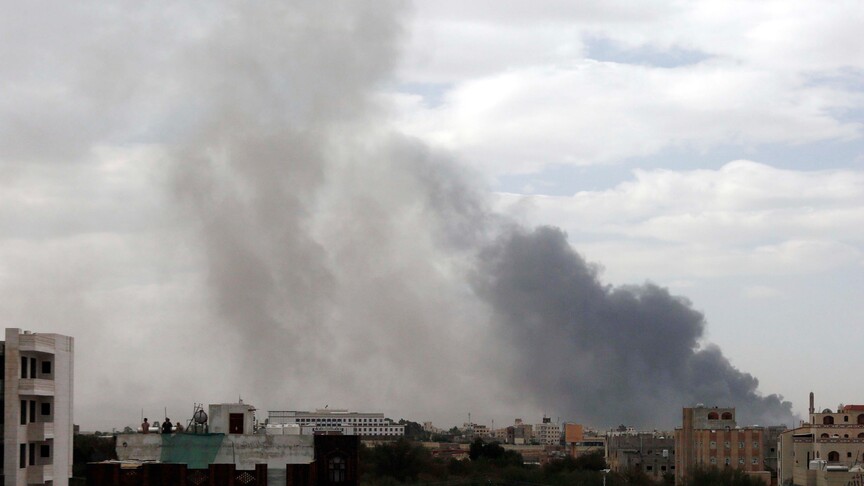
The latest escalation comes as the Houthis seek to seize control of the strategic Bab al-Mandeb Strait, a vital chokepoint for global oil and commodities shipping. [1] Clashes have been reported in the past 24 hours to the east, west and south of Taiz, with fierce fighting around the air defence axis and western and southern Taiz. [3] Government forces have thwarted Houthi infiltration attempts in Jabal Habashi and Bani Omar. [3] Government aircraft also carried out strikes targeting Houthi reinforcements and vehicles on Al-Siteen road and around Al-Kadaha and Al-Ahkloom. [3] The fighting was accompanied by reciprocal artillery fire and repeated closures of the eastern Al-Qasr crossing following Houthi shelling. [3] Taiz has significant political and geographical importance and is considered the main obstacle to Houthi expansion. [3] The Houthis are seeking to impose a complete siege by taking control of the only southern route linking Taiz with the interim capital Aden. [3] Around four million people live in Taiz and residents fear that a siege would worsen already severe humanitarian and economic conditions. [3]
What to watch next: UNHCR and IOM partners will continue monitoring arrivals at the Markazi site in Obock while expecting in excess of 10,000 more people in the coming days and weeks, with Qatar Charity maintaining its emergency response plan through November 2026.