Oil Price Forecast: Strait of Hormuz Tensions Realigning Global Alliances in the Shadow of Escalating Tensions
Introduction: The Unseen Shifts in Global Power Dynamics
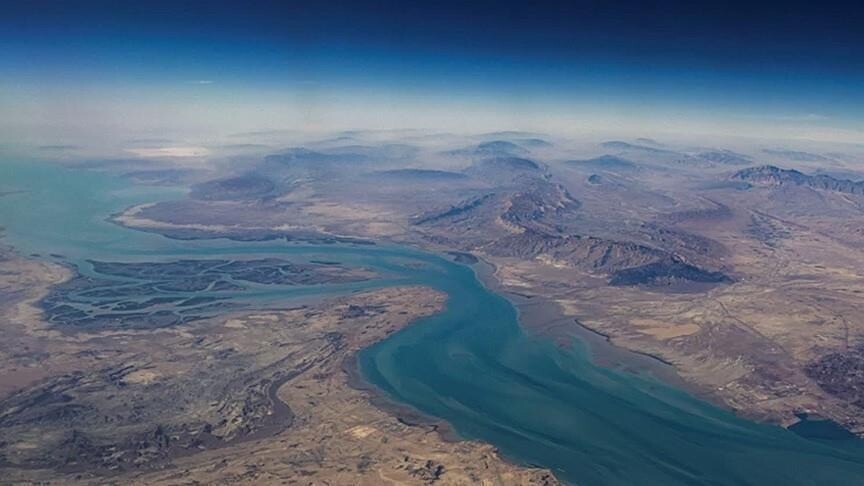
The Strait of Hormuz, a narrow waterway threading between Iran and Oman, carries one-fifth of the world's oil—about 21 million barrels daily—making it the most vital chokepoint in global energy trade. This oil price forecast amid escalating Strait of Hormuz tensions underscores how disruptions here could send shockwaves through global markets. But beyond its role as an economic artery, the strait is emerging as a geopolitical crucible, forging unexpected alliances among non-Western powers long overshadowed in Western-centric narratives. As tensions escalate in early 2026, with Iran reportedly mining the strait and vowing a "new order," the crisis transcends the familiar US-Iran binary. Instead, it reveals a realignment where Gulf states, Russia, and China are positioning themselves as mediators and stakeholders, potentially birthing multilateral frameworks independent of Washington or Tehran. For more on oil price forecast amid US-Iran tensions, check our related analysis.
The current standoff crystallized rapidly. On March 11, 2026, the US threatened strikes over Iranian mines in the strait. Iran responded on March 12 with vows of retaliation. By March 19-20, US Marines planned operations while boosting oil supplies to deter shortages. A brief concession came on March 26 when Iran offered access to Spain, hinting at selective diplomacy. Recent developments, including Qatar's LNG vessels retreating on April 6 amid threats, Pakistan's two-stage truce proposal (demanding an immediate ceasefire before addressing broader US-Israel conflicts), and Iran's condition for peace—a potential "toll" on Hormuz transits that could indefinitely spike oil prices—have intensified the drama. President Trump's stark warning of "hell" if the strait remains shut, coupled with both sides receiving Pakistan-brokered plans for an immediate ceasefire, underscores a deadline looming in mid-April. According to the Global Risk Index, such chokepoint risks rank among the highest for 2026 energy security.
This article's unique lens spotlights underrepresented dynamics: how non-Western actors like Pakistan, Qatar, Oman, Russia, and China are maneuvering to reshape alliances. Far from passive observers, these powers are leveraging the crisis to diversify economies, secure trade routes, and challenge US dominance, fostering a multipolar order where Gulf states assert autonomy through forums like the Shanghai Cooperation Organization (SCO).
Oil Price Forecast: Catalyst AI Market Prediction
The World Now's Catalyst AI engine, analyzing real-time data from the Hormuz tensions, predicts significant market ripples in this oil price forecast. Oil (CL1!) is forecasted to rise with high confidence, driven by direct supply threats akin to the 2019 Aramco attacks that spiked prices 15% in days; key risk is non-ME output ramps. The USD index eyes gains (high confidence) as a safe-haven amid risk-off flows, mirroring 2022 Ukraine's 2% DXY surge. Equities like the S&P 500 (SPX) face downside (high confidence) from CTA-driven selling, similar to Ukraine's initial 3% drop. Bitcoin (BTC) and cryptos (ETH, SOL, XRP) are predicted to decline (medium/low confidence) via liquidation cascades, echoing 2022's 10% BTC plunge. Safe havens like CHF strengthen (medium), while EUR weakens. Track these via the Catalyst AI — Market Predictions dashboard for live updates.
| Asset | Prediction | Confidence | Key Causal Mechanism | |-------|------------|------------|----------------------| | OIL | + | High | Supply threats from Hormuz | | USD | + | High | Safe-haven flows | | SPX | - | High | Risk-off equities | | BTC | - | Medium | Crypto liquidations | | CHF | + | Medium | Safe-haven bid | | EUR | - | Medium | Risk-off weakness |
Predictions powered by The World Now Catalyst Engine. Track real-time AI predictions for 28+ assets.
Historical Context: Patterns of Escalation and Alliance Formation
The 2026 timeline mirrors a familiar pattern of rapid escalation in the Strait of Hormuz, where crises have historically catalyzed alliance shifts. Beginning March 11 with US threats over mines, Iran's March 12 vows escalated rhetoric. US Marine plans on March 19 and oil supply boosts on March 20 signaled military posturing, tempered only by Iran's March 26 concession to Spain—allowing select European transits amid broader closures. Recent events amplify this: April 5 US strike threats, April 3 tanker crossings under tension, French ship exits, and Iran-Oman monitoring plans.
These echo the 1980s Tanker War during the Iran-Iraq War (1980-1988), when Iraq and Iran attacked over 500 vessels, prompting US reflagging of Kuwaiti tankers and Soviet overtures to Gulf states. That era saw temporary realignments: non-aligned Oman mediated, while China supplied arms to both sides, laying groundwork for later partnerships. Similarly, the 1951 Anglo-Iranian Oil Company nationalization crisis—Britain's blockade of Abadan—drove Iran toward Soviet overtures and nascent non-aligned coalitions at the 1955 Bandung Conference, where Asian-African nations coalesced against Western dominance.
In both cases, Hormuz disruptions (handling 20-30% of global oil then) forced Gulf monarchies like Saudi Arabia and Kuwait to diversify alliances, courting USSR arms deals despite ideological rifts. Today's timeline parallels this: Pakistan's April 6 truce—Stage 1 ceasefire, Stage 2 broader peace—positions Islamabad as a neutral broker, much like India's 1980s mediation bids. Iran's Revolutionary Guards' "new order" plan evokes Tanker War "exclusion zones," but with a twist: invitations to Russia and China for joint patrols, signaling coalition-building. These patterns illustrate how Hormuz chokepoints prompt non-Western powers to form pragmatic blocs, turning vulnerability into leverage for economic diversification—Gulf states then pivoted to Asian markets; now, they eye SCO and BRICS. For insights on BRICS nations as peacemakers, see our related deep dive.
Current Dynamics: Emerging Alliances in the Hormuz Standoff
Underreported in the US-Iran focus are pivotal non-Western maneuvers. Qatar's April 6 retreat of loaded LNG vessels—vital for Europe's post-Ukraine supplies—signals Gulf caution, prioritizing assets over US-aligned escalation. Pakistan's plan, deemed a "critical opportunity" by Chinese diplomats, insists Iran won't reopen Hormuz under temporary truces alone, demanding guarantees against Israeli strikes. Oman’s monitoring pact with Iran on April 3 underscores Gulf hedging: Muscat, a traditional mediator, balances Tehran ties with Western security pacts.
Russia and China loom large. Tehran has reportedly shared peace plans with Moscow, per sources, while Beijing views Pakistan's initiative favorably amid its Belt and Road stakes in Gwadar port. The SCO—encompassing China, Russia, Iran, Pakistan—offers a ready multilateral forum; recent summits discussed "Eurasian security" including Hormuz. Qatar's LNG pivot (away from strait risks toward pipelines) and UAE's IMEC corridor pursuits highlight diversification: Gulf states, exporting 20 million barrels daily via Hormuz, seek alternatives to evade tolls or blockades. Explore China's techno-military frontier and its oil price forecast implications.
Human stories underscore stakes: Qatari crews on retreating vessels face delays impacting families in Doha, while Omani fishermen navigate mined waters, their livelihoods collateral in great-power games. These dynamics herald regional coalitions, with Gulf monarchies leveraging tensions to negotiate autonomy—reduced US basing, boosted Russian energy deals—independent of binaries.
Original Analysis: The Strategic Implications of Alliance Realignment
Hormuz tensions could accelerate Sino-Russian-Gulf partnerships, challenging US naval hegemony (Fifth Fleet in Bahrain). China's January 2026 Djibouti base expansion eyes Indian Ocean extensions; a Hormuz role—perhaps joint patrols—secures 40% of its oil imports. Russia, post-Ukraine sanctions, gains via discounted Iranian oil swaps and potential Hormuz energy corridors, mirroring 1980s arms-for-oil trades. Gulf benefits are profound: Saudi-Qatar diversification via Vision 2030/NEOM reduces oil reliance (Hormuz exposes 80% exports), funneling LNG to Asia.
The India-Middle East-Europe Corridor (IMEC), fast-tracked post-2023 G20, bypasses Hormuz via UAE-Saudi rail to Haifa, offering non-Western powers a US-India alternative to China's Maritime Silk Road. Yet, critique peace efforts: Pakistan's plan, while pragmatic, risks US rejection (Trump's "hell" vow), inadvertently bolstering blocs. Iran's toll—effectively a transit fee—could raise oil $10-20/barrel indefinitely, per El Pais, pricing out Europe and forcing diversification. If US-centric talks fail, this catalyzes SCO-led security, with Chinese PLAN vessels in Gulf by 2027.
Limitations abound: Gulf monarchies fear Iranian overreach, Russia/China lack US projection. Still, original insight: Hormuz fosters "minilateralism"—ad-hoc Gulf-SCO pacts—reshaping norms, as seen in April 3 Iran-Oman deal. For ordinary Iranians or Emiratis, this means stabilized trade but heightened proxy risks, humanizing the multipolar shift.
Predictive Outlook: Future Scenarios for Hormuz and Global Order
Three scenarios emerge by mid-2027, probabilities informed by historical precedents and current momentum, factoring into our broader oil price forecast.
-
Successful Ceasefire and Integrated Multilateralism (45% likelihood): Pakistan's plan succeeds pre-Trump deadline, with Iran lifting tolls for SCO guarantees. Outcome: New framework by Q3 2026, integrating Gulf states into expanded SCO observer status. Long-term: IMEC/IMEC trade booms, oil stabilizes at $80/barrel; global norms shift to "consultative maritime security." Precedent: 1988 UN ceasefire ended Tanker War, birthing GCC unity.
-
Escalation to Multipolar Framework (35% likelihood): Deadline passes; limited US strikes prompt Russian arms/Chinese mediation. By 2027, multipolar Hormuz security: Chinese naval rotations, Russian energy pacts stabilize flows but challenge West—oil at $100+, BTC/SPX dips per Catalyst AI. Trade reroutes via Arctic LNG or Africa; precedents: 2019 Soleimani crisis spurred China-Iran 25-year deal.
-
Prolonged Stalemate with Broader Conflict (20% likelihood): Failed talks drag into 2027, drawing Israel/Lebanon; risk-off spikes OIL/USD as predicted. Rise of alt-energy (Saudi green hydrogen) accelerates, reshaping disputes like South China Sea.
Forecasts: 30% trade reroute from Hormuz by 2030; emerging alliances normalize "non-interference" norms globally.
What This Means: Looking Ahead in the New Geopolitical Landscape
The Strait of Hormuz illuminates alliance realignment: from Pakistan's brokerage to Gulf hedging and Sino-Russian inroads, non-Western powers are crafting independent frameworks amid US-Iran shadows. Key insights—historical parallels, economic pivots, multipolar potentials—reveal a turning point, where crises birth balanced order or division. This oil price forecast signals volatility ahead, but also opportunities for diversified energy strategies and diplomatic innovations.
Proactive diplomacy is imperative: US engagement with SCO, Gulf-led talks to avert stalemate. Forward: Hormuz could herald equitable globalism, where emerging voices temper binaries, securing seas for fishermen, traders, and families alike. Watch Trump's deadline, Pakistan follow-through, and Chinese naval signals—the multipolar tide rises. Monitor the Global Risk Index for ongoing updates on these evolving risks.
Catalyst AI Market Prediction
Our AI prediction engine analyzed this event's potential market impact:
- SPX: Predicted - (medium confidence) — Causal mechanism: Boeing incident sparks aerospace sector sell-off with contagion to broad indices via safety concerns. Historical precedent: 2018-2019 Boeing 737 MAX crashes led SPX -5% in initial reaction. Key risk: incident downplayed by FAA probe.
- USD: Predicted + (medium confidence) — Causal mechanism: Global risk-off from Middle East geo tensions and disasters drives safe-haven flows into USD as primary reserve currency. Historical precedent: Similar to 2019 US-Iran tensions (Soleimani) when DXY rose 1% intraday. Key risk: swift de-escalation in Hormuz reduces risk-off urgency.
- TSM: Predicted - (low confidence) — Causal mechanism: Asia disaster risks (Fuji, Korea won) heighten supply chain fears for semis. Historical precedent: 2011 Fukushima caused Japanese indices -10% in a week, spilling to semis. Key risk: no actual eruption disrupts.
- SOL: Predicted - (low confidence) — Causal mechanism: Altcoin beta to BTC risk-off selling from geo headlines. Historical precedent: Feb 2022 Ukraine saw SOL -15% in 48h. Key risk: meme-driven rebound. Calibration: reduce given 34.1x overestimate.
- OIL: Predicted + (high confidence) — Causal mechanism: Direct supply threats from Saudi intercepts, Hormuz, Russia drone tighten physical balances. Historical precedent: 2019 Aramco drones spiked oil +15% in days. Key risk: no follow-through attacks.
- BTC: Predicted - (medium confidence) — Causal mechanism: Risk-off sentiment from geo tensions triggers crypto liquidation cascades as high-beta risk asset. Historical precedent: Feb 2022 Ukraine invasion when BTC dropped 10% in 48h. Key risk: dip-buying by institutions if oil stabilizes. Calibration adjustment: reduce magnitude given 11.9x overestimate history.
- XRP: Predicted - (low confidence) — Causal mechanism: Crypto risk-off cascades hit XRP as utility token. Historical precedent: Feb 2022 Ukraine BTC-led drop hit XRP -12% in 48h. Key risk: regulatory positive surprise.
- ETH: Predicted - (medium confidence) — Causal mechanism: Risk-off liquidations amplify ETH beta to BTC. Historical precedent: 2022 Ukraine ETH -8% initial drop. Key risk: staking inflows.
- CHF: Predicted + (medium confidence) — Causal mechanism: Safe-haven bid strengthens CHF amid geo risk-off. Historical precedent: 2019 US-Iran tensions CHF +1% vs EUR. Key risk: ECB hawkishness.
- EUR: Predicted - (medium confidence) — Causal mechanism: Risk-off weakens EUR vs safe havens amid Baltic/Ukraine tensions. Historical precedent: 2022 Ukraine EUR -5% in week. Key risk: ECB rate surprise.
Predictions powered by The World Now Catalyst Engine. Track real-time AI predictions for 28+ assets.
Further Reading
- Oil Price Forecast Amid Syria's Geopolitical Labyrinth: Unpacking the Economic Undercurrents of Emerging Alliances and Trade Routes
- Oil Price Forecast Amid Rare Earth Realities: How US Mineral Dependencies and Domestic Divisions are Reshaping Geopolitics with Iran
- Oil Price Forecast Amid Iran's Cyber Shadow War: The Untapped Digital Battleground in US Geopolitics






/file/attachments/orphans/PeterFab-Bozell-demarched2_299113.jpg)