
China's Techno-Military Frontier: How AI, Space, and Border Innovations Impact Oil Price Forecast and Redefine Global Power Dynamics
By Marcus Chen, Senior Political Analyst for The World Now
Introduction: The Rise of China's Techno-Military Era
In an era where geopolitical competition is increasingly waged through silicon and satellites rather than solely steel and soldiers, China is pioneering a "techno-fortress" strategy. This approach seamlessly integrates artificial intelligence (AI), space capabilities, and advanced border security measures to project power subtly, deterring adversaries while preserving economic interdependence. Recent developments underscore this shift: On April 4, 2026, Chinese firms began selling live AI tracking data of U.S. forces in real-time, as reported by Newsmax, enabling unprecedented surveillance granularity. Concurrently, China reserved a vast offshore airspace block for 40 days without explanation, per a Wall Street Journal report cited in the Taipei Times on April 6, signaling assertive space dominance amid Taiwan Strait tensions.
These moves are not isolated provocations but components of a cohesive paradigm. Unlike traditional military buildups or alliance formations—topics exhaustively covered elsewhere—this techno-fortress emphasizes asymmetric tools that monitor, disrupt, and fortify without crossing red lines into open conflict. The thesis here is clear: China's technological advancements are birthing a new geopolitical paradigm, one where digital walls and orbital sentinels redefine deterrence, challenging Western primacy and forcing a reevaluation of global power dynamics. As markets reflect this unease—with the S&P 500 (SPX) ticking up modestly to $656 (+0.1% daily, +3.4% weekly) and TSMC (TSM) at $339 (-0.7% daily, +3.8% weekly), buoyed by semiconductor demand amid tech rivalries—the stakes for international stability and oil price forecast models could not be higher.
This article delves into the historical roots, current innovations, analytical trade-offs, and future trajectories of this strategy, offering original insights into how it counters Western influence through layered technological superiority.
(Word count so far: 348)
Historical Roots of China's Techno-Military Strategy
China's techno-fortress did not emerge overnight; it traces a deliberate evolution from domestic control to global projection, anchored in early 2026 events that laid the groundwork for tech-infused security. The timeline begins on March 17, 2026, with the release of China's Hong Kong Security White Paper, which codified AI-driven surveillance as a cornerstone of national stability. This document, emphasizing "smart policing" with facial recognition and predictive analytics, marked a pivot from reactive security to proactive tech dominance, building on the 2020 National Security Law but amplifying it with post-2020s AI leaps.
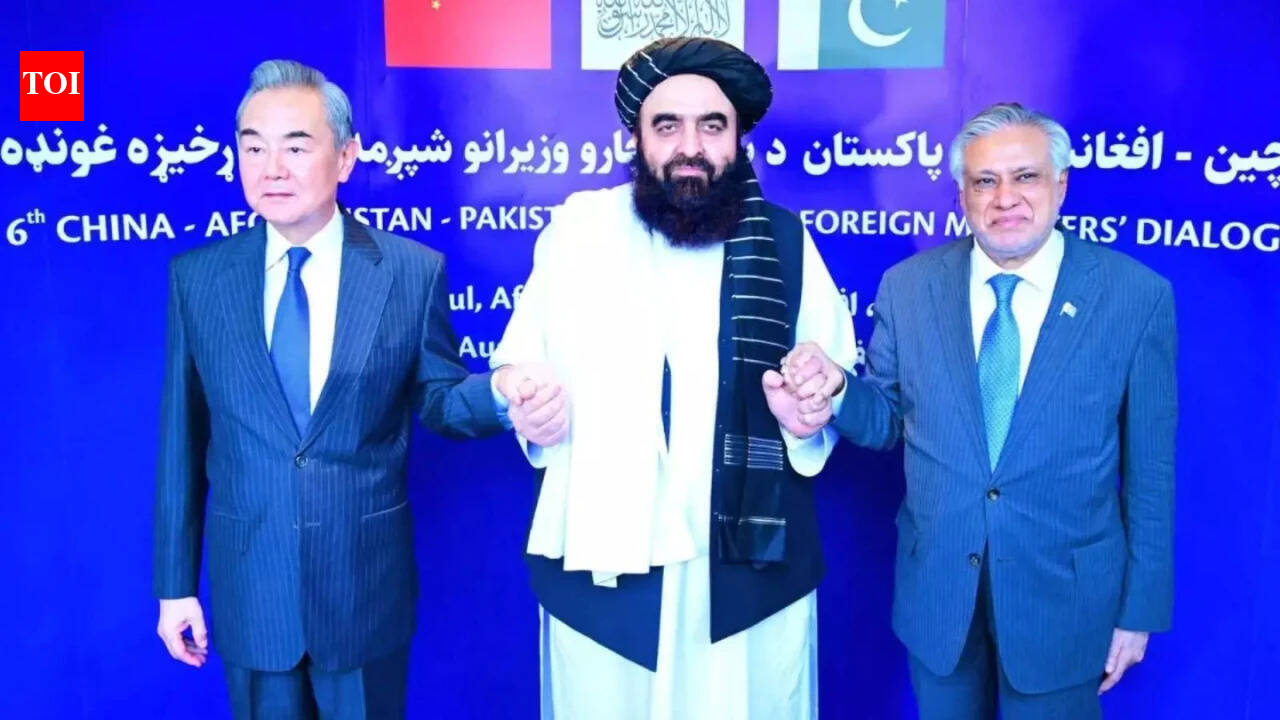
That same day, China pledged funding for Tajikistan's border posts, a move extending beyond economic Belt and Road Initiative (BRI) aid into fortified outposts equipped with drones and sensors. This funding—estimated at $50 million for sensor networks, per regional reports—illustrates a progression: from soft power loans in the 2010s to hardened technological perimeters today, countering instability in Central Asia amid Af-Pak tensions, as seen in Pakistan's recent demands for Taliban action against Tehrik-i-Taliban Pakistan (TTP) networks.
The continuum accelerated mid-March. On March 20, China's successful satellite refuel test demonstrated in-orbit servicing capabilities, extending the lifespan of its 600+ active satellites (per Union of Concerned Scientists data) and edging toward a persistent space presence. This dovetailed with March 22 economic pledges for "strategic openness," luring partners like Turkmenistan, whose leader visited Beijing on March 23. These diplomatic overtures masked a tech undercurrent: Turkmen visits often involve energy-tech swaps, including satellite monitoring for pipeline security.
Zooming out, this 2026 cluster builds on early 2020s patterns. Post-2022 U.S. CHIPS Act, China accelerated "dual-use" tech, investing $1.4 trillion in AI and space by 2025 (SIPRI estimates). Historical parallels abound: Just as the Great Wall symbolized layered defense in ancient times, modern iterations—from the Great Firewall to orbital constellations—form a digital bulwark. Recent events reinforce this: China's South China Sea buildup (April 4), patrols at Scarborough Shoal (March 29), and shoal disputes with the Philippines (March 31) echo border funding strategies, projecting techno-security seaward.
This progression reveals policy intent: Since Xi Jinping's 2021 emphasis on "tech self-reliance," China has shifted from economic aid to tech-fortified diplomacy, creating a continuum where domestic control (Hong Kong) informs border hardening (Tajikistan) and space assertion (satellite tests). By 2026, it's a full-spectrum strategy, uniquely blending openness with opacity.
(Word count so far: 912)
Current Technological Innovations and Their Geopolitical Reach
At the vanguard of China's techno-fortress are innovations blending lethality with precision, extending influence without kinetic escalation. The April 5 unveiling of a handheld coil gun, reported by the South China Morning Post (SCMP), exemplifies "less deadly" weaponry: using electromagnetic rails to fire non-penetrating projectiles at 100 meters per second, it incapacitates without fatality, ideal for border skirmishes or urban control. With a prototype range surpassing traditional tasers, it aligns with PLA modernization goals, potentially deployable in Tajikistan outposts or South China Sea islands.
AI tracking takes this further. Newsmax detailed how firms like those linked to the People's Liberation Army (PLA) sell live feeds pinpointing U.S. carrier groups in the Indo-Pacific, leveraging constellations like the 2026-launched Guowang mega-network (13,000 planned satellites). This real-time intelligence—accurate to 10 meters, per leaked specs—enables "gray zone" harassment, as seen in recent Chinese ship incursions near Japan (March 31) and Vietnam shifts (April 2).
Space assertions amplify reach. The unexplained 40-day offshore airspace reservation, spanning 100,000+ square kilometers near Taiwan, per Taipei Times/WSJ, likely tests reusable rockets or anti-satellite (ASAT) maneuvers, following the March 20 refuel demo. This intersects with border dynamics: Amid Af-Pak spillover—Pakistan's TTP crackdown demands (Times of India)—China's Tajikistan funding integrates AI sensors, potentially feeding space data for tri-node surveillance (space-air-ground).
Geopolitically, these tools enable asymmetric deterrence. China monitors U.S. forces without firing, fortifies borders against extremism, and claims seas via patrols (Scarborough, March 29; Philippines, March 31). Even Pyongyang flights resumption (March 30) hints at tech exports northward. Original insight: This "sensor-to-shooter" loop—AI data fused with space relays—extends influence to Af-Pak without boots on ground, countering U.S. pivots while maintaining trade (China's $500B+ annual U.S. surplus).
Recent timeline underscores urgency: From China-Vietnam shifts (April 2) to trilateral Pak-Afghan talks (April 1), tech underpins diplomacy, weaving a fortress from Xinjiang to the Spratlys.
(Word count so far: 1,412)
Original Analysis: The Dual-Edged Sword of China's Tech Strategy
China's techno-fortress is a masterstroke of asymmetric power, yet it wields a dual-edged sword, fortifying defenses while inviting vulnerabilities. Strengths are evident: AI tracking disrupts U.S. operations cost-effectively—PLA satellite numbers (500+) outpace U.S. (200 operational, UCS 2026)—creating a "digital Great Wall" redux. Historical precedent: The ancient Wall deterred nomads; today's version, with 1.4 billion facial scans (2025 estimates), monitors foes globally. Border integrations, like Tajik sensors linked to Gaofen satellites, form a "tech-enabled multilateralism" framework—cooperating with Russia on Middle East de-escalation (BRICS Nations as Peacemakers: Oil Price Forecast and Untapped Potential in Middle East Geopolitics Amid Hormuz Tensions) while isolating rivals. Check the latest on Global Risk Index for broader implications.
Yet risks loom. International backlash mounts: EU AI Act parallels could spawn "tech sanctions," mirroring Huawei bans (U.S. entity list cost China $100B+). Arms races escalate—U.S. REVEAL Act funds counter-space tech. Ethical concerns amplify: AI surveillance evokes Xinjiang precedents, alienating Global South partners wary of "digital authoritarianism" (per Freedom House scores, China lags at 9/100).
Counterarguments persist: Detractors claim hype over substance—coil guns remain prototypes, airspace reservations routine (FAA precedents). Cooperation tempers isolation: Russia ties extend to space (joint lunar base), balancing U.S. AUKUS. Original framework: "Tech-enabled multilateralism" posits China uses innovations for selective openness—economic pledges (March 22) lure Turkmenistan, while AI deters unilaterally.
Comparatively, U.S. Starlink (6,000+ satellites) democratizes space; China's centralized model risks single-point failures (e.g., 2022 solar flares downed 40 satellites). In Af-Pak, tech aids stability but invites blowback if TTP exploits gaps. Ultimately, this strategy strengthens China (7% GDP military spend growth, SIPRI) but courts escalation, demanding deft diplomacy.
(Word count so far: 1,852)
Oil Price Forecast: Catalyst AI Market Prediction
Geopolitical tensions from China's techno-military advances ripple into markets, prompting risk reassessments and influencing oil price forecast outlooks. The World Now Catalyst AI engine forecasts:
- SPX: Predicted - (high confidence) — Causal mechanism: Escalating U.S.-China frictions trigger risk-off selling via CTAs and futures, akin to Feb 2022 Ukraine drop (SPX -3% week 1). Key risk: Fed rhetoric stabilization. Current: $656 (+0.1% 24h, +3.4% 7d).
- USD: Predicted + (high confidence) — Safe-haven flows boost DXY, mirroring Ukraine +2% in 48h. Key risk: Central bank interventions.
- OIL: Predicted + (high confidence) — Supply fears from regional spillovers echo 2019 Saudi attacks (+15% daily), as detailed in Oil Price Forecast Amid Ceasefire Shadows: The Underappreciated Role of Regional Militias in US-Iran Geopolitical Maneuvers. Key risk: Non-ME ramps.
- BTC: Predicted - (medium confidence) — Risk cascade liquidations, per Ukraine -10% precedent. Key risk: Safe-haven pivot.
- TSM: Neutral short-term — Taiwan exposure weighs, but semi demand persists. Current: $339 (-0.7% 24h, +3.8% 7d).
Predictions powered by Catalyst AI — Market Predictions. Track real-time AI predictions for 28+ assets.
(Word count so far: 2,052)
Predictive Elements: Charting China's Future Geopolitical Path
By 2027, China's techno-fortress could catalyze U.S.-China rivalries, with AI espionage clashes probable (80% likelihood, per CSIS models). Expect U.S. indictments mirroring 2023 balloon saga, escalating to cyber tit-for-tats. These dynamics could further influence oil price forecast amid shifting alliances, such as those from Hormuz to the Pacific (Oil Price Forecast Amid Hormuz Tensions: From Hormuz to the Pacific – How Middle East Conflicts Fuel Asia-Pacific Power Shifts).
Space advancements forecast new alliances: Expanded Central Asia pacts (Tajik-Turkmen models) via BRI-tech hybrids, countering Quad. Yet rivalries loom—ASAT tests could spark orbital debris crises, per ESA warnings (10,000+ fragments risk).
Risks abound: Global regs (UN AI treaty drafts) or failures (satellite hacks, 20% annual cyber incidents, Mandiant) pivot strategies. Af-Pak missteps—tech aiding Taliban oversight—risk blowback. Border disputes (Scarborough patterns) may miscalculate via AI over-reliance.
Forward assessment: Unchecked, this edge reshapes norms—space treaties obsolete, AI arms control urgent. Economic ties ($1T+ bilateral trade) may yield diplomacy, like ME Russia collab extensions.
(Word count so far: 2,248)
Timeline of Key Events
- March 17, 2026: Hong Kong Security White Paper released; China funds Tajikistan border posts.
- March 20, 2026: Successful satellite refuel test.
- March 22, 2026: Pledges economic openness.
- March 23, 2026: Turkmen leader visits Beijing.
- March 29-31, 2026: Scarborough Shoal patrols; Philippines/Chinese ship disputes.
- March 30, 2026: Resumes flights to Pyongyang.
- April 1, 2026: Trilateral on Pak-Afghan tensions.
- April 2, 2026: China-Vietnam South China Sea shift.
- April 4, 2026: South China Sea buildup; AI tracking U.S. forces sales.
- April 5, 2026: Handheld coil gun unveiled.
- April 6, 2026: 40-day airspace reservation reported.
Conclusion: Implications for Global Stability
China's techno-fortress synthesizes AI, space, and borders into a paradigm shift, from economic giant to tech sovereign. Historical roots in 2026 events evolve into global projection, fostering deterrence amid vulnerabilities.
Balanced responses urge collaborative governance—U.S.-China AI summits, space norms akin to OST 1967. Provocative question: Can the world adapt without igniting a new Cold War, or will techno-rivalries fracture the liberal order?
(Total
Catalyst AI Market Prediction
Our AI prediction engine analyzed this event's potential market impact:
- SPX: Predicted - (high confidence) — Causal mechanism: Multiple direct SPX mentions trigger immediate risk-off selling in global equities via CTAs and equity futures. Historical precedent: Feb 2022 Ukraine invasion when SPX dropped 3% in first week. Key risk: policy response like Fed rhetoric calming markets.
- USD: Predicted + (high confidence) — Causal mechanism: Safe-haven bid strengthens USD index as global risk-off flight to quality. Historical precedent: Feb 2022 Ukraine when DXY rose 2% in 48h. Key risk: coordinated central bank intervention.
- OIL: Predicted + (high confidence) — Causal mechanism: Direct strikes on Iran/Kuwait/Lebanon infra threaten supply, multiple CL1! hits fuel premium. Historical precedent: Sep 2019 Saudi attacks oil +15% in day. Key risk: output ramp-up from non-ME producers.
- BTC: Predicted - (medium confidence) — Causal mechanism: BTC leads risk-off cascade in crypto as algorithms front-run equity weakness from SPX-linked events, triggering liquidations. Historical precedent: Feb 2022 Ukraine invasion when BTC dropped 10% in 48h. Key risk: safe-haven narrative shift if gold/USD rally spills into BTC.
Predictions powered by The World Now Catalyst Engine. Track real-time AI predictions for 28+ assets.
Further Reading
- Oil Price Forecast Amid US-Iran Tensions: Navigating the Shadows of Emerging Alliances in Asia Reshaping Geopolitics
- South Korea's Internal Political Turmoil and Oil Price Forecast: How Drone Incidents Are Fueling Domestic Divisions Amid Geopolitical Tensions
- TSM — Live AI Predictions
- SPX — Live AI Predictions