Oil Price Forecast 2026
AI-powered oil price forecast connecting real-time geopolitical events to Crude Oil price movements.
Live price
Crude Oil (WTI)
24-hour
-1.6%
rolling change
Display in
Current call for Crude Oil
+1% to +3%
timeframe · next 4h
Price chart
Crude Oil (WTI)
Global Risk Index
|macro and marketStress are driving the current global risk posture.
Geopolitical Events Affecting Crude Oil
Click any event to expand the AI's reasoning, multi-timeframe predictions, and the related coverage from The World Now archive.
Live prices
Market signals with oil exposure
crypto
ADA
Cardano
$0.23
-7.49%
Catalyst is tracking this asset for event-driven moves.
crypto
AVAX
Avalanche
$10.18
-7.26%
Catalyst is tracking this asset for event-driven moves.
crypto
SOL
Solana
$105.80
-4.55%
Uzbek National Faces Terror Financing Charges in South Korea
crypto
DOGE
Dogecoin
$0.08
-4.53%
Catalyst is tracking this asset for event-driven moves.
crypto
LINK
Chainlink
$12.77
-3.93%
Catalyst is tracking this asset for event-driven moves.
stock
META
Meta
$742.96
+3.38%
Catalyst is tracking this asset for event-driven moves.
Live surface
Geopolitical events affecting oil markets
Active conflicts, strikes, and military operations near oil infrastructure and shipping lanes. Each event carries a market impact assessment.
Catalyst impact
Market-moving events for energy
UAE detains 2 Maldivian pilots over Flydubai axe attack links
UAE authorities have detained two Maldivian pilots for suspected connections to Omani co-pilot Hammam al-Hammami, who attacked Indian pilot Smit Machchhar with an axe mid-flight. Investigators are examining the attacker's potential extremist ties following the alarming incident.
NATO Warns Russia on Sabotage as Poland Prepares for Casualties
NATO's top commander issued a stark warning to Russia over its alleged sabotage and hybrid warfare against the alliance, emphasizing readiness to counter any attack. Poland urged NATO to brace for potential casualties from Russian actions in Europe while Norway signed new defense agreements to bolster regional security.
India Bolsters Himalayan Defenses with FPV Drones Amid China Tensions
The Indian Army is deploying 225 FPV drones to enhance high-altitude operations in Ladakh as border tensions with China persist. India's Ministry of External Affairs delivered a strong rebuttal to Beijing, firmly rejecting its denial over the Ladakh situation and underscoring unresolved territorial disputes.
Spaniards Fear Armed Conflict with Morocco Over Ceuta
A POLITICO poll reveals three-quarters of Spaniards view Morocco as a serious threat to territorial integrity and believe the Ceuta crisis could escalate into armed conflict. Spanish royals have begun a sensitive diplomatic visit to Ceuta amid accusations of Moroccan naval incursions into Spanish waters.
French Navy Seizes Russian Shadow Fleet Tanker in Indian Ocean
The French Navy intercepted a Russian shadow fleet tanker operating in the Indian Ocean. The operation highlights growing Western efforts to enforce sanctions against Russia's evasive maritime fleet.
Oil Price Forecast 2026 — What Drives Crude Oil Prices
Oil prices are set by the interaction of global supply and demand, but in practice, short- and medium-term price movements are dominated by a smaller set of high-impact variables: OPEC+ production decisions, geopolitical disruption risk, US shale output, Chinese demand growth, and strategic petroleum reserve policy. This page combines live price data with AI-powered analysis of these factors to generate continuously updated oil price forecasts.
In 2026, the oil market operates in an environment of structural uncertainty. The energy transition reduces long-term demand forecasts, which suppresses upstream investment — but current demand remains robust, and any supply disruption can produce sharp price spikes precisely because spare capacity has been drawn down. This paradox — weak long-term outlook combined with tight short-term balances — makes oil prices unusually sensitive to geopolitical events.
OPEC+ and Supply-Side Dynamics
OPEC+ — the alliance of traditional OPEC members led by Saudi Arabia and non-OPEC producers led by Russia — controls roughly 40% of global oil production and a larger share of spare capacity. OPEC+ decisions on production quotas remain the single most important supply-side variable for oil prices.
The cartel's strategy in 2026 involves balancing three competing objectives: maintaining revenue by supporting prices, defending market share against US shale producers, and managing internal disagreements between members with different fiscal breakeven prices. Saudi Arabia's fiscal breakeven — the oil price needed to balance its government budget — sits around $80-85 per barrel, while some Gulf producers can operate profitably below $50.
US shale production provides a price ceiling of sorts. When prices rise above $70-75, shale producers accelerate drilling, adding supply within 6-9 months. This responsiveness prevents sustained price spikes above $100 unless accompanied by genuine supply disruption — which is where geopolitical risk enters the equation.
Geopolitical Risk and Oil Price Spikes
History shows that the largest oil price movements are driven by geopolitical events, not gradual supply-demand shifts. The 1973 Arab oil embargo quadrupled prices. The 1979 Iranian Revolution doubled them. Iraq's 1990 invasion of Kuwait produced a 130% spike. The 2022 Russian invasion of Ukraine pushed Brent above $130. In each case, the price shock was driven by actual or feared supply disruption in a region critical to global oil flows.
In 2026, several geopolitical scenarios carry significant oil price risk. Strait of Hormuz disruption — through which 20% of global oil transits — would produce the most extreme price shock, potentially pushing crude above $150. Red Sea/Suez Canal disruption from Houthi attacks has already elevated shipping costs and transit times. Libyan production outages can remove 1+ million barrels per day from the market with little warning.
Demand Factors and the Energy Transition
Global oil demand in 2026 sits at approximately 103-104 million barrels per day, with growth driven primarily by emerging markets — India, Southeast Asia, and parts of Africa. Developed-world demand is flat to declining as electric vehicle adoption, efficiency improvements, and fuel switching gradually reduce petroleum consumption.
China remains the swing factor on the demand side. Chinese oil demand growth slowed significantly from its post-COVID surge, and any further deceleration — driven by economic weakness, property sector stress, or accelerated EV adoption — would pressure prices downward. Conversely, a Chinese economic stimulus that reignites industrial activity would tighten global balances. For how these macro forces interact with specific market assets, see our markets hub.
Related trackers
Gold Price Tracker
Gold prices correlated with geopolitical safe-haven flows.
Middle East Strikes
Military strikes near oil infrastructure and shipping lanes.
Geopolitical Risk
Global threat assessment driving oil risk premium.
Stock Market Prediction
Equity market forecasts including energy sector outlook.
Current Wars
Active conflicts that could disrupt oil supply chains.
Ukraine War Map
Track Russia-Ukraine developments affecting energy markets.
Catalyst reports
Recent Crude Oil appearances in Catalyst reports
- 01+1% to +3%mixed7 months ago
US strikes on Iranian oil depots spike prices amid tensions.
- 02+5% to +10%mixed7 months ago
Geopolitical strikes spike oil amid crypto rebound and stock dips.
- 03+5% to +10%mixed7 months ago
US-Israel strikes on Iranian oil spike prices amid tensions.
- 04+5% to +10%mixed7 months ago
US-Israel strikes on Iranian oil escalate global tensions.
- 05+5% to +10%mixed7 months ago
US-Israel strikes on Iranian oil spike prices amid tensions.
Prediction Markets
Data from PolymarketWill WTI Crude Oil (WTI) hit (HIGH) $100 in October?
Will Crude Oil reach a new all-time high by December 31?
Latest analysis
Recent Crude Oil coverage from The World Now
Live news and analysis tagged to Crude Oil, drawn from the full World Now archive. Each story informs the Catalyst AI engine's real-time prediction.

China's Defiance in the Strait of Hormuz: How Beijing's Sanctions Evasion is Fueling a New Geopolitical Chess Game
China defies US sanctions on Iranian refiners as Trump launches Hormuz ship rescue amid fragile ceasefire. Superpower clash risks oil spikes & global disruptions in key strait.

Iran's Blockade Crisis: Fueling Transatlantic Divisions and NATO's Fragile Future
Trump's Iran Strait of Hormuz blockade spikes oil to $125+, divides NATO with Germany troop threats. Impacts on markets, Europe & global security revealed.

2026 Strait of Hormuz Crisis: Iran's Hidden Threats to Emerging Markets Supply Chains and Global Trade
2026 Strait of Hormuz crisis: Stalled US-Iran talks, naval blockades & cyberattacks threaten emerging markets' supply chains, oil flows & global trade. Impacts revealed.

Iran's Geopolitical Storm: Igniting Asia's Rapid Shift to Sustainable Energy Alternatives
Iran Strait of Hormuz blockade drives oil to $110, sparking Asia's biofuel boom & renewables shift. Indonesia leads sustainable energy pivot amid US tensions. Predictions inside.
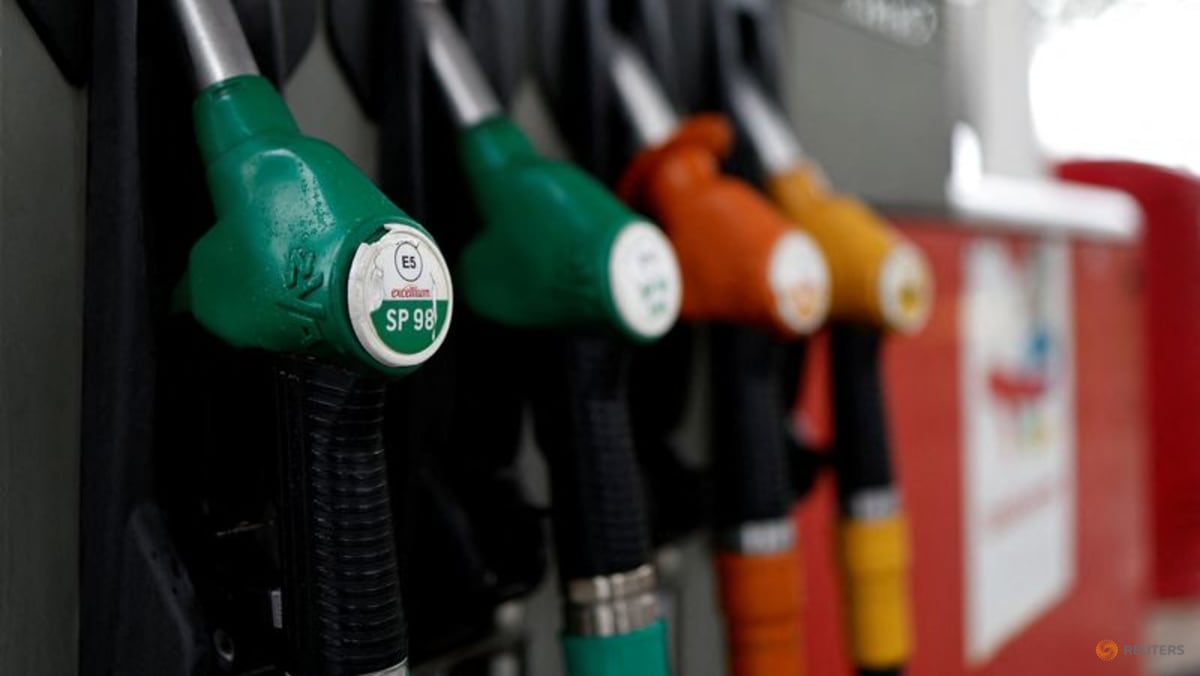
AI Escalation: How US Technological Advances Are Igniting Global Geopolitical Flashpoints in 2026
US AI military advances ignite 2026 geopolitical flashpoints: Iran Hormuz tensions, China South China Sea clashes, AUKUS woes. AI analysis, market predictions.

Iran's Leadership Vacuum: Unraveling Global Alliances and Emerging Power Shifts in Unexpected Regions
Iran's Qom leadership vacuum fuels US-Iran Strait of Hormuz crisis. Trump deploys 3rd carrier; alliances shift in India, Africa. Oil surge, market predictions ahead.
Field guide
How Crude Oil responds to global events
The fundamentals, geopolitical mechanics, and historical precedents Catalyst weighs when generating each oil price forecast.
What Affects Crude Oil Prices?
Understanding oil price forecast requires analyzing the fundamental forces that drive commodity markets: supply-demand dynamics, central bank monetary policy, inflation expectations, currency movements, and geopolitical risk premiums. Crude Oil occupies a unique position in global financial markets as both a physical commodity with industrial and consumer demand and a financial instrument that responds to macroeconomic sentiment and geopolitical uncertainty.
Our Catalyst AI engine monitors these interconnected factors in real time, tracing causal chains from specific geopolitical events to their likely impact on Crude Oil prices. By combining live event data from verified sources with established market dynamics and historical precedents, Catalyst delivers oil price forecast intelligence grounded in fundamental analysis rather than purely technical patterns.
Geopolitical Risk and Crude Oil
Geopolitical events are among the most powerful drivers of Crude Oil prices. Military conflicts in or near major producing regions can disrupt supply chains and trigger immediate price spikes as markets price in potential shortages. The 2022 Russia-Ukraine conflict demonstrated this dynamic dramatically — oil prices surged 30% in two weeks while gold rallied 8% as investors sought safe-haven assets. The magnitude of these moves depends on whether the conflict directly threatens production, refining, or transportation infrastructure.
Economic sanctions and trade restrictions add another layer of geopolitical risk to Crude Oil markets. When major economies impose sanctions on commodity-producing nations, the resulting supply constraints can persist for months or years, creating structural price support. Conversely, diplomatic breakthroughs and sanction relief can release pent-up supply, pressuring prices lower. Our Catalyst engine evaluates these scenarios using historical precedent analysis to quantify likely price impacts.
Beyond direct supply disruption, geopolitical uncertainty drives demand for Crude Oil as a store of value and inflation hedge. Central banks and sovereign wealth funds increase commodity allocations during periods of elevated geopolitical risk, creating additional price support. This safe-haven dynamic is particularly strong for precious metals but extends to energy commodities when conflicts threaten global supply chains.
Central Bank Policies and Inflation Dynamics
Central bank monetary policy exerts significant influence on Crude Oil prices through multiple channels. Interest rate decisions affect the opportunity cost of holding non-yielding commodities — when rates rise, fixed-income investments become more attractive relative to Crude Oil, creating downward price pressure. When rates fall or central banks engage in quantitative easing, the resulting currency debasement fears and lower opportunity costs tend to support commodity prices.
Inflation expectations are closely tied to Crude Oil valuations. During periods of elevated inflation, investors historically allocate capital to commodities as a hedge against purchasing power erosion. The post-COVID inflationary surge of 2021-2023 drove significant commodity price appreciation as markets priced in expectations of sustained price increases across the economy. Our Catalyst engine integrates these monetary policy dynamics with geopolitical event analysis to produce comprehensive oil price forecast forecasts.
Historical Precedents: Crude Oil During Major Crises
Historical patterns provide essential calibration for commodity price predictions during geopolitical stress. The 1973 oil embargo, the 1990 Gulf War, and the 2022 Russia-Ukraine conflict each caused significant commodity price dislocations, but the magnitude and duration varied based on the scale of supply disruption and the speed of market adaptation. These precedents inform our AI model's impact estimates.
During the COVID-19 pandemic, commodity markets experienced unprecedented volatility — oil briefly traded at negative prices in April 2020 due to demand collapse and storage constraints, while gold surged to record highs as central banks launched massive stimulus programs. The subsequent recovery saw broad commodity price increases as supply chains struggled to meet rebounding demand. These episodes demonstrate how global crises create both risks and opportunities in Crude Oil markets, patterns that our Catalyst engine systematically identifies and quantifies.
Frequently asked
Questions about Crude Oil
Direct answers covering forecast cadence, accuracy, drivers, and how Catalyst processes geopolitical shocks into prediction signals.
Oil prices in 2026 are influenced by OPEC+ production decisions, geopolitical disruption risk (particularly in the Middle East), US shale output responsiveness, and Chinese demand trends. The Catalyst system generates continuously updated forecasts by analyzing these factors against live event data. Check the AI prediction section above for the current directional assessment.
Related commodity assets
Continue across the commodity universe
Catalyst engine
Real-time Crude Oil predictions across 28 tracked assets
Live event feed, AI-classified market impact, and detailed reasoning per asset — refreshed every 15 minutes against the world's news flow.
Disclaimer: The predictions and analysis on this page are generated by AI based on geopolitical event analysis and should not be considered financial advice. Past performance and historical patterns do not guarantee future results. Always conduct your own research and consult a qualified financial advisor before making investment decisions.