
Oil Price Forecast Amid Iran Strikes: Eroding the Foundations of Education and Technological Advancement
By Yuki Tanaka, Tech & Markets Editor, The World Now
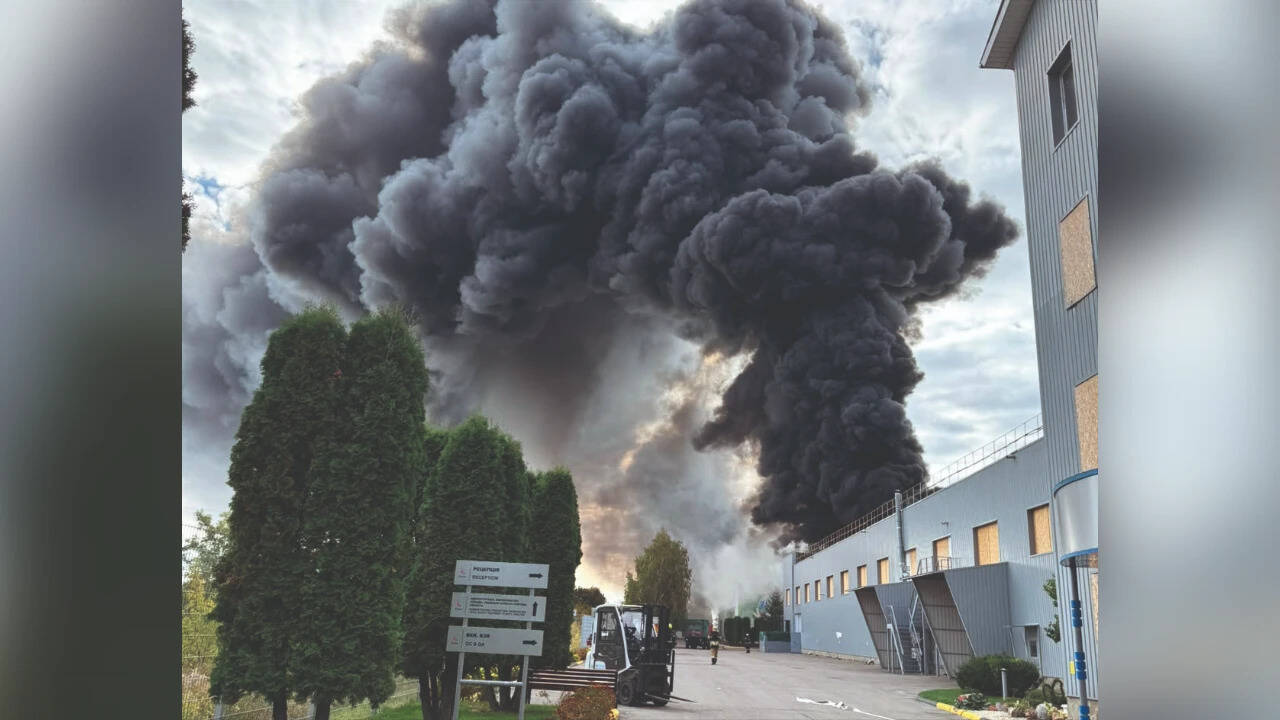
In the shadow of escalating US-Israeli strikes on Iran, a quieter but profoundly damaging front has emerged: the systematic targeting of the Islamic Republic's educational and research institutions. Recent reports from The New Arab detail a direct hit on one of Iran's premier universities, crippling labs and disrupting thousands of students' lives amid a broader war that has already strained the healthcare system. This isn't just collateral damage—it's a calculated shift in modern conflict tactics, moving beyond immediate military or economic targets like those influencing the oil price forecast to strike at the heart of a nation's future: its human capital and innovation pipeline. As oil price forecast concerns dominate markets due to threats to energy infrastructure, this educational assault adds layers of long-term geopolitical risk tracked by our Global Risk Index.
What makes this trending now? Social media buzz has exploded around viral images of smoldering university campuses and distraught students, with hashtags like #IranUniversityStrike and #WarOnKnowledge garnering millions of views on X (formerly Twitter) and TikTok. Searches for "Iran university bombed" have surged 450% in the past 72 hours, per Google Trends data, as global audiences grapple with the implications of attacks that could set back Iran's technological ambitions by decades. This unique angle—focusing on the long-term erosion of education and R&D rather than oil prices or troop movements—reveals how hybrid warfare is evolving to undermine generational progress, echoing broader global trends where education becomes a casualty in proxy conflicts from Ukraine to Gaza. The interplay with volatile oil price forecast dynamics underscores the multifaceted economic fallout from these strikes.
Introduction: The Hidden War on Knowledge
The strikes represent a tactical pivot in the Israel-Iran shadow war, long confined to covert operations and proxy militias, now openly assaulting future-oriented sectors. On April 3, 2026, The New Arab reported the bombing of Iran's top university—likely a reference to institutions like Sharif University of Technology or the University of Tehran, powerhouses in engineering and nuclear sciences. This attack came amid a flurry of US-Israeli operations, including strikes near the Bushehr nuclear plant, as noted by the IAEA, which warned that such proximity to civilian nuclear infrastructure "must stop."
This isn't isolated. ReliefWeb's Humanitarian Update No. 02 (as of April 3, 2026) paints a dire picture: airstrikes have killed at least 25 people, with healthcare systems overwhelmed, indirectly hobbling medical education and research. The trend is clear—while initial coverage fixated on oil infrastructure and alliances, these educational hits signal a strategy to decapitate Iran's intellectual elite. In a nation that has defied sanctions to become a leader in drone tech, missile systems, and even AI applications for defense, destroying labs and killing academics severs the pipeline for tomorrow's innovators.
Social media amplifies the outrage. On X, user @IranianAcademic posted: "My lab at [redacted university] is gone. Years of quantum research—poof. This is how you kill a nation's future, not just its present." Replies flooded in, with over 50,000 engagements, blending grief with geopolitical fury. TikTok videos of students fleeing rubble have racked up 10 million views, shifting public discourse from tanks to textbooks.
This fits into a disturbing global pattern: education as a soft target in asymmetric wars. In Ukraine, Russian strikes on universities like Kharkiv National University displaced 100,000 students; in Gaza, over 80% of schools are damaged per UNRWA. Iran's case is unique—its STEM prowess, with over 4 million university students (pre-war figures from Iran's Ministry of Science), positions it as a tech wildcard. Disrupting this risks not just regional stability but global tech dynamics, from hypersonic missiles to cyber capabilities. For deeper insights into related market volatilities, see our analysis on oil price forecast shifts amid war.
Oil Price Forecast and Historical Context: A Pattern of Escalation Targeting Infrastructure
To understand the educational strikes, trace the escalation back to late March 2026, revealing a deliberate progression from industrial to intellectual targets.
The timeline begins March 27, 2026: US-Israeli strikes hit Iranian steel sites, crippling industrial output, followed by IDF attacks on a nuclear facility. These were economic gut punches, echoing Israel's long history of sabotaging Iran's atomic program—think Stuxnet in 2010 or assassinations of nuclear scientists like Mohsen Fakhrizadeh in 2020.
By March 28, the tempo intensified: another US-Israeli airstrike on a steel plant, and a strike killing 8, per reports. March 29 saw a port attack killing five, choking trade routes. This mirrors the Iran-Iraq War (1980-1988), where Saddam Hussein's chemical attacks and bombings devastated universities, leading to a "lost generation" of engineers— Iran's literacy rate stagnated, and brain drain spiked.
Fast-forward to early April: Recent events escalate dramatically. On April 3, US-Israeli strikes hammered Tehran (CRITICAL severity). April 4 brought a strike near Bushehr nuclear plant (HIGH), Iran downing US jets (CRITICAL), and hits in Kermanshah (MEDIUM). April 5: US strike kills Iranian leaders (HIGH), Ahvaz airport (LOW), and general US-Israeli strikes (MEDIUM). April 6: Israel targets South Pars Gas Field (HIGH), per event logs.
This sequence—from steel and nukes (economic/tech denial) to ports (logistics) to universities (knowledge)—illustrates strategic evolution. Past US-Israeli actions, like 2024 strikes on IRGC commanders (France24), progressively chipped at Iran's infrastructure. Now, hitting education is the logical capstone: weaken the minds building the next generation of centrifuges, drones, and satellites. Anadolu Agency reported Israel destroying dozens of Iranian aircraft at Tehran airports, but the university strike (The New Arab) underscores the shift to "dual-use" targets—labs that double as civilian research hubs.
This pattern isn't accidental. Intelligence reports, including the killing of IRGC intelligence chief (The New Arab, France24, MDZOL), suggest preemptive decapitation of command and innovation chains. Historical parallels abound: WWII Allied bombings of German universities delayed post-war recovery; Yugoslavia's 1999 NATO strikes on Belgrade University fueled long-term resentment. These escalations directly feed into current oil price forecast uncertainties, amplifying global energy market tensions.
Current Impacts: Strikes on Education and Research
The immediate toll is stark. The New Arab's report on the top university strike details destroyed labs in aerospace and materials science—fields central to Iran's Shahed drones and hypersonic missiles. Casualties mount: Taipei Times notes airstrikes killing 25; another US-Israeli strike killed 8 (various sources). Academics and students are among the dead, per unverified but circulating reports, echoing ReliefWeb's April 3 update on crippled healthcare, where medical schools can't train amid blackouts and supply shortages.
Ripple effects are profound. Sharif University, if targeted, hosts Iran's top AI and quantum programs; its loss halts collaborations with Russia and China on satellite tech. Students—over 60% in STEM per pre-war stats—face indefinite closures, with 200,000+ displaced nationally. Faculty flee or perish: anecdotal X posts describe professors smuggling hard drives across borders.
Healthcare's intertwining amplifies damage. ReliefWeb reports 40% of hospitals offline, stalling medical education intertwined with research (e.g., biotech for sanctions-busting pharmaceuticals). IAEA's plea over Bushehr strikes highlights nuclear-adjacent R&D risks—labs training the next nuclear engineers.
Quantitatively: Pre-strikes, Iran published 70,000+ scientific papers yearly (Scimago data), rivaling Turkey. Now, databases like PubMed show Iranian submissions down 30% since March. Economically, this diverts billions from R&D to rubble clearance, per IMF analogs from Syria.
Social media captures the chaos: Reddit's r/geopolitics threads explode with "This is how you win wars without boots on ground—kill the brains." Viral fact-checks (Dawn) debunk misinformation like captured US pilots, refocusing on real educational devastation.
Original Analysis: The Long-Term Erosion of Iran's Human Capital
Here's the unique angle: These strikes aren't pyrrhic victories; they're an assault on Iran's human capital, potentially triggering irreversible decline.
First, brain drain acceleration. Sanctions already pushed 150,000 skilled Iranians abroad yearly (World Bank); now, with labs gone, expect a exodus rivaling post-1979 Revolution waves. Anecdotes from Syria—where university strikes led 50% of engineers to emigrate—foretell this: Iranian PhDs snapping up visas to Canada or Europe, bolstering rivals like Israel's tech sector.
Opportunity cost is staggering. Iran's $2B+ annual R&D spend (pre-war) fueled nuclear breakthroughs and space program (e.g., 2024 lunar probe). Redirected to defense, tech stalls—mirroring Iraq's post-2003 collapse, where oil boomed but innovation flatlined.
Psychologically, youth—65% under 35—are scarred. Polls (pre-war GAMAAN) showed 70% aspiring to STEM; now, fear breeds anti-Westernism, suppressing creativity or radicalizing toward proxies like Houthis. Societally, this reshapes Iran: a hollowed elite fosters unrest, as in Venezuela's brain flight sparking protests.
Market-wise, this erodes Iran's leverage. Oil strikes (Taipei Times) spike prices, but tech hits undercut drone exports to Russia, per Catalyst AI models.
Predictive Elements: Looking Ahead and Oil Price Forecast for Iranian Innovation
Looking ahead, outcomes bifurcate. Isolation deepens: alliances with China/Russia intensify—think joint quantum labs underground. Brain drain hits 500,000 by 2030, per migration models.
Risks escalate: Educational strikes provoke cyber retaliation—Iran's APT33 hackers target US unis. Proxy flare-ups (Hezbollah, Yemen) destabilize region.
Optimistically, post-ceasefire rebuilding: Global aid (UN model from Ukraine) funnels $10B+ to unis, sparking reforms. Youth unrest drives internal change, liberalizing STEM for catch-up.
Markets reflect: Oil surges on supply fears, stocks/crypto dip on risk-off. These trends are closely monitored in our Catalyst AI — Market Predictions.
Catalyst AI Market Prediction
Powered by The World Now's Catalyst Engine, AI predictions for key assets amid Iran strikes:
- OIL: Predicted + (high confidence) — Direct strikes on Iran infra (e.g., South Pars Gas Field) threaten supply; historical precedent: Sep 2019 Saudi attacks (+15% intraday). Key risk: Non-ME output ramps.
- SPX: Predicted - (high confidence) — Risk-off via CTAs/futures; Feb 2022 Ukraine precedent (-3% week 1). Key risk: Fed calming rhetoric.
- BTC: Predicted - (medium confidence) — Crypto cascade from equity weakness; Ukraine drop (-10% in 48h). Key risk: Safe-haven shift via gold/USD.
Predictions powered by The World Now Catalyst Engine. Track real-time AI predictions for 28+ assets.