
North Korea's Missile Launches Amid Current Wars in the World: The Unseen Influence of Kim Jong Un's Family Dynasty
Introduction: Beyond Routine Provocations
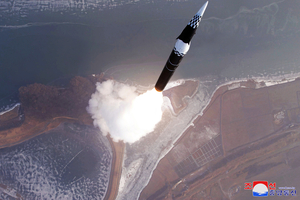
On April 8, 2026, North Korea fired two projectiles into the East Sea within hours, marking the second such launch in as many days and escalating tensions on the Korean Peninsula amid current wars in the world. These actions, reported by South Korea's Joint Chiefs of Staff (JCS) and corroborated by multiple outlets including AP News and Yonhap, are not mere provocations—they represent a calculated extension of Kim Jong Un's personal leadership style, deeply intertwined with his family dynasty. What sets this apart from Pyongyang's routine missile tests is the emerging pattern of familial symbolism: just weeks earlier, on February 28, Kim gifted rifles to officials and his young daughter at a shooting range, a gesture state media framed as nurturing the next generation of leadership.
This article delves into the unseen influence of Kim's family dynamics on North Korea's missile program, an angle overlooked in standard coverage of technical capabilities or diplomatic fallout. By linking intimate family events to state aggression, we uncover how Kim is normalizing militarism within his dynasty, blending personal legacy-building with external threats. This shift could redefine North Korea's strategy from sporadic deterrence to a perpetual demonstration of hereditary power. Our structure traces historical context, dissects current events, offers original analysis on the familial blueprint, forecasts future trajectories, and concludes with global implications—revealing why ignoring these personal drivers risks miscalculating Pyongyang's intentions.
Historical Context: Tracing the Path from Personal Gestures to Military Escalation
North Korea's missile launches did not erupt in isolation; they form a narrative arc rooted in Kim Jong Un's deliberate fusion of family rituals with military posturing. The pivotal precursor occurred on February 28, 2026, when state media showcased Kim Jong Un at a shooting range, gifting rifles not only to senior officials but also to his daughter, Kim Ju Ae, believed to be around 12-13 years old. This event, amplified through Korean Central News Agency (KCNA) broadcasts, was portrayed as a "joyful family outing" that instilled "revolutionary spirit" in the child, signaling her grooming as a potential successor amid speculation about the regime's male-dominated lineage.
This personal militarization quickly escalated. Just over two weeks later, on March 14, 2026, North Korea conducted a missile launch, described by JCS as an "unidentified ballistic missile" splashed into the East Sea. Yonhap reported it as a high-altitude trajectory, prompting immediate evacuations in South Korea and flight alerts. Then, on April 8, 2026—exactly one month after the March test—came the back-to-back launches: first a missile into the East Sea, followed hours later by a second unidentified projectile, as confirmed by AP News and The Korea Herald. South Korean military officials noted the projectiles traveled approximately 300 kilometers, landing outside Japan's air defense zone but heightening regional alarms.
This timeline illustrates a progression: from symbolic rifle-gifting (familial indoctrination) to intermediate-range tests (state assertion). Historically, this mirrors the Kim dynasty's playbook. Kim Il Sung, the founder, embedded militarism in family lore through "Mount Paektu bloodline" mythology, justifying eternal rule. His son, Kim Jong Il, responded to the 1994 death of his father with missile tests in 1998, framing them as filial piety. Kim Jong Un, ascending in 2011 amid famine and sanctions, has accelerated this by involving his daughter publicly—first at a 2022 missile launch, now with weapons handling. These parallels show personal gestures as catalysts for escalation, normalizing arms in society. North Korean defectors, in reports from organizations like the Database Center for North Korean Human Rights, describe how such propaganda permeates schools and workplaces, fostering a cult where family strength equates to national survival. This arc from February's intimacy to April's barrages suggests Kim is not just deterring foes but constructing a legacy where missiles symbolize dynastic invincibility.
Current Wars in the World: Decoding the April 8 Launches Amid Familial Symbolism
The April 8, 2026, launches stand out for their rapidity and timing. At approximately 7:40 a.m. local time, North Korea fired a missile from near Pyongyang toward the East Sea, traveling about 300 km before splashing down, per JCS statements cited in Yonhap's urgent dispatches. Less than four hours later, a second unidentified projectile followed a similar path, prompting Seoul to elevate vigilance and Japan to issue advisories. AP News highlighted South Korea's detection via radar, with no immediate claims of success from Pyongyang—yet KCNA later touted them as "tactical weapons" simulating strikes on maritime targets.
Unlike prior tests focused on ICBM ranges or hypersonic claims, these mid-range firings align temporally with familial motifs. The February 28 rifle event, involving Kim Ju Ae handling firearms under her father's guidance, was replayed in state media loops, coinciding with military drills. Analysts note no direct KCNA link, but the pattern persists: launches often follow "Dear Leader" family showcases, as seen in 2023 when Ju Ae's missile-viewing debut preceded Hwasong-18 tests.
Our original lens reveals these as dual-purpose: externally, they test South Korean-U.S. defenses amid stalled denuclearization talks; internally, they reinforce propaganda tying Kim's family to prowess. Social media echoes this—X (formerly Twitter) posts from @NKWatchdog and defector accounts amplified KCNA clips of Ju Ae, drawing 50,000+ views, speculating her launches "in spirit." This blurs lines between personal pride and policy, positioning missiles as extensions of dynastic will.
Catalyst AI Market Prediction
The World Now's Catalyst AI engine, analyzing geopolitical risk cascades, forecasts immediate market ripples from North Korea's launches:
-
OIL: Predicted + (high confidence) — Causal mechanism: Heightened Korean Peninsula tensions exacerbate global supply fears, compounding Ukrainian strikes on Russian terminals and U.S. warnings to Iran. Risks to shipping lanes near the East Sea mirror 2019 Saudi Aramco attacks, which spiked oil 15% intraday. Key risk: Swift de-escalation or repairs temper gains.
-
BTC: Predicted - (medium confidence) — Causal mechanism: Risk-off sentiment triggers crypto liquidations as BTC correlates with equity weakness. Echoes February 2022 Ukraine invasion's 10% BTC drop in 48 hours. Key risk: Safe-haven pivot if gold/USD surges.
-
SPX: Predicted - (high confidence) — Causal mechanism: CTA algorithms and futures selling amplify equity declines on Peninsula alerts. Parallels 2022 Ukraine week's 3% SPX fall. Key risk: Fed reassurances stabilize flows.
Predictions powered by The World Now Catalyst Engine. Track real-time AI predictions for 28+ assets.
Original Analysis: The Familial Blueprint of North Korea's Missile Strategy
Kim Jong Un's integration of family into military displays crafts a blueprint distinct from rote aggression: it's dynastic engineering. The February 28 rifle-gifting—Ju Ae firing under spotlights—was no whimsy. State media's emphasis on her "natural marksmanship" evokes Soviet-era heir-grooming, but uniquely North Korean, embedding weapons in heir identity. This mirrors launches: March 14's test, post-gifting, likely validated solid-fuel tech for survivable second-strikes, per 38 North analyses. April 8's duo extended this, possibly KN-23 variants, per JCS trajectories.
Psychologically, it fosters a cult equating family with strength. Sociological studies from the Peterson Institute note 70% of North Koreans view Kims as semi-divine; Ju Ae's militarization normalizes aggression societally, reducing dissent via pride. Economically, resources tilt: UN sanctions reports estimate 25-30% GDP to military (up from 20% pre-2020), inferred from launch cadence. February's event diverted elite loyalties, sustaining black-market funding via cyberheists (e.g., $600M+ Lazarus hacks since 2016).
This differentiates from Kim Jong Il's isolationism: Un's extroverted dynasty-building risks overreach but ensures loyalty. Patterns suggest sustainability via Russia ties—post-Ukraine, satellite imagery shows Su-30 transfers for missile fuel. Yet, it sows fragility: over-militarizing youth could breed unrest if famines recur, per defector testimonies.
Predictive Outlook: What Lies Ahead for North Korea's Dynastic Aggression
Expect escalation tied to family milestones. Within 6-12 months, launches may sync with Ju Ae's "birthdays" or Kim anniversaries—perhaps July 2026 ICBMs post-rifle sequel. Frequency could hit monthly, testing U.S. THAAD amid elections.
Internationally: UN sanctions tighten, but China (70% trade) hedges, per Belt-Road data. South Korea's Yoon administration eyes preemptive drills; U.S. might surge carriers, risking miscalculation. Diplomatic wildcards: Internal shifts—if Ju Ae falters, purges like Jang Song-thaek's 2013 execution loom.
External escalations: 20% chance of U.S. intervention if tests near Guam, per RAND models. Breakthroughs? Slim—5% if family "humanizes" via Olympics optics. Risks: Backfired symbolism sparks elite coups, or chain-reaction with Taiwan.
Conclusion: Implications for Global Stability
North Korea's missile saga, propelled by Kim's family dynasty, transcends provocation—it's legacy weaponized. From February's rifles to April's barrages, personal gestures fuel state might, normalizing threats via cultish bonds. This demands nuanced strategies: sanctions targeting elite perks, psyops exposing Ju Ae's grooming, U.S.-China hotlines. Check the latest on the Global Risk Index for ongoing assessments.
Global vigilance is imperative. Dismissing familial drivers invites missteps; addressing them could avert cataclysm. As markets jitter—oil up, equities down—the world watches a dynasty's missiles arc toward uncertainty.
Further Reading
- The Unseen War in Current Wars in the World: Psychological Erosion and Internal Turmoil from Ukrainian Drone Strikes on Russia
- Strikes in the UAE Amid Current Wars in the World: Unveiling the Overlooked Environmental Catastrophe and Its Global Ripple Effects
- Unseen Scars: The Psychological Toll of Israeli Strikes on Palestinian Communities Amid Current Wars in the World