Nine Killed in Israeli Strikes on Southern Lebanon Towns
Israeli airstrikes on southern Lebanon killed at least nine people early on 15 August 2026, including seven in a house strike on Ansar that killed three children and two women, in one of the deadliest incidents since a US-mediated framework agreement in June aimed at reducing hostilities, with Lebanon strikes reported across multiple towns and villages in the Nabatieh region.
Casualties from Strikes on Ansar and Deir al-Zahrani
Lebanon’s National News Agency reported that an Israeli strike hit a house on the outskirts of Ansar in the Nabatieh district, killing seven people and wounding others. [1] Another strike in Deir al-Zahrani killed at least two people and wounded several others. [1] Lebanese media also reported artillery fire and other strikes in areas including Ali al-Taher Heights near Nabatieh al-Fawqa, Kfar Tebnit, Zawtar al-Sharqiya and other parts of southern Lebanon. [1] The intensity of the overnight bombardment forced many residents to leave their homes. [1] Al Jazeera reported that children and members of one family were among those killed in the Ansar strike. [1] Lebanon’s Health Ministry and state news agency said one of the airstrikes that targeted a home on the edge of the village of Ansar killed seven people, including three children, and wounded two. [2] The second, on the village of Deir al-Zahrani, killed two and wounded nine. [2] Seven people were killed when Israeli warplanes struck a house in the southern village of Ansar, while two others died in a separate strike on Deir El Zahrani. [4] Eleven people were also injured in the attacks. [4] The agency said three children and two women were among those killed in Ansar. [4] Eleven people have been killed in Israeli strikes in southern Lebanon, authorities say. [5] Lebanon’s prime minister said seven people were killed in a strike on a house on the outskirts of Ansar in the Nabatieh district, which state media reported included three children and two women. [5] Later on Saturday, another round of strikes hit the town of Deir al-Zahrani, killing four and wounding five others, the Lebanese Ministry of Health said. [5] Authorities say the strike in Ansar at around 04:30 occurred where displaced families were living. [5]
Israeli Military Statement on the Operation
The Israeli military said it struck "Hezbollah infrastructure" in the Nabatieh and Ansar areas, adding that the attacks came in response to "action against Israeli soldiers". [1] Israel said it struck Hezbollah infrastructure in southern Lebanon in response to actions taken by the group against Israeli soldiers operating in the security zone. [2] Israel’s military said it had struck Hezbollah infrastructure overnight in what it described as a security zone in southern Lebanon, saying the action came in response to activity directed against Israeli soldiers. [4] The Israel Defense Forces said the incident that had prompted its strike on Ansar took place in the Ali al-Taher Ridge, a strategic high ground overlooking much of south-eastern Lebanon. [5] The IDF says it will continue to remove threats to Israeli citizens and soldiers operating in the security zone. [5]
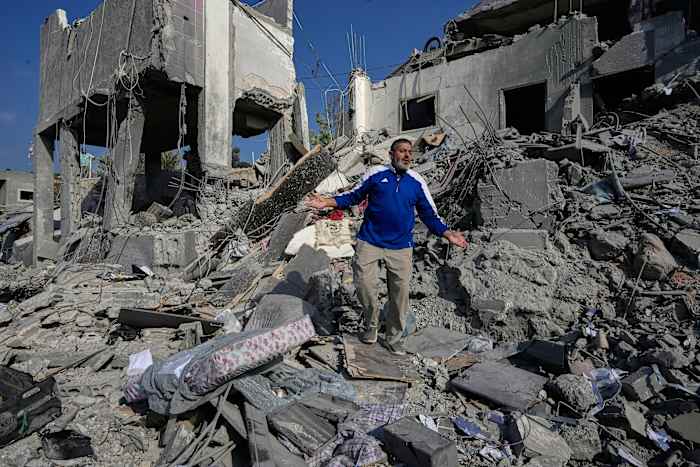
Israeli airstrike hits house in Ansar, southern Lebanon, killing seven including three children. — Source: gdelt
Lebanese Government Condemnation
Lebanese Prime Minister Nawaf Salam rejected Israel's account and described the escalation in Nabatieh, Ansar, Deir al-Zahrani and surrounding villages as “extremely dangerous”, adding that it was undermining efforts to stabilise the region. [1] “The seven people killed in the Israeli strike on Ansar are not ‘military infrastructure’, and the children and women killed in it are not military targets,” Salam said in a statement. [1] He said responsibility for dealing with any military infrastructure on Lebanese territory, “if it exists”, rests exclusively with the Lebanese state through the army and other state institutions. [1] Lebanese Prime Minister Nawaf Salam condemned the strike and rejected Israel’s assertion that it had been targeting military sites. [4] “The martyrs of the Israeli raid on the village of Ansar are not ‘military infrastructure’ and the women and children killed in it are not military targets,” Salam wrote on X. [4] Lebanon’s Prime Minister Nawaf Salam condemned the attacks, saying the seven civilians killed were not "military infrastructure". [5] "Israel must halt this escalation," he said. [5] Lebanese President Joseph Aoun has also condemned the attacks, saying the escalation in Nabatieh and surrounding areas amounted to repeated violations of the framework governing efforts to reduce hostilities and protect civilians. [1] Aoun said the attack on Ansar had killed members of an entire family and described the escalation as “a clear message” to the negotiating process and US-led efforts to implement the agreement. [1] Lebanon's President Joseph Aoun condemned the Israeli strikes that had killed an entire family in Ansar and its "repeated violations" of the framework. [5]
Hezbollah Response and Criticism
Hezbollah said that Israeli attacks would be met with an "appropriate" response, urging authorities to halt "humiliating" negotiations with Israel. [1] "Israel must clearly understand that its attacks, violations and attempts to impose a fait accompli cannot continue, and will be met with an appropriate response", the group said in a statement. [1] In a speech on Friday, Hezbollah leader Naim Qassem sharply criticised the agreement. [4] Hezbollah was not involved in the agreement and has rejected direct negotiations. [5] "The Israeli enemy must clearly understand that its attacks, violations and attempts to impose a fait accompli cannot continue, and will be met with an appropriate response in defense of Lebanon, its people, sovereignty and national dignity," the group said in a statement on Saturday. [5]
Context of the June Framework Agreement
The violence comes despite a reduction in hostilities following a US-Iran memorandum of understanding in June and a subsequent US-sponsored framework between Lebanon and Israel. [1] The arrangement calls for Hezbollah's disarmament, the gradual withdrawal of Israeli forces and the deployment of the Lebanese army in southern Lebanon. [1] However, disagreements over its implementation have continued. [1] On Thursday, Israeli Defence Minister Israel Katz said that Israel would not withdraw from territory it controls in Lebanon until Hezbollah was disarmed. [1] The strikes come weeks after Lebanon agreed to a US-mediated peace framework with Israel intended to bring the latest conflict under control. [4] Under the arrangement, Israeli forces remain in areas they occupy in southern Lebanon while Hezbollah is disarmed and the Lebanese army gradually assumes responsibility for security there. [4] The dispute over Hezbollah’s weapons remains one of the biggest obstacles to implementing the deal. [4] The June ceasefire framework calls for Hezbollah to disarm, Israeli forces to withdraw gradually from southern Lebanon and the Lebanese army to deploy across the area. [5] Despite a reduction in fighting following the June agreements, Israeli strikes and demolitions in southern Lebanon have continued. [5]
Broader Regional Developments
The United Arab Emirates accused Iran of attacking a vessel in the Strait of Hormuz, while the Iran-backed Houthis struck a Red Sea port in Yemen. [2] A tanker owned by Abu Dhabi’s state-owned oil and gas company ADNOC was attacked while transiting through the Strait of Hormuz. [2] Yemen's military said the Iranian-backed Houthis attacked a crucial Red Sea port under the control of the internationally recognized government, killing at least one security guard. [2]
What to watch next: Lebanese and Israeli negotiators are set to meet for an eighth round of negotiations in September, but a final date has not been set.