
Nigeria Reports First Ebola Case in Over a Decade as WHO Warns of Complex African Outbreak
Nigeria Confirms First Ebola Case
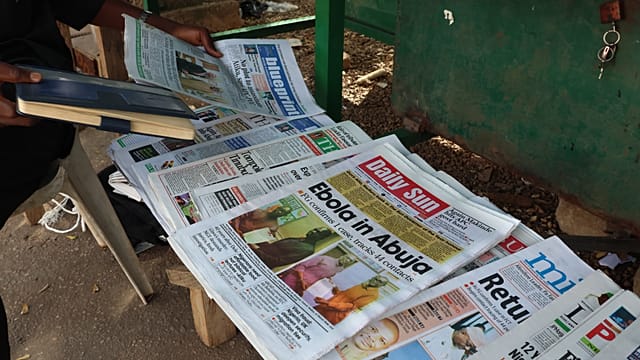
Nigeria has confirmed its first imported case of the Bundibugyo Ebola strain in more than a decade, prompting the WHO to warn of a more complex outbreak now spanning the African continent. [1] The patient is a woman, wife of a diplomat, who traveled from Uganda to Abuja on 3 October, developed symptoms on 6-7 October, sought care at private facilities, and was diagnosed on 19 October after hospital admission. [2] Nigeria on Tuesday announced an imported case of the Bundibugyo strain behind a major DR Congo outbreak, in a woman, a diplomat who had a history of travel to Uganda. [1] The continent's most populous nation is the fourth African country affected by the outbreak, which this week came to span the continent, with Kenya in the east reporting nine cases since October 6. [1]
Contact Tracing and Containment Measures
The WHO said 44 contacts had been identified and were being monitored, while investigators worked to establish where she became infected. [2] On Thursday, health minister Muhammad Ali Pate said the woman’s contacts had been tracked down since her arrival in Nigeria earlier this month, and that an undisclosed number of “high risk” individuals “have been quarantined, fully, in a facility.” [4] Nigeria's health minister said on Thursday authorities had no evidence that the country's recently confirmed Ebola case had spread into the wider community, describing it as a single, contained infection. [5] Health Minister Muhammad Ali Pate said "there is no evidence that it has gone into the communities" and that there was "no need for any panic", as health officials intensified contact tracing and monitoring of people who may have been exposed. [5] "This is a contained, single case and we are diligently working to ensure that it remains so," he said. [5] "All the Infection Prevention and Control measures have been put in place to try to ensure that the risk of amplification of transmission within the health facilities is limited," said WHO's Dr Otim. [3]
WHO and Africa CDC Warn of Complex Regional Outbreak
The World Health Organization's Africa chief warned on Thursday that the continent now faced a “complex” Ebola outbreak after the virus crossed from east Africa to Nigeria. [1] "We are facing a more complex outbreak landscape. Nigeria has confirmed an imported case of Ebola virus disease," Mohamed Janabi, the regional director for WHO in Africa, told an online media briefing. [1] Jean Kaseya, director general of the Africa Centres for Disease Control and Prevention, told RFI that countries needed to strengthen Ebola surveillance, and clarified comments he had made about international funding for the response which had attracted criticism. [2] "Above all, we need to recognise that no country is safe unless we strengthen surveillance, not just at borders but in private and public health facilities too," Kaseya said. [2] "Ebola does not wait. It follows movement, exploits gaps and tests the strength of our health systems," said Dr Mohamed Janabi, Regional Director for WHO Africa, underscoring that the virus is "no longer confined to one place, it is a regional concern." [3]
Outbreak Scale in DRC and Cross-Border Spread
The epidemic was declared in the DRC on 15 May. [2] Its latest figures, which cover the period from the start of the outbreak until Wednesday, show 9,735 confirmed cases and 4,690 deaths — overwhelmingly in the DRC. [2] The DRC's Ebola epidemic has become the deadliest in the country's history, killing 4,381 people out of more than 9,000 confirmed cases since mid-May, according to the health authorities. [1] This epidemic has been caused by the Bundibugyo virus, a type of Ebola for which there is no approved vaccine or specific treatment. [2] The epidemic is not yet under control and tighter surveillance is needed. [2] It is now the second-largest Ebola outbreak on record, the US Centers for Disease Control and Prevention (CDC) said. [2] First, it is spreading geographically within the DRC, where eight provinces are now affected. [2] Second, it is spreading across Africa. Third, there are still around 65-70 new cases a day. [2] Kenya has recorded nine cases, including one death. [2] Uganda previously recorded two deaths and 20 confirmed cases of infection, before officially declaring the Ebola threat over at the end of August. [3]
Vaccine Trial and Treatment Challenges
A trial of the Ervebo vaccine is underway in eastern Congo. [1] Researchers are hoping to determine if the jab, which is approved for the Zaire strain of the virus, is effective against the Bundibugyo strain driving the current outbreak. [1] The World Health Organization said in August that 70,000 doses of Ervebo had been approved for use in Congo. [1] About 50,000 doses are intended for frontline and health workers, while 20,000 doses will be used in a clinical trial to study whether the vaccine protects against Bundibugyo, which currently has no licensed vaccine nor treatment. [1] "We still do not have preliminary data yet as to whether there is...sufficient cross-protection between the Ervebo vaccine — which is for the Zaire species — and the Bundibugyo species. As soon as we get it, we'll be able to share that information," Dr Otim told journalists. [3]
Memories of 2014 and Nigeria's Past Response
The case reignited memories of a widespread outbreak in 2014 that struck several countries in the region and killed more than 11,000 people across west Africa between late 2013 and 2016. [1] Nigeria's experience in successfully containing the Ebola outbreak in 2014 raised confidence that the country can respond effectively to new public health threats. [1] Pate said there was no reason at present to alter plans for large public gatherings, but left open the possibility of additional measures if the situation worsened. [5] "We have only one case, and hopefully it will stay that way," he said. [5]
What to watch next: Genetic sequencing of the infection is underway to confirm that it is the same Ebola Bundibugyo disease circulating inside DRC. [3]