

New Zealand Earthquake of 5.9 Prompts Brief Tsunami Alert Near Te Anau
A magnitude 5.9 New Zealand earthquake struck the South Island region, prompting a partial closure of the state highway into Milford for damage assessment while a brief tsunami alert was issued and later lifted. The event occurred 40km north of Te Anau according to reports.
Earthquake Details and Initial Impact
The quake initially measured 6.3 before being revised to 5.9 and occurred at a depth of 76km according to USGS data. [2] It struck 40km north of Te Anau in New Zealand's South Island. [1] The epicenter was located 42.3 kilometres northwest of Te Anau according to the same USGS information. [2] The earthquake took place at 21:14 local time on 16 July 2026. [2] This New Zealand earthquake was felt during a live television broadcast featuring Marcus Lush. [1] The state highway into Milford has been partly closed while damage is assessed after the strong earthquake near Te Anau. [1] Aftershocks continued to rattle the region overnight following the quake. [1] The event produced strong shaking that interrupted normal activities in the affected area.
Tsunami Alert and Lift
After the strong quake, authorities issued a tsunami alert and called on inhabitants of the zone to move to higher ground. [2] The alert was lifted hours later. [2] Strong and unusual currents can still be expected along the West Coast. [5] The brief tsunami alert was issued in connection with the magnitude 5.9 event near Te Anau. [1] People were prompted to move to higher ground during the period the alert remained active. [2] The cancellation of the alert came after several hours without further tsunami activity. [2] Coastal areas along the West Coast continue to face expectations of strong and unusual currents even after the alert ended. [5]
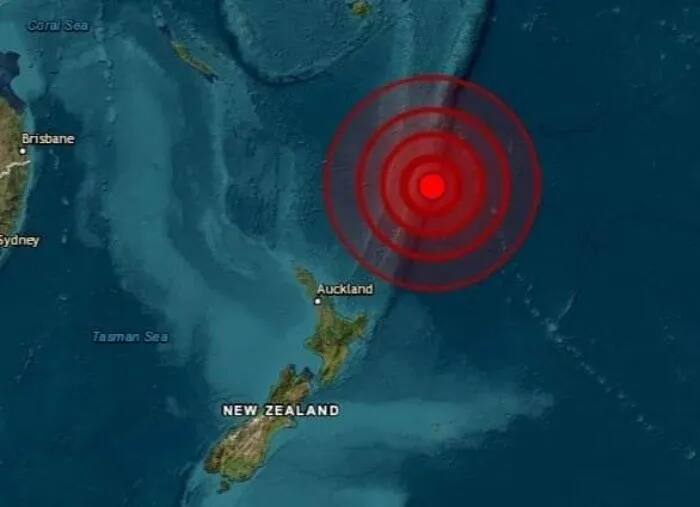
A magnitude 5.9 earthquake struck 40km north of Te Anau on New Zealand's South Island. — Source: gdelt
Damage Assessment and Aftershocks
No victims or material damage have been reported so far, with the USGS preliminary assessment classifying the risk of casualties or economic losses as green. [2] Emergency Management duty manager Phill Mackay has spoken about the latest on quake damage. [1] Aftershocks continued to rattle the region overnight. [1] The partial closure of the state highway into Milford remains in place while damage assessment continues. [1] Officials have not reported any casualties or significant structural harm from the event. [2] The green classification from USGS indicates limited expected impact from the New Zealand earthquake. [2] Continued aftershocks have been noted in the hours following the main shock. [1]
Geological Context of New Zealand Seismicity
New Zealand experiences around 14,000 earthquakes annually due to its location on the boundary between the Pacific and Australian tectonic plates. [2] The most recent major event was the 2011 Christchurch quake that killed 185 people. [2] This tectonic setting places the country on the fault dividing the Pacific and Australian plates. [2] The location explains why the country registers approximately 14,000 earthquakes each year. [2] Between 100 and 150 of those annual events are typically felt by the population. [2] The 2011 Christchurch earthquake measured 6.3 and affected 30,000 buildings in addition to the fatalities. [2] The recent magnitude 5.9 event fits within the pattern of frequent seismic activity in the region.

Magnitude 5.9 earthquake struck 40km north of Te Anau on New Zealand's South Island. — Source: nzherald
Safety Recommendations Following the Quake
During an earthquake experts recommend that if a person is inside a building they move only a few steps then drop, cover and hold on. [2] People should remain indoors until the shaking stops and it is safe to exit. [2] If outdoors when shaking begins, move a few steps away from buildings, trees, streetlights and power lines before dropping, covering and holding on. [2] After an earthquake, listen to local radio stations because emergency management officials will broadcast the most appropriate advice for the community and situation. [2] Expect to feel aftershocks. [2] If inside a damaged building, try to exit and find a safe open place while using stairs rather than elevators. [2] These recommendations were issued in connection with the recent seismic event.
What to watch next includes ongoing aftershocks and expectations of strong currents along the West Coast as authorities continue damage assessments.







