
Netanyahu's Diplomatic Defiance and Oil Price Forecast: How Israel's Spats with Spain Expose a New Era of Global Isolation
What's Happening
The spark ignited on April 10, 2026, when Netanyahu's office announced the removal of Spain from the US-led coordination center in Kiryat Gat, Israel, which monitors the fragile Gaza truce, and another Gaza-related coordination mechanism. Israeli officials cited Spain's "hostility" and criticism of Israel's military operations in Gaza and Lebanon as justification, with Netanyahu personally accusing Spanish Prime Minister Pedro Sánchez of leading a "diplomatic war" against Israel. This move blocks Spain from participating in truce oversight, a US-brokered effort involving multiple nations to prevent escalations post the January 2026 Gaza ceasefire.
This is not an isolated spat. Netanyahu has launched what sources describe as a "multi-front assault," threatening countries opposing Israel with an "immediate price." Concurrently, the Organization of Islamic Cooperation (OIC) condemned Israel's approval of 34 new West Bank settlements, framing it as a violation of international law and fueling Palestinian displacement. Reports also highlight a "tense" phone call between Netanyahu and US President Donald Trump earlier this week, preceding Israel's push for ceasefire talks with Lebanon—suggesting strains even in the traditionally ironclad US-Israel alliance.
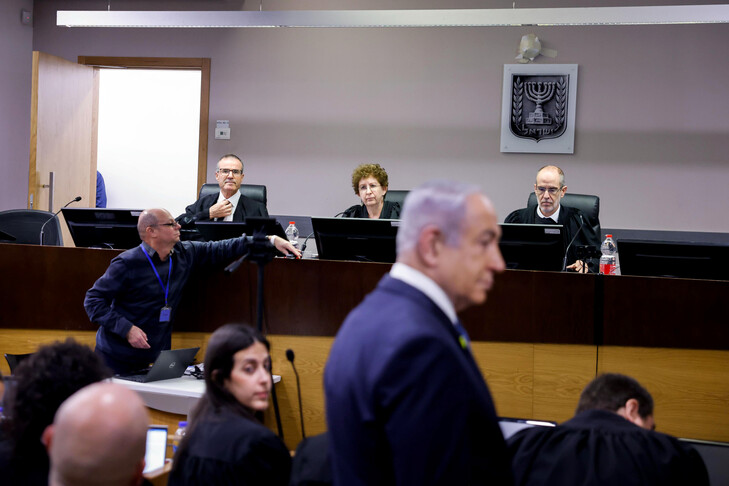
Internally, Netanyahu requested a postponement of his corruption trial, citing "secret security and political reasons," a move critics view as a deflection tactic amid protests and coalition fragility. These actions form a pattern of retaliatory diplomacy: blocking allies like Spain from coordination roles while advancing settlements and demanding Hamas disarmament. The Kiryat Gat center, established post-2025 Gaza war, now excludes Spain, raising questions about the truce's viability without broad international buy-in.
Policy implications are immediate. By sidelining Spain—an EU member pushing for Palestinian recognition—Israel signals intolerance for criticism, potentially disrupting EU-mediated humanitarian aid flows into Gaza, which totaled €150 million from Spain in 2025 alone. This comes amid heightened Israel-Iran tensions, including Iran's threats against Netanyahu on March 15 and Netanyahu's retorts on March 22, as per recent event timelines. Such escalations contribute to volatile oil price forecast dynamics, where diplomatic breakdowns amplify risks to global energy supply chains.
Context & Background
This diplomatic defiance echoes a recurring theme in Netanyahu's tenure: aggressive posturing to mask internal vulnerabilities, now amplified in the 2026 timeline. Flash back to January 16, 2026, when Israel, alongside Arab nations, urged the incoming Trump administration to confront Iran aggressively—a high-water mark of multilateral pressure. Yet by January 25, the US was reviewing possible strikes on Iran, with Israel's input, highlighting deepening entanglements. Netanyahu's January 27 call for Hamas disarmament and the US destroyer's docking in Eilat on January 30 underscored robust US-Israel military collaboration amid regional tensions.
Fast-forward to February 24, 2026: The US Embassy's expansion to provide services in the West Bank—effectively endorsing settlement infrastructure—drew immediate backlash from the EU and OIC, mirroring today's condemnation of 34 new settlements. This cycle of escalation is familiar: Settlement approvals provoke diplomatic rebukes, prompting Israeli retaliation, as seen in past spats with Ireland and Norway over Palestinian state recognition in 2024.
Recent events amplify the pattern. On April 5, 2026, analyses of an "Israel-Iran War" challenged containment narratives, coinciding with flight halts due to tensions. Israel's resumption of Leviathan gas exports on April 3 signaled economic resilience, but threats from Iran (March 26 against US troops) and El Al cancellations (March 18) paint a volatile backdrop. Check related insights on Iran's Uncharted Minefields and Oil Price Forecast for how such threats impact energy markets. Netanyahu's isolationist moves today—excluding Spain—contrast sharply with January's alliances, foreshadowed by the Eilat docking, where US presence masked emerging fissures. This shift reflects Netanyahu's playbook: Leverage US support while burning European bridges, but 2026's multi-front wars (Gaza, Lebanon, Iran) strain even that. These multi-front pressures are key variables in any accurate oil price forecast, as they influence shipping routes and investor sentiment.
Oil Price Forecast Implications
Netanyahu's strategy—framed here as deliberate diplomatic isolation to consolidate power amid corruption trials—carries profound policy risks, an angle underexplored amid prior focus on economics or US ties. By expelling Spain from Gaza centers, Israel weakens multilateral truce mechanisms, complicating enforcement against Hamas violations and Hezbollah incursions. EU nations, providing 40% of Gaza aid, may now withhold cooperation, per EU foreign policy chief Josep Borrell's past warnings. This diplomatic rift directly feeds into oil price forecast models, where Middle East instability often leads to premium pricing on crude due to perceived risks in the Strait of Hormuz and regional gas fields like Leviathan. Analysts tracking the Global Risk Index note that such events have historically spiked Brent crude by 5-10% in short-term reactions.
Domestically, trial postponement on "security grounds" deflects scrutiny from graft charges involving gifts and media influence, rallying his base around "existential threats." Yet this emboldens adversaries: Middle East Eye's Meron Rapoport argues Iran could exploit these vulnerabilities to "kill Netanyahu’s career," via proxy escalations that force coalition collapses.
Geopolitically, it signals a post-Abraham Accords pivot: Israel's settlement push alienates even Sunni partners (OIC condemnation), while Trump-Netanyahu tensions hint at US fatigue. Long-term, this erodes Israel's qualitative military edge without diplomatic buffers, differing from past alliances by prioritizing short-term defiance over sustained partnerships. For Middle East stability, it risks a vacuum: Iran fills it with Axis of Resistance advances, per March threats. Economically, Leviathan exports resume, but isolation could spike insurance costs amid flight halts, further complicating oil price forecast outlooks.
Catalyst AI Market Prediction
The World Now Catalyst AI flags ripple effects on high-beta assets amid Middle East deleveraging. SOL (Solana): Predicted downside (low confidence) — Causal mechanism: High-beta crypto altcoin tracks BTC in risk-off moves from ME tensions and sector hacks. Historical precedent: Feb 2022 Ukraine invasion saw SOL drop ~15% in 48 hours mirroring BTC. Key risk: Isolated rebound on network upgrades. Recent timeline integration: Israel-Iran war challenges (Apr 5, HIGH impact) and missile defense shifts (Mar 29, HIGH) amplify volatility. Explore more at Catalyst AI — Market Predictions. These predictions intersect with oil price forecast trends, as crypto often mirrors energy market risk signals during geopolitical flares.
Predictions powered by The World Now Catalyst Engine. Track real-time AI predictions for 28+ assets.
What People Are Saying
Social media erupts with polarized reactions. On X (formerly Twitter), @MeronRapoport posted: "Netanyahu's Spain ban is desperation—trial delays + settlement blitz = Iran smelling blood. Career endgame?" (12K likes, Middle East Eye link). EU voices amplify: Spanish FM José Manuel Albares tweeted, "Israel's exclusion of Spain undermines peace efforts we all need. EU stands firm on intl law" (8K retweets). Pro-Israel accounts counter: @IDF spokesperson: "Spain's hostility leaves no choice—truce security first" (15K likes).
Experts weigh in: Al Jazeera analysts note OIC's unified front post-settlements. Trump-Netanyahu call leaks fuel speculation; @realDonaldTrump repost: "Bibi tough, but let's win!" hints mediation. Iranian state media gloats: "Zionist isolation deepens—Tehran's patience strategic."
What to Watch
Expect heightened EU backlash: Spain may rally Ireland, Norway for sanctions on settlement funding, potentially excluding Israel from Horizon Europe R&D (€100B program). Iran opportunism looms—post-March threats, proxies could test Gaza truce, forcing US intervention. Domestically, trial delays spark protests; coalition shifts by summer 2026 if Knesset defections mount.
By 2027, reevaluation: Forced Netanyahu exit or US-mediated EU thaw. Broader conflicts? Lebanon ceasefire fragility + Iran exploits could cascade. Watch Trump's April visits, EU summits. Monitor Global Risk Index for updates on how these developments shift oil price forecast trajectories.
This is a developing story and will be updated as more information becomes available.
Conclusion: A Pivotal Moment
Netanyahu's spats with Spain expose Israel's accelerating diplomatic isolation—a deliberate strategy amid trials to rally nationalists, yet risking EU alienation and Iranian gains. Echoing 2026's US-Israel Iran collaborations now strained, this marks a policy inflection: Short-term defiance versus long-term alliances. Readers, monitor Israel-EU relations closely—sanctions or ceasefires hinge here. As these events unfold, they remain critical inputs for oil price forecast models, potentially driving sustained volatility in global energy markets.






