
NATO's Northern Flank Under Siege: How Trump's Troop Pull Threats and Ukraine Truce Reshape Baltic and Nordic Security
The Story
The narrative unfolding across the Baltic Sea and Nordic frontiers is one of quiet urgency, where the chill winds of geopolitical uncertainty carry echoes of vulnerability for nations wedged between a resurgent Russia and a distracted West. On April 9, 2026, reports from Newsmax revealed Trump's mulling of troop pullbacks from Europe, a threat that harks back to his first-term skepticism of NATO burden-sharing. This comes just days after Russian President Vladimir Putin announced an Orthodox Easter ceasefire with Ukraine, confirmed by BBC and The Guardian, intended to pause hostilities through the holiday. Yet, Ukrainian President Volodymyr Zelenskyy has countered with accusations that Russia aided Iran in targeting U.S. bases, per Newsmax, layering Middle East strike tensions onto Europe's doorstep and highlighting interconnected global risks that strain NATO resources.
For the Baltic states—Estonia, Latvia, and Lithuania—and Nordic partners like Norway and Finland, these headlines are not abstract; they pierce the daily lives of border communities. Estonia's freshly unveiled strategy document, detailed by ERR News, mandates 30-day self-sufficiency in crises where external links are severed—a direct response to fears of U.S. withdrawal leaving NATO's Article 5 promise hollow. Imagine the farmers in Ida-Viru County, near the Russian border, now stockpiling essentials under government drills, their routines upended by simulations of severed supply lines. This isn't mere bureaucracy; it's a human pivot born of lived memory from Soviet occupation, reflecting broader trends in regional self-reliance amid transatlantic uncertainties.
Norway enters the frame through unconfirmed but explosive allegations in VG.no: claims of collaboration with Ukraine on "terror plans," possibly drone strikes or sabotage against Russian assets. While Oslo denies involvement, the rumors amplify Nordic anxieties, especially as the Ukraine truce raises questions of spillover. Could a lull on the Donbas front embolden Moscow to probe Arctic or Baltic borders? NATO's Rutte, in Newsmax interviews, lamented the alliance's "bit slow" response to U.S. pleas for help against Iran—linked to ongoing US-Iran dynamics in Middle East ceasefires—signaling bandwidth constraints that could sideline northern defenses and expose the NATO northern flank to greater threats.
These developments cascade from a tense week: Russia's threats against the Baltics on April 7 (per recent event timelines), NATO chief concerns on April 8, and Estonia's self-sufficiency plan surfacing April 9. The EUR holds steady at $1.00 (-0.0% 24h, +1.4% 7d), reflecting cautious markets, but the human stakes pulse beneath, with communities in the Baltic region and Nordic countries preparing for potential isolation scenarios that could redefine European security architecture.
The Players
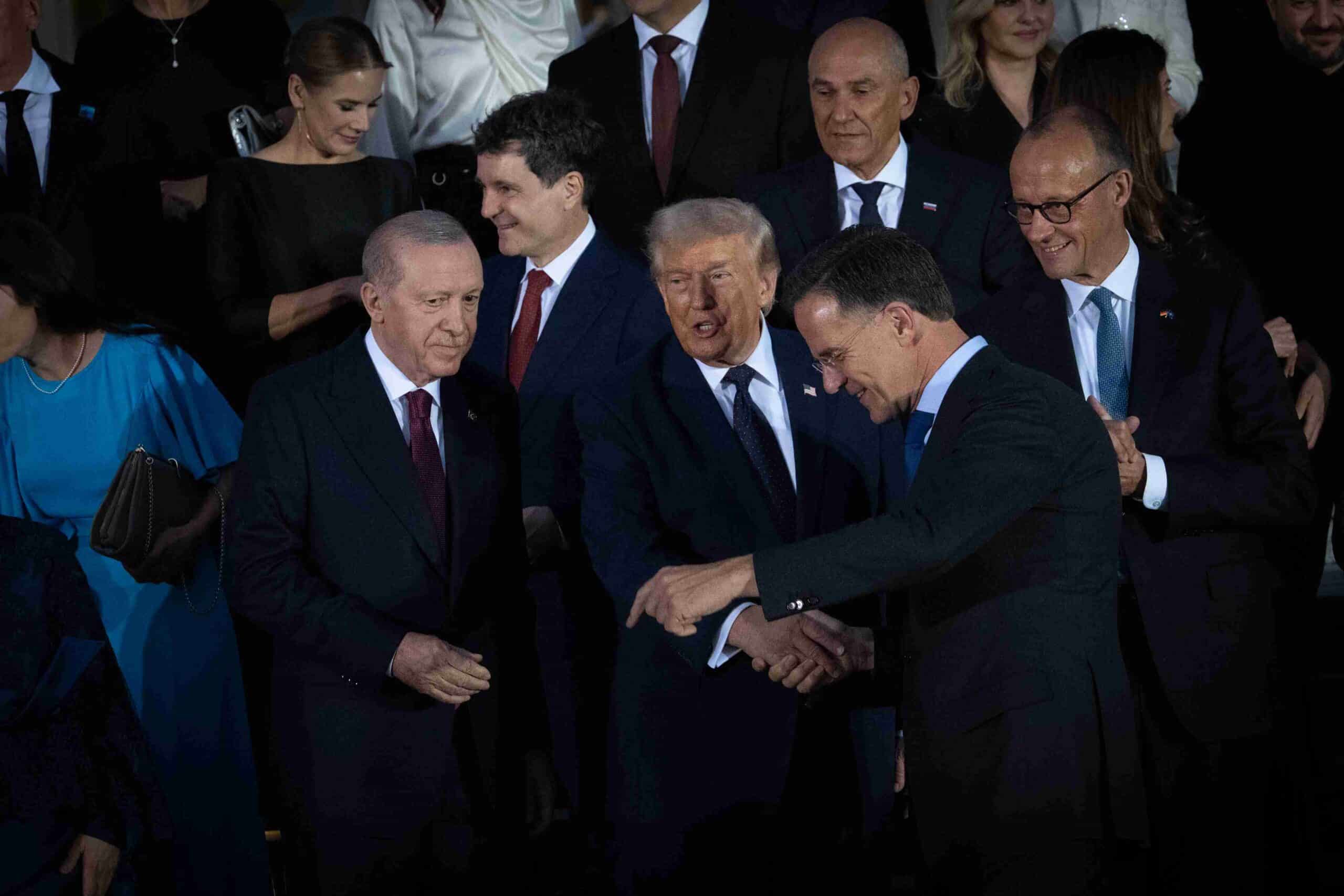
At the vortex: Donald Trump, whose April 1, 2026, NATO threats—alarming Europe per timelines—stem from a motivation to extract "fair share" contributions, viewing troop presence as leverage amid U.S. domestic priorities and Middle East flare-ups. His administration eyes reallocating forces, potentially slashing the 100,000 U.S. troops in Europe, a move that could fundamentally alter the balance of power on NATO's northern flank.
NATO Secretary-General Mark Rutte, the pragmatic Dutch leader, balances alliance cohesion with U.S. demands, his "bit slow" admission revealing internal frictions that underscore the challenges of multi-theater commitments. Vladimir Putin leverages the Easter truce—announced April 9—for tactical respite, possibly to regroup for northern provocations, motivated by weakening NATO unity and exploiting divisions exposed by global tensions.
Baltic leaders like Estonian PM Kaja Kallas embody resolve: her government's 30-day plan targets food, fuel, and defense stockpiles, driven by historical Russian hybrid threats (e.g., 2007 cyber attacks), positioning Estonia as a model for Baltic security enhancements. Norway's Jonas Gahr Støre navigates alleged Ukraine ties amid Arctic interests, motivated by energy security—Norway's gas fields vital to Europe, especially as disruptions from Ukraine-related conflicts loom. Volodymyr Zelenskyy accuses Moscow-Iran links to rally Western support, his position precarious post-truce, intertwining European and Middle Eastern theaters.
Lesser-known: Finnish President Alexander Stubb, who discussed NATO with Trump on April 1, and Lithuanian officials reaffirming unity that day, all threading a needle between U.S. reliability doubts and EU hesitancy, contributing to a patchwork of Nordic-Baltic resilience strategies.
The Stakes
Politically, a U.S. pullback risks fracturing NATO's northern flank, where Baltic states host enhanced forward presence battlegroups—now potentially exposed, as reflected in rising metrics on the Global Risk Index. Estonia's plan mitigates isolation but strains its 1.3 million population; failure means humanitarian crises, with refugees overwhelming neighbors and testing the limits of regional solidarity.
Economically, Norway's alleged Ukraine ops could invite Russian retaliation on energy infrastructure, spiking European gas prices amid Ukraine truce uncertainties and amplifying volatility in global energy markets. Humanitarian toll: Baltic families, many with Russian-speaking minorities, face hybrid warfare—disinformation, cyberattacks—exacerbating social divides and eroding cohesion in frontline communities.
Broader: Spillover from the truce could see Russian forces test Finnish-Norwegian borders, echoing 2024 exercises, while interconnected risks from US pressure in other regions add layers to the global picture. For global order, weakened transatlantic ties embolden authoritarians, with stakes for 25 million in the region and implications for worldwide alliances.
Market Impact Data
Markets exhibit risk-off jitters, with EUR stable at $1.00 (-0.0% 24h, +1.4% 7d) but broader assets flinching at NATO strains and oil risks. Recent events—Trump's withdrawal mulls (April 9, LOW impact), Estonia's plan (LOW), Russia-Baltic threats (April 7, MEDIUM)—fuel volatility, underscoring how NATO northern flank tensions influence investor sentiment worldwide.
Catalyst AI Market Prediction
Powered by The World Now Catalyst Engine, our AI analyzes causal chains from these northern flank tensions:
- OIL: Predicted + (high confidence) — Ukrainian strikes on Russian terminals and Trump threats curb supply; precedent: 2019 Aramco attacks (+15%). Risk: De-escalation.
- SPX: Predicted - (medium confidence) — Airline drags from safety reviews/oil shocks; 2019 Boeing precedent (-2% SPX).
- BTC: Predicted - (medium confidence) — Risk-off treats crypto as high-beta; 2022 Ukraine drop (-10%).
- ETH: Predicted - (medium confidence) — BTC correlation via DeFi; 2022 (-12%).
- USD: Predicted + (low confidence) — Safe-haven on oil fears; 2022 DXY +2%.
- XRP: Predicted - (low confidence) — Crypto cascades; 2022 (-10%).
- TSM: Predicted - (low confidence) — Semis hit by trade fears; 2022 (-5%).
- SOL: Predicted - (low confidence) — Altcoin deleveraging; 2022 (-15%).
Predictions powered by The World Now Catalyst Engine. Track real-time AI predictions for 28+ assets.
Looking Ahead
Echoing the April 1-2, 2026, timeline—Trump threats, Stubb talks, Europe frets, UK-Iran braces, Lithuania unity pledges—these events form a pattern of escalating doubts, now manifesting in Estonia's blueprint and Norway whispers. By mid-2027, Trump's pull (if enacted) could fragment NATO, spurring Baltic-Nordic "Northern Shield" pacts: ad-hoc alliances with Finnish tech, Norwegian subs, Estonian cyber defenses, accelerating EU autonomy like PESCO and fostering innovative defense collaborations tailored to the unique challenges of the northern flank.
Scenarios: Optimistic—truce holds, U.S. recommits post-Iran; baseline—regional self-reliance grows, weakening Article 5 deterrence; pessimistic—Russian probes (e.g., Suwalki Gap) exploit gaps, drawing Finland/Norway in. Key dates: NATO summit (June 2026), Estonia drills (Q3), truce review (May). Watch Russian Arctic maneuvers, which could signal shifts in Baltic security dynamics.
This humanizes the flank: Estonian teachers training civilians, Norwegian fishers eyeing horizons warily. A 'Northern Shield' could redefine Europe by 2027, trading transatlantic faith for resilient bonds, with profound implications for global stability and NATO's future role.
This is a developing story and will be updated as more information becomes available.