
China's Shadow Diplomacy: Unseen Alliances in the Asia-Pacific Power Play
The Story
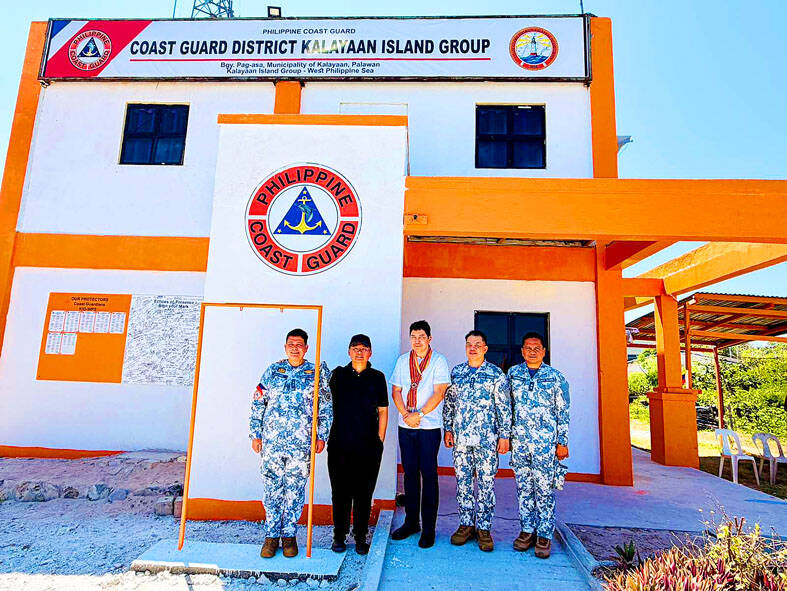
The narrative of China's shadow diplomacy unfolds like a meticulously scripted chess game, where each move is calculated to encircle adversaries without firing a shot. On April 9, 2026, reports emerged of North Korea and China agreeing to deepen cooperation following high-level talks between their foreign ministers, as detailed in AP News. This pact, confirmed through official statements from Pyongyang and Beijing, emphasizes economic ties, technology sharing, and mutual security assurances—hallmarks of a relationship that has thawed dramatically since early 2026. Just days earlier, on April 9, the Philippines inaugurated a new coast guard base on Thitu Island in the disputed South China Sea, a direct response to Beijing's maritime claims, according to AP News and Taipei Times. Yet, in a surprising twist, this escalation coincides with quieter overtures elsewhere. These contrasting actions highlight the multifaceted nature of China's diplomatic strategy, blending confrontation in contested waters with conciliation toward key neighbors, thereby amplifying Beijing's influence without provoking direct Western intervention.
Vietnam's top leader is slated to visit China next week, per The Diplomat, marking a potential thaw in relations strained by overlapping South China Sea claims. This visit, unconfirmed in official channels but reported by reliable diplomatic sources, builds on a February 2 shift in China-Vietnam dynamics noted in recent timelines. Adding to the intrigue, China imposed a shocking 40-day airspace blackout over a zone twice the size of Taiwan near Shanghai, starting April 9, with no explanation offered—speculated by Times of India analysts as military drills but framed by Beijing as routine. This "blackout," confirmed via aviation notices, evokes the human cost: commercial pilots rerouted, supply chains disrupted, and families separated, underscoring the subtle dominance China asserts without declaration. The opacity of such measures fuels speculation about underlying military preparations, potentially linked to broader regional tensions, and serves as a stark reminder of Beijing's ability to project power through non-kinetic means.
These events are not isolated. They form a pattern rooted in March 2026's timeline. On March 26, China launched its "Asian Security Promotion" initiative, a blueprint for regional stability under Beijing's leadership, explicitly courting neighbors wary of U.S. alliances. March 27 saw the Hong Kong-UK row over Jimmy Lai intensify, with China protesting U.S. interference on March 29, framing Western meddling as the root of instability. The same day, Philippines-China South China Sea talks yielded tentative agreements on fishing rights, per historical records—yet Manila's new base suggests fragile progress. China's March 27 endorsement of Singham's influence blueprint further hinted at soft-power expansion through proxies. This sequence reveals a deliberate escalation from rhetoric to action, positioning China as the indispensable architect of Asian security.
This evolution from defensive posturing to proactive encirclement humanizes the stakes: North Korean workers gaining rare economic lifelines amid sanctions; Vietnamese fishermen eyeing joint patrols to avoid clashes; Filipino communities on Thitu Island bracing for gray-zone tactics like militia boats. Recent escalations amplify this—China's nuclear drills near Taiwan (April 9, HIGH impact), Yellow Sea live-fire exercises (MEDIUM), South China Sea buildup (April 4, MEDIUM), and unveilings of handheld coil guns (April 5) and AI-driven canine robots for urban combat. Yet, Beijing rejects military aid to Iran ("never added fuel to the fire," Times of India) and touts new battlefield AI that "outsmarts everyone" (SCMP), signaling tech-savvy restraint. The KMT head's peace calls in Shanghai (April 10, Taipei Times) serve as a domestic olive branch, projecting stability amid external pressures. These technological advancements not only bolster China's military edge but also serve as diplomatic leverage, showcasing innovation as a pathway to partnership rather than pure aggression.
Confirmed: NK-China FM agreement, PH base opening, Vietnam visit reports, airspace ban, tech deployments. Unconfirmed: Exact terms of Vietnam talks; military intent of blackout (officials cite "training").
The Players
At the center is China, led by Foreign Minister Wang Yi and President Xi Jinping, motivated by securing a "buffer zone" against U.S.-led coalitions like AUKUS and QUAD. Beijing's playbook—diplomatic charm offensives paired with shows of force—aims to peel away U.S. allies without invasion risks. This dual approach allows China to maintain plausible deniability while steadily eroding Western footholds in the region.
North Korea's Foreign Minister Choe Son Hui, in AP-reported talks, pushes for sanctions relief via deepened ties, viewing China as a lifeline against isolation. Vietnam's top leader, To Lam, per The Diplomat, balances U.S. partnerships with economic dependence on China (over 30% of trade), motivated by domestic stability and SCS resource shares. The delicate tightrope walk by Hanoi exemplifies how economic realities often trump ideological alignments in Southeast Asian capitals.
The Philippines' President Ferdinand Marcos Jr. opens the Thitu base to assert sovereignty, backed by U.S. defense pacts, but faces domestic pressure from fishermen affected by Chinese coast guard harassment. Taiwan's Kuomintang (KMT) chair, during Shanghai visits, calls for "peace across the strait," positioning as a pro-dialogue force amid DPP hardlines—motivated by electoral gains and economic reunification dreams.
Peripheral players include the U.S., with Trump's China trip calculations intertwined with Iran ceasefire diplomacy (AP News), as detailed in related analyses like Trump's Hormuz Warnings Amid Middle East Strike: The Untapped Potential for US-Iran Diplomatic Breakthroughs and Pakistan Hosts US-Iran Talks Amid Middle East Strike Tensions, and the UK, lingering from Hong Kong rows. These actors navigate a web where China's soft power—aid, infrastructure via Belt and Road—contrasts U.S. military umbrellas, humanizing choices for leaders balancing national pride and prosperity. The interplay of these global powers adds layers of complexity, as Middle East dynamics increasingly influence Asia-Pacific strategies.
The Stakes
Politically, China's encirclement risks fracturing U.S. alliances: A Vietnam tilt could neutralize a QUAD partner; NK deepening ties amplify missile threats. Economically, interdependencies—China-Vietnam trade at $200B+ annually—mitigate sanctions, reshaping supply chains. Humanitarian implications loom large: SCS fishermen (over 100 clashes yearly) face militia swarms; NK citizens endure famine risks without aid diversification; Taiwanese face drill-induced anxiety, with evacuations straining families. Track escalating risks with our Global Risk Index.
For the West, stakes involve credibility—PH base tests mutual defense treaties. Globally, this shadow play diverts from Mideast fires, but spillover risks abound: AI/robot deployments signal hybrid warfare readiness, potentially escalating accidents in disputed waters. Domestically, KMT peace rhetoric bolsters Xi's narrative of harmonious rise, but failure invites hardliner backlash. The broader geopolitical ripple effects could redefine not just regional balances but global norms on territorial disputes and technological warfare.
Market Impact Data
Asia-Pacific tensions ripple through global markets, with semiconductors particularly vulnerable given Taiwan's centrality. The S&P 500 (SPX) trades at $680, up 0.6% over 24 hours and 3.7% over seven days, buoyed by tech resilience but shadowed by risk-off signals. Taiwan Semiconductor Manufacturing Co. (TSM), pivotal to China-Taiwan frictions, sits at $365, down 0.1% daily but up 7.8% weekly, reflecting supply chain jitters from China's drills and airspace bans. These market movements are exacerbated by uncertainties in trade routes and tech exports, underscoring the economic interdependence that amplifies geopolitical shocks into financial volatility.
Broader sentiment ties into geopolitical oil shocks and trade fears, amplifying volatility. Investors are closely watching how these diplomatic shifts might influence commodity flows, currency strengths, and equity rotations away from high-risk assets.
Catalyst AI Market Prediction
Powered by The World Now Catalyst Engine, our AI analyzes causal links from these developments:
- SPX: Predicted - (medium confidence) — Aviation safety from China's blackout prompts reviews, hitting airlines (5-10% S&P weight); compounded by SCS risk-off. Historical: 2019 Boeing groundings dragged SPX ~2%.
- USD: Predicted + (low confidence) — Safe-haven flows from regional shocks. Historical: 2022 Ukraine saw DXY +2% in 48h.
- XRP: Predicted - (low confidence) — Crypto cascades on risk-off. Historical: 2022 drop ~10%.
- TSM: Predicted - (low confidence) — Trade fears from China-Taiwan drills. Historical: 2022 Ukraine -5%.
- OIL: Predicted + (high confidence) — SCS disruptions echo supply curbs. Historical: 2019 Aramco +15%.
- SOL: Predicted - (low confidence) — High-beta altcoin deleveraging. Historical: 2022 -15%.
- BTC: Predicted - (medium confidence) — Risk-off selling. Historical: 2022 -10%.
- ETH: Predicted - (medium confidence) — BTC correlation. Historical: 2022 -12%.
Predictions powered by The World Now Catalyst Engine. Track real-time AI predictions for 28+ assets.
Looking Ahead
China's alliances could forge a "buffer zone" by mid-2026, with Vietnam talks yielding joint SCS patrols and NK pacts boosting rare-earth exports, countering Western sanctions via economic webs. Escalation risks: PH base sparks militia incidents, forcing U.S. naval responses; Trump's China trip (unconfirmed date) might yield de-escalation or tariffs, per Iran ceasefire precedents, as seen in Trump's Intervention After Middle East Strike: How US Pressure is Redefining Israel's Lebanon Strategy Amid Fragile Ceasefire and Middle East Strike Ceasefires: The Underappreciated Role of Royal Diplomacy in Shaping Global Power Shifts. The convergence of Asia-Pacific maneuvers with Middle East dynamics highlights interconnected global flashpoints.
Scenarios: Optimistic—new security framework by July 2026, stabilizing trade. Pessimistic—drill mishaps ignite conflicts, spiking oil 15%+. Key dates: Vietnam visit (next week), PH-China fishing talks resumption (late April), Asian Security Promotion follow-up (Q2). Diplomacy's success hinges on restraint; failure invites aggression, redrawing maps with human costs—displaced communities, economic refugees—in its wake. As these events evolve, ongoing monitoring of diplomatic signals and military posturing will be crucial to anticipating shifts in the balance of power.
This is a developing story and will be updated as more information becomes available.






