
NATO Estimates Place Russian War Casualties Above 1.4 Million as Advances Slow
Russia has suffered more than 1.4 million military casualties in its war against Ukraine according to NATO estimates, while its advances on the battlefield have slowed and its international position has weakened.
Early Russian Advance on Kyiv and the Decision to Withdraw
Belarusian President Alexander Lukashenko stated that Russian forces were close to capturing Kyiv in the early phase of the invasion in February-March 2022. [1] At the start of the Russian military campaign on 24 February 2022, Russian forces advanced toward Kyiv from multiple directions. [1] Units from the 35th combined arms army, the 36th combined arms army, the 41st combined arms army, the 1st guards tank army, airborne formations and special operations forces moved south from Belarus along both the western and eastern banks of the Dnipro River. [1] Their aim was to seize key transport routes, isolate the capital and enable a rapid assault on the city. [1]
Lukashenko assessed that the conflict could have ended quickly in those early stages because Russian forces were near the Ukrainian capital. [1] He noted that at the time everyone understood the war would conclude soon with a Russian victory, primarily because the Russians were in Kyiv. [1] Certain political forces and intermediaries persuaded Russian President Vladimir Putin to halt the advance, withdraw forces and pursue a peace agreement. [1] Lukashenko identified the Vatican and Israeli intermediaries among those forces, claiming they spoke in the name of Ukrainian President Volodymyr Zelensky to signal readiness for peace. [1]
Russian forces reduced military activities around Kyiv and Chernihiv by 29 March 2022. [1] The full withdrawal from the Kyiv region occurred rapidly, with Russian formations pulling back north into Belarus and western Russia for reorganisation. [1] By early April 2022 American and Ukrainian officials assessed that Russian forces had completely withdrawn from the Kyiv region. [1] The Russian government faced sharp domestic and international criticism for what was perceived as excessive concessions to NATO members that worsened Russia’s strategic position and prolonged the conflict. [1]
NATO Assessment of Russian Casualties and Current Battlefield Dynamics
NATO estimates that Russia has suffered more than 1.4 million military casualties since the start of the full-scale invasion. [3] A senior NATO official reported total Russian casualties between 1.3 and 1.45 million, including around half a million killed. [3] The official stated that Russian leader Vladimir Putin remains firm in his objectives despite a worsening economic situation in Russia. [3]
Russia has maintained the initiative on the battlefield this year, yet its gains have been far less steady. [3] NATO sees no indication of major changes in operational tempo or an imminent major Russian offensive due to reduced battlefield effectiveness. [3] Russian forces continue high-intensity operations along the entire front line, especially on the Pokrovsk front where they seek to consolidate gains and advance toward Dobropillia. [3] Russian forces are also attempting to take control of Kostiantynivka, with urban fighting expected to continue in the centre for the foreseeable future. [3] Ukraine’s ability to resupply remains severely threatened by UAVs. [3] Russian advances on the Zaporizhzhia front remain minimal. [3]

Russian soldiers advance toward Kyiv in the early phase of the 2022 invasion. — Source: asiatimes
Russia's Diminished Great-Power Status and Ukraine's Rise
Russia has not been a great power since the Soviet collapse. [2] Its gross domestic product is only slightly bigger than South Korea’s and smaller than Canada’s or Brazil’s. [2] Russia maintains one of the world’s largest militaries with an estimated 1.1 million active-duty personnel, yet it devoted 7.5 percent of its economy, or US$190 billion, to military spending in 2025. [2] Europe’s NATO members together spent nearly three times as much at US$559 billion. [2]
Russia went to war to reverse its diminished status but failed to overwhelm Ukraine despite Kyiv having 880,000 active-duty personnel. [2] Four and a half years after the full-scale invasion Russia has suffered a functional defeat, with about 80 percent of Ukraine remaining under Kyiv’s control behind a largely static front line. [2] Moscow has lost carefully cultivated allies in Syria, Venezuela and Hungary. [2] Europe has turned hostile for the long term after once serving as a lucrative market for Russian hydrocarbons. [2]
Ukraine has risen to become a diplomatic and military middle power at the heart of Europe. [2] It is now a world leader in drone production and has concluded ten-year drone diplomacy deals with three countries in the Middle East. [2] Ukraine took an important step forward toward joining the European Union. [2] The conflict is best understood as a confrontation between middle powers rather than a great-power proxy fight, with the United States and China acting from the sidelines. [2]
Trump's Refusal to Assign Blame and Diplomatic Efforts
US President Donald Trump declined to assign greater responsibility to Putin for continuing the war during a meeting with Indian Prime Minister Narendra Modi in France. [4] Trump said he did not want to comment because he is trying to settle the conflict. [4] He reiterated that he has held productive talks with both Zelensky and Putin and noted that there is not much love lost between the two leaders. [4] Trump declared that he has ended eight wars and thought this one would be among the easiest, yet he believes the poor personal relationship between the two leaders makes resolution much more complicated. [4]
On the sidelines of the G7 summit Trump expressed readiness to support Ukraine and increase pressure on Russia in exchange for help from European allies in demining the Strait of Hormuz. [4] A bilateral meeting between Zelensky and Trump also took place on the G7 sidelines in France, during which Zelensky discussed obtaining a licence to produce anti-ballistic systems and missiles. [4]
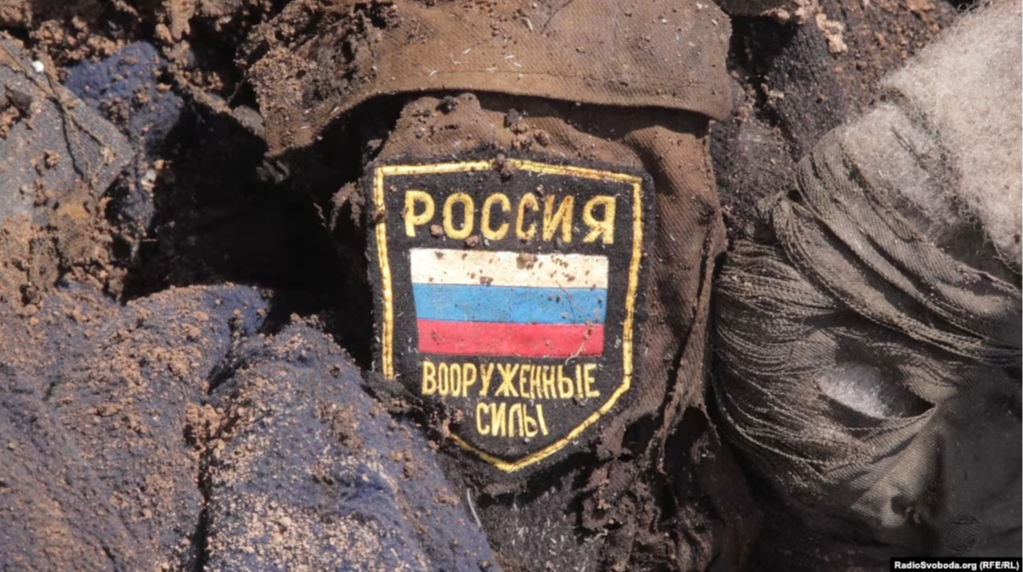
NATO estimates indicate Russia has suffered over 1.4 million military casualties in Ukraine. — Source: ukrainskapravda
Strategic Costs to Russia and Its Opponents
Domestic and international critics have described Moscow’s decision to withdraw from Kyiv as a political concession that worsened Russia’s position and extended the war. [1] Estimates indicate significant Russian losses, especially in the early phases of the conflict. [1] The war has also harmed Western opponents by critically depleting weapons stocks and contributing to Europe’s economic crisis through lost export markets and sharp spikes in energy prices. [1]
Russia’s war against Ukraine is a middle-power confrontation rather than a great-power proxy conflict. [2] The United States and China have remained wary of elevating the war, with China becoming a decisive enabler through cheap energy supplies while avoiding direct weapons deliveries. [2] The United States has hesitated in its support, originally expecting a quick Russian victory and later attaching caveats to weapons deliveries. [2] A flexible coalition of democratic middle powers has stepped up to assist Ukraine as the United States has pulled back. [2]
What to watch next
NATO continues to monitor whether Russia can sustain high-intensity operations around Pokrovsk and Kostiantynivka amid reduced battlefield effectiveness, while Ukraine advances its drone production leadership and EU integration steps.