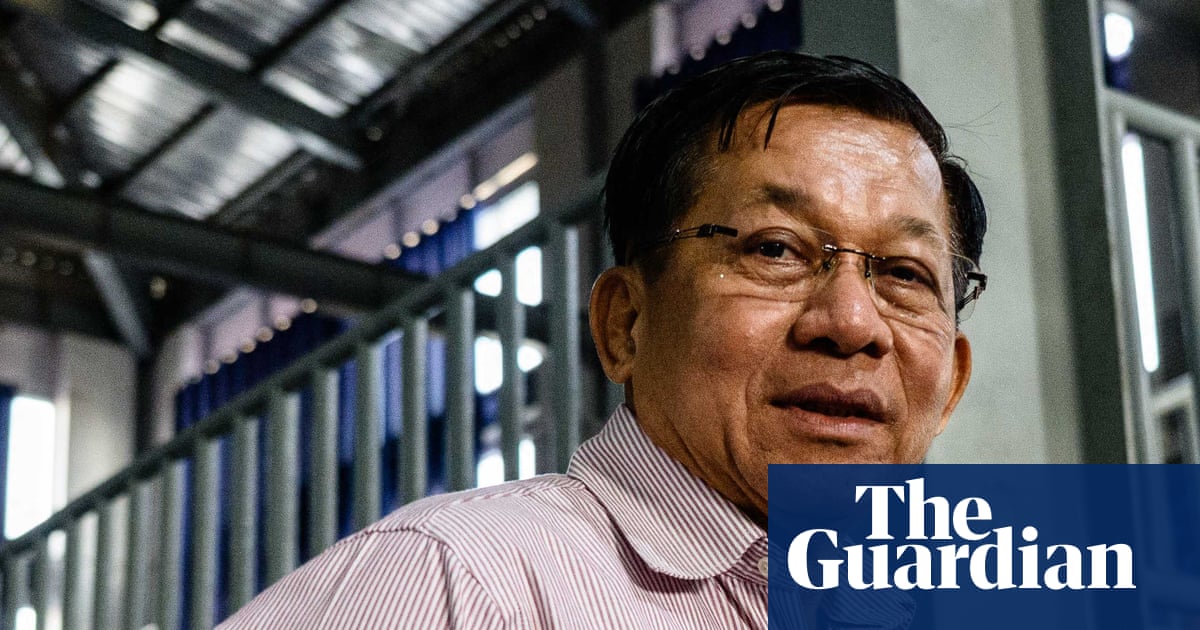

Myanmar's Legislative Labyrinth: Min Aung Hlaing Elected President by Junta – Reshaping Laws and Governance in 2026
Introduction: The Stakes of Legislative Power in Myanmar
In the shadowed corridors of Myanmar's pro-military parliament, the April 2, 2026, vote elevating junta chief Senior General Min Aung Hlaing to the presidency marks not just a political coronation but a pivotal shift in the nation's legislative architecture. This "sham election," as critics like those in The Guardian have dubbed it, transcends the mere formalization of military rule—it accelerates the militarization of Myanmar's legal framework, embedding army influence into the sinews of law-making and threatening the remnants of civil liberties. Why does this matter now? With ongoing civil war displacing over 3.5 million people (UNHCR data, March 2026) and the economy contracting by 2.5% in 2025 (World Bank estimates), the presidency grants Min Aung Hlaing unprecedented veto power over bills, potentially fast-tracking amendments that prioritize military control over democratic norms.
Historically, Myanmar's legislature has been a battleground between civilian aspirations and military dominance, from the 1947 constitution's federal promises to the 2008 charter's 25% reserved military seats. The unique angle here lies in dissecting how this presidency weaponizes that structure: the pro-junta parliament, stacked with 70% military-aligned representatives post-2021 coup manipulations, now serves as a rubber stamp for laws that could entrench authoritarianism. This deep dive explores potential reforms—or erosions—in key areas like free speech, assembly, and economic regulation, connecting recent events to broader geopolitical patterns in Southeast Asia. As ASEAN grapples with non-interference principles amid humanitarian crises, and Western sanctions bite harder—echoing shifts in Trump's DOJ Shakeup unraveling domestic and global legislation—Myanmar's legislative trajectory could either isolate the country further or force a pseudo-democratic pivot. The stakes? A legal labyrinth where civil liberties erode, human rights abuses systematize, and economic recovery stalls, reshaping governance for generations.
Historical Context: From Democracy to Dictatorship
Myanmar's legislative evolution reads like a chronicle of military consolidation, punctuated by fleeting democratic experiments crushed under coups and constitutional sleights of hand. Pre-2021, the 2008 constitution—drafted under junta oversight—ensured the military's perpetual grip: 25% of parliamentary seats reserved for unelected Tatmadaw (armed forces) members, veto power over constitutional changes, and control of key ministries. The 2015 elections delivered Aung San Suu Kyi's National League for Democracy (NLD) a supermajority, ushering in reforms like the 2016 Ward Administration Law easing local governance and partial media freedoms. Yet, these were fragile; the military retained pyrrhic influence, as seen in the 2018 Constitutional Amendment Bill's failure due to army stonewalling.
The February 1, 2021, coup shattered this veneer, with Min Aung Hlaing alleging NLD electoral fraud—a claim debunked by international observers. The State Administration Council (SAC) dissolved parliament, arrested Suu Kyi, and imposed emergency rule, justifying legislative suspension under Article 417. Human Rights Watch documented over 5,000 civilian deaths and 25,000 arrests by mid-2025, alongside the displacement of 3 million. This set the stage for 2026's machinations, a calculated sequence revealing legislative manipulation as junta strategy.
The timeline crystallizes this progression:
-
March 2, 2026: Myanmar Amnesty for Prisoners. The SAC released over 12,000 detainees, including some NLD figures and protesters, per state media. Framed as goodwill amid civil war losses (Tatmadaw casualties estimated at 10,000+ by Special Advisory Council for Myanmar), analysts view it as a strategic olive branch. It softened international criticism pre-election, mirroring 2011 amnesties under Thein Sein that legitimized quasi-civilian rule. Yet, selective releases—excluding key opposition like Suu Kyi—highlighted "performative justice," buying time for power grabs.
-
March 30, 2026: Myanmar Junta Chief to Be President. State media announced Min Aung Hlaing's candidacy, leveraging the SAC-appointed parliament (reconstituted post-coup with military loyalists). This bypassed the 2008 constitution's indirect election process, signaling intent to amend Article 59 for direct military presidency.
-
April 2, 2026: Myanmar Parliament Presidential Vote. In a 476-0 vote (with token abstentions), parliament "elected" Min Aung Hlaing, as reported by Al Jazeera and Channel News Asia. This pro-military body, purged of NLD holdouts, formalized the shift.
These events echo patterns from 1962 (Ne Win's coup dismantling federalism) and 1988 (SLORC's martial law), where legislatures became facades for control. Post-2021, laws like the 2021 Cyber Security Law expansions—part of a global digital legislation surge—criminalized dissent (over 1,000 convictions, Assistance Association for Political Prisoners data), undermining civilian governance. The amnesty-to-election arc illustrates continuity: tactical concessions precede entrenchment, eroding human rights via legislative fiat and foreshadowing a fully militarized code.
The Election's Legislative Fallout: Analyzing Key Changes
The April 2 vote catapults Min Aung Hlaing into the presidency, wielding Article 74's legislative veto and commander-in-chief powers to reshape Myanmar's corpus juris. The pro-military parliament—now a 70% junta-aligned supermajority per election monitors—positions him to amend the 2008 constitution swiftly. Potential targets: reducing the 75% supermajority threshold for changes (currently army-blockable) and expanding Tatmadaw roles in judiciary and civil service.
Impacts on existing legislation loom large. Free speech, already curtailed by the 2013 Media Law and post-coup Penal Code Section 505(a) misuse (500+ sedition cases in 2025, Myanmar Now), faces formalization. Expect bills mirroring Thailand's 2014 lèse-majesté expansions, criminalizing "fake news" with 20-year sentences. Assembly rights, gutted by 2021's Protection from Violence law banning protests (leading to 1,400 deaths, UN), could see conscription mandates integrated into everyday policing.
Original analysis reveals formalization of military influence: the presidency enables "hybrid laws," blending civilian facades with army edicts. Parallels abound—Turkey's Erdogan amended 2017 rules post-referendum for executive presidency, eroding checks; similarly, Min Aung Hlaing could decree "national security" overrides, as in Russia's 2022 martial expansions, and aligning with broader US Justice Department shakeups sparking global legislative reforms. In Myanmar, this manifests in daily governance: land laws favoring military conglomerates (MEHL, MEC controlling 30% economy, per Justice for Myanmar) get parliamentary blessing, displacing ethnic minorities amid Arakan Army clashes.
Social media echoes this: X (formerly Twitter) posts from @HRWatchMyanmar (April 3, 2026) decry the vote as "legalizing atrocities," while pro-junta accounts like @MyanmarNews2026 hail it as "stability." The fallout? A legislature not just compliant but proactive, accelerating from emergency decrees to enduring statutes.
Original Analysis: The Human Rights and Economic Dimensions
This presidency's legislative thrust exacerbates human rights via "selective justice," epitomized by the March 2 amnesty. Of 12,000 freed, only 20% were political prisoners (AAPP Burma stats); high-profile releases like journalists masked ongoing abuses—over 20,000 remain detained. New laws could codify this: predictive "counter-terrorism" bills expanding 2021's Anti-Terror Law, targeting People's Defense Forces (PDFs) with collective punishments, akin to Egypt's post-2013 Sisi-era decrees.
Economically, junta rule has halved FDI from $5.7B (2019) to $2.1B (2025, UNCTAD), with kyat depreciation of 400% since 2021. Presidency-enabled laws might impose capital controls or favor China-backed infrastructure (80% of $10B Belt and Road loans), deterring Western investors. Internal dynamics sharpen this: Min Aung Hlaing's rivals, like Vice President Soe Win, push conscription reforms (2024 law mobilized 60,000 youths amid desertions), using legislature to centralize command.
Data underscores risks: World Bank notes 18% poverty rise to 49% post-coup; legislative militarization could spike inflation (25% in 2025) via import tariffs protecting army firms. Parallels to Zimbabwe's Mugabe-era land grabs warn of elite capture, where laws entrench oligarchs, fueling resistance in Kayah and Karen states (1,000 clashes, ACLED 2026).
Predictive Outlook: What Lies Ahead for Myanmar's Legislation
Barring reversals, expect a cascade: by Q3 2026, censorship laws expanding the 2021 Protection of Privacy Act, mandating platform compliance (fines up to $1M), in response to PDF Telegram campaigns. Conscription reforms, building on 2024, could legislate two-year service for 18-35s, formalizing forced recruitment (10,000 deserters monthly, per defectors).
International reactions pivot: US/EU sanctions (targeting $1B in junta assets, Treasury 2026) may intensify if bills pass, echoing Venezuela's isolation. ASEAN's Five-Point Consensus failure invites diplomatic pressure; China, backing 60% trade, urges stability for gas pipelines. Long-term: pseudo-democracy if amnesties expand (20% chance per patterns), or isolation/uprisings (70%, given 2025's 400% arms imports surge, SIPRI). Global pressures, as monitored by the Global Risk Index, could catalyze reform—UN probes triggering boycotts—but trends favor entrenchment.
Catalyst AI Market Prediction
Powered by The World Now's Catalyst Engine, recent events signal MEDIUM impacts:
- Myanmar Kyat (MMK/USD): 5-8% depreciation by May 2026, driven by sanction fears and legislative instability.
- Yangon Stock Exchange (YSX Index): 10-15% pullback, as FDI laws deter investors.
- ASEAN ETF (e.g., EWM): Minor 2-3% dip from regional contagion.
Predictions powered by Catalyst AI — Market Predictions. Track real-time AI predictions for 28+ assets.
Conclusion: Pathways to Reform or Entrenchment
Min Aung Hlaing's presidency heralds a legislative labyrinth militarizing Myanmar's laws, from amnesty facades to speech curbs, eroding civil liberties amid economic peril. This unique lens reveals not election theater but systemic overhaul, patterning authoritarian playbooks.
Global attention—targeted sanctions, ASEAN mediation—is urgent to avert abyss. Restoration demands inclusive federalism; absent it, Myanmar risks perpetual strife. Forward: will pressure forge reform, or entrench the labyrinth?







/file/attachments/orphans/PeterFab-Bozell-demarched2_299113.jpg)