
Trump's DOJ Shakeup: Unraveling the Web of Domestic Legislation and Global Implications
The Story
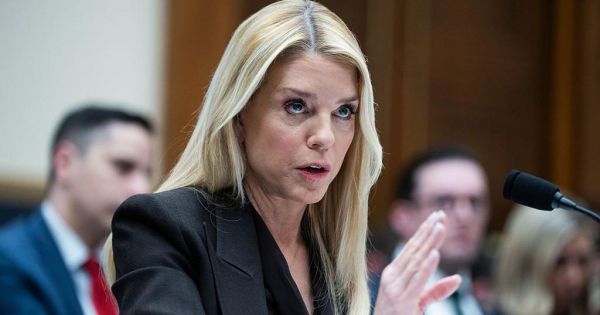
The breaking news erupted late on April 2, 2026, when President Trump abruptly dismissed Attorney General Pam Bondi, a staunch loyalist who had served as Florida's solicitor general before her DOJ tenure. Reports from The New Arab, France 24, Bangkok Post, and Greek Reporter confirm Trump tapped Todd Blanche—his ex-personal lawyer who defended him in past legal battles—as acting Attorney General. Confirmed details include the White House statement announcing Bondi's "immediate departure" and Blanche's interim leadership, effective that evening. Unconfirmed speculations, drawn from Newsmax and Mercopress, point to High Court setbacks and frustrations over the handling of Epstein-related files and perceived "political prosecutions" as catalysts, though the administration has not officially commented.
This firing caps a frenetic two-week period of legislative turbulence. On March 19, the DOJ issued a stern warning to New York Attorney General Letitia James, threatening federal intervention over the state's transgender youth medical treatments, framing them as violations of emerging national standards on parental rights and child protection. This set the tone for federal overreach into state jurisdictions. The very next day, March 20, the Trump administration escalated by suing Harvard University over alleged civil rights violations tied to affirmative action remnants and campus policies, signaling a broader war on elite institutions perceived as out of step with conservative priorities.
That same day, the U.S. Senate blocked a DHS funding bill, extending a partial government shutdown into its third week—a standoff Xinhua described as the House receiving the bill back amid Democratic resistance to border security riders. Tensions peaked on March 21 when Florida Governor Ron DeSantis signed a controversial cruise ban law, prohibiting state-subsidized ports from servicing vessels that allow "woke" policies like gender-neutral facilities, directly challenging international maritime norms. Concurrently, USCIS invalidated an old work permit form, stranding thousands of immigrants and sparking lawsuits over administrative overreach.
These events form a pattern of aggressive enforcement: DOJ warnings, high-profile lawsuits, funding brinkmanship, and state-federal synergies under Trump-DeSantis alignment. Bondi's ouster—linked by Newsmax analyst Johnny Yoo to Supreme Court rebuffs on related cases—appears as the breaking point, potentially clearing the way for a more pliant DOJ under Blanche to accelerate these initiatives without judicial drag. This dynamic highlights the silent erosion of civil liberties through blended federal and state powers in 2026 legislation.
The Players
At the epicenter is President Trump, whose motivations blend personal loyalty with policy acceleration; Blanche's appointment underscores a preference for trusted insiders over institutionalists like Bondi. Todd Blanche, a former federal prosecutor turned Trump defender in hush-money and January 6 cases, brings a track record of combative litigation, likely to prioritize DOJ alignment with executive agendas on immigration, civil rights reversals, and election integrity.
Pam Bondi, ousted after less than three months, represented the bridge between Trump's MAGA base and establishment GOP, but sources speculate her firing stems from failures to shield administration probes, including Epstein files that could implicate allies. Key adversaries include Democratic leaders like Chuck Schumer, suing over Trump's mail-voting executive order (Newsmax), and state AGs like James, now bracing for escalated federal pressure.
Broader players: Ron DeSantis, whose Florida laws exemplify state-level experimentation testing national boundaries; Harvard and elite universities as symbolic foes; and DHS, caught in shutdown limbo. Internationally, cruise lines like Royal Caribbean—hit by Florida's ban—lobby via trade groups, while EU nations eye U.S. civil rights shifts warily.
The Stakes
Politically, this DOJ pivot risks amplifying domestic divides: DHS funding hangs in balance, with shutdown extensions eroding public trust and forcing policy concessions. Florida's proof-of-citizenship voting law faces lawsuits (Newsmax), potentially validating state voter restrictions but inviting federal-state chaos. Humanitarian implications loom for transgender youth, immigrants via USCIS changes, and civil rights litigants.
Economically, the unique angle here is the inadvertent global spillover. Florida's cruise ban, targeting international operators, could violate WTO maritime service commitments, prompting retaliatory tariffs from tourism-dependent economies like the Bahamas or EU ports. Harvard lawsuit signals U.S. retreat from global academic norms, straining Fulbright exchanges and soft power. Immigration clampdowns—USCIS invalidations echoing H-1B reforms (March 28 timeline)—threaten tech talent pipelines, irking Asian allies like India and Taiwan amid U.S.-China rivalry.
Geopolitically, allies perceive unreliability: EU might accelerate digital services taxes in response to U.S. "culture war" exports, while WTO disputes over Florida laws test trade dispute mechanisms. This positions the U.S. as an isolationist wildcard, undermining alliances like AUKUS where policy predictability matters, as reflected in our Global Risk Index. Confirmed: immediate legal flux; unconfirmed: Epstein files' role, but stakes include eroded U.S. legislative credibility abroad. For context on related geopolitical tensions, explore our oil price forecast amid Trump's Iran strategy.
Catalyst AI Market Prediction
The World Now's Catalyst AI engine detects risk-off signals from this DOJ instability, linking domestic policy volatility to broader geopolitical uncertainty. Key predictions:
- SOL: Predicted decline (low confidence) — Causal mechanism: High-beta crypto dumps on risk-off liquidation. Historical precedent: No direct; based on 2022 Ukraine SOL -20% in days. Key risk: Meme/alt rebound.
- BTC: Predicted decline (medium confidence) — Causal mechanism: Risk-off selling dominates accumulation amid geopolitical oil shocks. Historical precedent: 2022 Ukraine BTC -10% in 48h. Key risk: Miner hodl prevents cascade.
- SPX: Predicted decline (high confidence) — Causal mechanism: Immediate risk-off selling from oil supply threat headlines triggers algorithmic de-risking. Historical precedent: 2019 Soleimani strike caused SPX -2% in one day. Key risk: Oil surge contained below $140 limits inflation fears.
Recent event timeline context: Low-impact moves like US Forest Service HQ relocation (April 1) pale against high-impact H-1B reforms (March 28), amplifying volatility.
Predictions powered by The World Now Catalyst Engine. Track real-time AI predictions for 28+ assets. Learn more at our Catalyst AI — Market Predictions page.
Looking Ahead
Scenarios diverge sharply. Optimistically, Blanche's DOJ fast-tracks DHS funding via concessions, ending shutdown by mid-April and stabilizing markets. Pessimistically, intensified lawsuits—over Florida citizenship proofs, Harvard, or NY transgender policies—prolong gridlock, inviting Supreme Court interventions by May.
Internationally, expect WTO scrutiny of cruise bans by Q3 2026, with EU countermeasures on U.S. ag exports. UN human rights bodies may cite DOJ shifts in reports, straining NATO cohesion amid Ukraine aid debates. Immigration: USCIS reversals could spark 2026 migration surges to Canada/EU, fracturing global pacts.
Long-term: isolationist tilt weakens alliances; predict 20% drop in U.S. FDI from Asia by 2027 if patterns hold. Key dates: House DHS vote (April 5?), SCOTUS dockets (late April), WTO filings (summer). This shakeup foreshadows a U.S. legislature prioritizing sovereignty over harmonization, reshaping global dynamics.
This is a developing story and will be updated as more information becomes available.






/file/attachments/orphans/PeterFab-Bozell-demarched2_299113.jpg)