
Most Dangerous Countries Face Renewed Attacks From Nigeria to the Middle East and Ukraine
Ongoing conflicts around the world continue to produce deadly violence, with fresh attacks in Nigeria's Plateau State killing at least nine people, including a pastor, while fighting intensifies in Ukraine, the Middle East and the occupied West Bank. In several most dangerous countries, renewed strikes have underscored the persistent threats to civilians and energy routes alike.
Plateau State Killings Condemned
The Northern Christian Association condemned recurring killings in Plateau State, stating Nigerians must not become accustomed to violence and that every life matters. The association said the latest attacks, which reportedly claimed at least nine lives across communities in the state, including a pastor travelling to church, underscored the need for the government and security agencies to move beyond reactive measures and prevent attacks before they occur. The NCA Chairman, Rev. Joseph Hayab, made the position known in a statement issued to journalists in Kaduna on Tuesday. Hayab expressed concern over the recurring violence in Plateau State and its devastating impact on families, communities and livelihoods. He said every life lost represented a human tragedy that should command the attention of the government and Nigerians, irrespective of ethnic, religious or political differences. According to him, the recent attacks occurred between Saturday night and Sunday morning across parts of Barkin Ladi, Riyom and neighbouring communities. He said five people travelling towards Gana-Ropp in Barkin Ladi were reportedly killed when their vehicle came under attack, while a pastor and another person were killed on their way to church at Dorowa Babuje. Hayab added that separate attacks were also reported at Baten Wereng and Ratyidi. “Is that how lives have become so cheap that they can now be taken at will? Nigerians must not get used to killings. Every life matters. We cannot continue to wake up to reports of innocent people being killed and gradually accept such incidents as part of our normal existence,” he said. The NCA chairman said the frequency of attacks should not diminish Nigerians’ sense of compassion, stressing that every victim left behind relatives, friends and communities that continued to bear the consequences of the violence. While commending the Federal and Plateau State governments, as well as security personnel, for their efforts, Hayab urged the authorities to urgently review the security situation in vulnerable communities and strengthen measures to identify and neutralise threats before they result in attacks. He said increased deployment of security personnel could provide temporary reassurance, but argued that the long-term solution required a security system capable of detecting threats early, acting on credible intelligence and preventing attackers from reaching vulnerable communities. Hayab also called for closer collaboration between security agencies and local residents, describing communities as critical partners in the fight against insecurity. “Residents are often the first to notice unusual movements, suspicious activities and emerging threats in their communities. Such information could help security agencies prevent attacks if reliable channels are created for reporting intelligence and appropriate action is taken promptly,” he said. The association further urged security agencies to thoroughly investigate the attacks and ensure that those responsible were arrested and prosecuted in accordance with the law. The NCA condoled with the families of the victims, affected communities and the Plateau State Government, while calling for support for residents whose lives and livelihoods had been disrupted by the violence. Hayab said the recurring attacks should remind authorities that the protection of citizens should not be measured only by the response after an incident, but also by the ability of security agencies to anticipate threats, prevent attacks and protect vulnerable communities [1].
Intensified Fighting in Ukraine
Ukrainian forces repelled 248 Russian combat clashes in the past day, the highest number on the Pokrovsk front with 33 attacks. The Russians are applying pressure along the entire line of contact. A total of 248 combat clashes have occurred over the past day, most of them on the Pokrovsk and Kostiantynivka fronts. On the North Slobozhanshchyna front, the Russians conducted five attacks near the settlements of Buniachyne, Mala Korchakivka and Yunakivka. On the South Slobozhanshchyna front, Ukrainian units repelled 10 Russian attacks. The Russians attempted to advance near the settlements of Starytsia, Kozacha Lopan, Lyman, Symynivka, Rybalchyne and Zarubynka. On the Kupiansk front, the Russians conducted one attack near the village of Kivsharivka. On the Lyman front, Ukrainian forces repelled Russian attempts to break through the defence, with the Russians conducting five attacks near the settlements of Stavky, Shyikivka, Novoselivka and Derylove. On the Sloviansk front, the Russians conducted four assaults near the settlements of Ozerne, Mykolaivka and Rai-Oleksandrivka. On the Kramatorsk front, the Russians conducted one attack towards the village of Fedorivka Druha. On the Kostiantynivka front, 19 Russian attacks were recorded. The Russians conducted assaults near the settlements of Kostiantynivka, Novoselivka, Illinivka, Dovha Balka, Rozkishne and Novopavlivka. The highest number of assaults was recorded on the Pokrovsk front, where Ukrainian forces stopped 33 Russian attacks. The Russians were active near the settlements of Bilytske, Serhiivka and Novopavlivka and conducted assaults towards Toretske, Sofiivka, Dobropillia, Novyi Donbas, Vilne, Hannivka, Krasnopodillia, Vodianske, Dorozhnie, Vasylivka and Myrne. On the Oleksandrivka front, the Russians conducted one attack towards the village of Ternove. On the Huliaipole front, the Russians conducted 14 attacks. They attempted to advance near the settlements of Rizdvianka, Ternuvate and Kopani. On the Orikhiv front, Ukrainian forces stopped two Russian attempts to advance towards the village of Pavlivka. Over the past day, Ukraine's Air Force and Rocket Forces and Artillery struck one cluster of Russian personnel, three artillery systems and one command post [5].
Houthi Attacks Pressure Saudi Arabia and Global Energy
Houthi offensive against Saudi Arabia includes strikes on oil pipelines, attempts on Riyadh and Mecca, and expanded control around the Bab al-Mandab Strait, threatening to draw the US deeper into the Middle East conflict. The Iranian-backed Houthi militia is ramping up attacks against Saudi Arabia and its energy facilities as more parts of the country are facing missile and drone attacks, raising the prospects of a wider war breaking out in the Middle East. The Houthis’ offensive is creating another pressure point in the region that is already putting strains on energy supplies and U.S. military resources. With Iran restricting traffic through the Strait of Hormuz and the Houthis expanding their control around another vital shipping route, the Trump administration is facing growing risks of a bigger energy crunch or having to devote military resources to another front in the conflict. In recent days, the Houthis have hit Saudi Arabia’s most important oil pipeline, tried to attack its capital city of Riyadh and was accused by the Saudis of trying to attack the holy city of Mecca. They have also expanded control around the Bab al-Mandab Strait, seizing territory and islands near a waterway where some 25% of tanker traffic and 10% of global oil supplies passed through before the war. The Houthi attacks on Saudi energy sites and their growing ability to disrupt traffic through the Bab al-Mandab Strait are putting new pressure on global oil markets already under strain from Iran’s interference in the Strait of Hormuz, another vital waterway where traffic is well below pre-war levels. Tehran has significantly slowed traffic through the Strait of Hormuz, a waterway where 25% of the world’s oil supply passes through, with repeated threats to tankers from missiles and mines laid throughout the strait. The pinch on both shipping routes has raised the prospect of greater disruption to energy exports, giving Iran and the allied Houthis a leverage point to expand the economic costs of the war. Iran has taken similar measures since the war started earlier this year, frequently lashing out at surrounding countries and hitting energy infrastructure in an effort to pressure the U.S. to back off its campaign. “This is a coordinated strategy with Iran to seize the opportunity now based on the factors that are having an impact on the economic side, to just drive up the costs,” said Javed Ali, a former counterterrorism official in the federal government and associate professor of practice at the University of Michigan. The recent escalation in the Red Sea and toward the Saudis has also forced the White House to consider how far it is willing to go to help the kingdom without getting entangled in another conflict in the Middle East. Saudi Arabia has repeatedly asked the U.S. for more military support in the war against the Houthis, but President Donald Trump has not yet signed off on striking Houthi targets. He has said the group has been in frequent contact with the U.S. and has agreed to not fight with America or target its troops. “The Houthis called us and they don’t want to fight with us,” Trump said last weekend. “They don’t want us to go after them and would much prefer not having us involved and they’re letting most ships go through.” The U.S. has launched strikes on the Houthis in Yemen and the Red Sea at several points over the last several years, including the spring of 2025 when the American military bombed the militia for nearly two months to stop attacks on commercial and U.S. shipping vessels in the Red Sea. The fight with the Houthis came to an abrupt end with the announcement of a ceasefire under which the Houthis agreed to stop targeting American ships in exchange for the U.S. ending its bombing campaign. Saudi Arabia has been embroiled in conflict with the Houthis since a Saudi-led coalition intervened in Yemen’s civil war starting in 2015 that was unable to defeat the militia despite years of fighting. The Houthis have been able to maintain control of significant shares of Yemen and continued to build up an arsenal of missiles and drones with support from Tehran. A lack of U.S. intervention may pose an issue for Saudi Arabia and its allies in the region as the Houthis are expanding the strategic positions in their control. Finding a diplomatic solution may also be a challenge with negotiations between Washington and Tehran stalled and diplomatic solutions likely to require some concessions to Iran. Adding another front to the conflict would also add to concerns about the strains the war with Iran has had on U.S. weapons and defense stockpiles, as dedicating missile interceptors or other weapons to a fight against the Houthis could take away from what is available against Iran or for other missions. “These are all things the White House and the military are going to have to think through. And again, there's a political clock ticking on this,” Ali said. “There are all the issues with dwindling inventories the U.S. has on defensive capabilities to intercept drones and ballistic missiles and cruise missiles, and then the offensive side too. The munitions we use against the Houthis — you're not going to be able to use them against someplace else” [3].
Violence Continues in Occupied West Bank
Israeli forces arrested Palestinians while occupiers attacked towns across the occupied West Bank, including more than 200 attacking Al-Mazraa al-Sharqiya and livestock stolen in Silwad [4].
Elusive Peace in Southern Lebanon
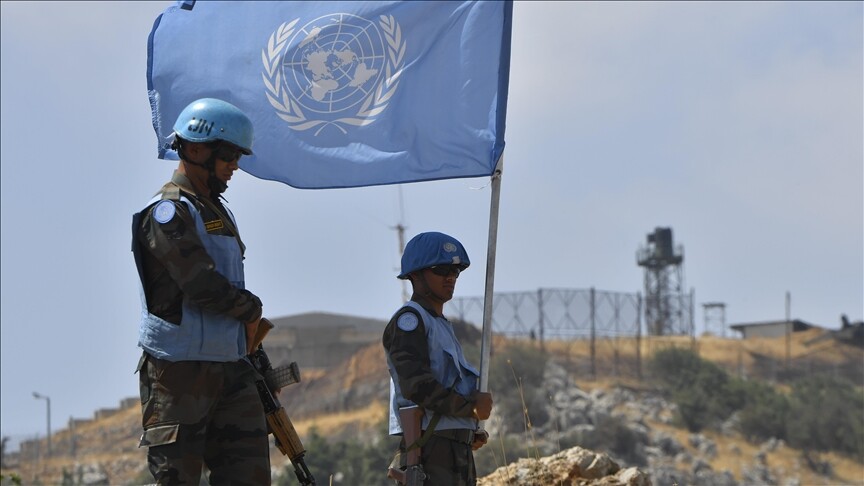
Lasting peace in southern Lebanon remains elusive according to the UN mission, requiring political will from the parties involved [2].
Calls for Prevention and Accountability
The Northern Christian Association's recommendations for intelligence-led prevention, community collaboration, investigations and prosecutions across the reported conflicts include urging the authorities to urgently review the security situation in vulnerable communities and strengthen measures to identify and neutralise threats before they result in attacks. Hayab also called for closer collaboration between security agencies and local residents, describing communities as critical partners in the fight against insecurity. The association further urged security agencies to thoroughly investigate the attacks and ensure that those responsible were arrested and prosecuted in accordance with the law [1].
What to watch next: Ukrainian forces continue to face pressure on the Pokrovsk front while the UN mission in southern Lebanon stresses the need for political will from the parties to achieve lasting peace.