Middle East Tensions Ease as US-Iran Pact Extends Ceasefire and Lowers Oil Prices
The United States and Iran signed an interim agreement on Wednesday to end their war in the Middle East, reopening the Strait of Hormuz, suspending sanctions, and extending a ceasefire for 60 days of further negotiations on a permanent truce and Iran's nuclear program. This development comes as Middle East tensions show signs of easing following months of conflict.
US and Iran Sign Interim Peace Agreement
The U.S. and Iran released the text of an interim agreement their presidents have signed to end their war on Wednesday. [1] The 14-point agreement extends a ceasefire announced in April by another 60 days, including in Lebanon, to allow the two sides to negotiate a final truce. [1] Both Trump and Iranian President Masoud Pezeshkian have digitally signed the memorandum in English and Farsi, U.S. and Iran officials said, with Iran’s foreign ministry saying the agreement was already in effect as of Wednesday. [1] The memorandum includes an immediate end to the war on all fronts, including Lebanon, the full resumption of maritime traffic “with no charge” in the Strait of Hormuz, the lifting of a U.S. blockade of Iranian ports, the waiving of U.S. sanctions on Iran, the unfreezing of its assets, and a $300 billion investment fund for the Islamic Republic’s post-war reconstruction. [1] The “Islamabad Memorandum of Understanding,” which also encompasses the Lebanese front, was signed by US President Donald Trump during his official visit to France. [2] Iranian Foreign Ministry Spokesperson Esmaeil Baghaei announced that the text was also signed by Iranian President Masoud Pezeshkian. [2] The text of the agreement, read to reporters by a US official on Wednesday, stipulates that Washington will suspend sanctions blocking Iranian oil sales effective from the moment of signing. [2]
Trump's Mixed Rhetoric on the Deal
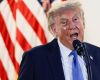
Trump, attending the G7 with other leaders in France, also withdrew at least one of his stated rationales for attacking Iran in the first place, saying it would be “unfair” for Tehran not to have ballistic missiles, having previously vowed to obliterate them. [1] “We’re going to bomb the hell out of them if they violate the agreement,” Trump said of Iran at a press conference. [1] He also called Iranians “smart people” as U.S. and Iranian negotiators work on a permanent truce over the coming 60 days, which Trump said he hoped would usher in peace in the Middle East and lower oil prices. [1] Earlier, he had said: “If I don’t like it, if they don’t behave, we’ll go right back to dropping bombs right smack in the middle of their head, OK?” [1] Trump on Wednesday gently rebuked Israeli Prime Minister Benjamin Netanyahu, who has distanced Israel from the U.S.-Iran agreement, over his tactics in Lebanon against Hezbollah. [1] “Netanyahu happens to be a good man, gets a little excited sometimes,” Trump told reporters. [1] “We have a little dispute over Lebanon. I say you can do a little softer touch, Bibi,” he said, using Netanyahu’s nickname. [1] “You don’t have to knock down a building every time somebody walks into it that’s from Hezbollah.” [1]
Impact on Oil Markets and Shipping
Oil prices fell again on Wednesday on prospects for the reopening of the Hormuz, the slender, vital waterway between Iran and Oman, with Brent crude futures below $80, at their lowest level since the war’s start. [1] They later regained more than 1% after Trump threatened renewed violence. [1] The presidential signatures ensure that the Strait of Hormuz will fully reopen “without delay” and the US military blockade on Iranian ports will be lifted “immediately,” Pakistani Prime Minister Shehbaz Sharif confirmed in the early hours of Thursday. [2] According to ship-tracking data, the Mraikh, a tanker chartered by QatarEnergy, has begun heading towards the Strait after remaining in the Persian Gulf since February. [3] The vessel loaded a cargo earlier this month and is expected to dock at Pakistan's Port Qasim, according to Bloomberg. [3] Draft documents released by the two sides show that ships will be allowed to pass through the Strait of Hormuz without tolls for two months, although the agreement leaves open the possibility of charges being introduced later. [3] Energy shipments in the Gulf have once again resumed sailing, after the US and Iran signed an interim agreement. [3]
Gains for Iran and Unresolved Issues
The deal immediately waives, but doesn't eliminate, sanctions that Trump imposed on Iran’s oil exports, allowing it once again sell its crude on the world market and restoring a revenue stream worth billions. [4] Last year, Iran earned an estimated $45 billion from oil sales. [4] The draft agreement includes language on Iran’s highly enriched uranium, requiring it be downgraded on site at a “minimum,” according to the US officials. [4] The interim pact also promises a $300 billion fund for reconstruction of Iran’s war damage. [4] One of the officials said Wednesday that the agreement doesn't require the US to pay any money toward the fund but permits other countries, such as Gulf Arab nations, to do so. [4] The deal also promises to unfreeze billions of dollars worth of Iranian assets held abroad during the negotiations under a procedure the two sides will work out, according to the text provided by US officials. [4] Iran’s theocratic government remains in place, its stockpile of highly enriched uranium has not been surrendered, its ballistic missile capabilities have not been destroyed and it has not ended its support for anti-Israel militias like Hezbollah in Lebanon. [1] Trump recanted his February promise to destroy all of Iran’s missiles and “raze their missile industry to the ground.” [1] “I’m saying that if other countries have them, it’s a little bit unfair for them not to have some,” Trump told reporters in Paris after leaving the summit. [1]
Ongoing Tensions in Lebanon
The leaders of France, Germany, Britain, Japan, Italy, Canada and the U.S. demanded in a joint statement an immediate ceasefire in Lebanon, where the memorandum calls for a halt to hostilities between Israel and the Iran-backed Hezbollah group that have killed thousands of people and displaced more than a million more. [1] Fighting there has abated but not ceased since the agreement was reached on Sunday, and Israel, which was not part of the negotiations and whose military is occupying southern Lebanon, says it retains the right to use force. [1] Lebanese state media reported fresh Israeli air strikes and artillery fire in several southern towns throughout Wednesday. [1] Lebanese security sources said Hezbollah had also launched two drone attacks on Israeli forces in the south. [1] Israel later said five of its soldiers had been injured in two Hezbollah drone attacks in southern Lebanon. [1] The deal calls for an end to the war in Lebanon, where Israel has been fighting Hezbollah. [4] However, Israel and Hezbollah aren't parties to the agreement. [4] Iran insists Israel must withdraw from the large swath of southern Lebanon it has occupied since March, but the interim deal doesn't explicitly require that and only affirms a commitment to ensuring Lebanon's “territorial integrity.” [4]
International Reactions and Next Steps
G7 leaders hailed the agreement at their summit, held in the French town of Evian-les-Bains, an hour’s drive along the shore of Lake Geneva from where the U.S. has said a formal signing ceremony for the U.S.-Iran agreement was due to be held across the Swiss border on Friday. [1] But Iranian foreign ministry spokesperson Esmaeil Baghaei cast doubt on this, telling IRIB’s News Network that, because the two presidents had already signed, “No signing ceremony will be held in Switzerland.” [1] European leaders share U.S. concerns about Iran’s nuclear program, but never endorsed his decision to go to war without United Nations authorization, and worry Iran has gained leverage by withstanding the superpower onslaught and asserting control over the strait. [1] The U.S. and Israel launched the war on Iran on February 28, assassinating the 86-year-old Supreme Leader Ayatollah Ali Khamenei and military leaders on the first day. [1] It quickly spiralled into a regional conflict that has killed more than 7,000 people, mostly in Iran and Lebanon; driven up energy prices; renewed inflationary pressures and sparked concerns about a major food supply crisis in developing countries. [1]
What to watch next: Iran and the US will enter a 60-day period of negotiations focused on Tehran's nuclear program, with the possibility of a formal signing event in Switzerland remaining in dispute and low-level fighting continuing in Lebanon between Israel and Hezbollah.