
Middle East Strike: The Technological Arms Race Redefining Regional Power Dynamics
The Story
The past week has witnessed an unprecedented acceleration in hostilities between Iran, Israel, and the United States, transforming a simmering proxy conflict into a direct technological showdown amid the ongoing Middle East strike. What began as targeted Israeli airstrikes on March 8, 2026, has evolved into a barrage of high-precision operations leveraging advanced missile systems, drone swarms, and naval interdictions, with the Strait of Hormuz emerging as a flashpoint for global economic disruption. This rapid progression in the Middle East strike demonstrates how cutting-edge technologies are now dictating the pace and scale of modern warfare.
The timeline of events reveals a compressed cycle of retaliation that outpaces historical precedents. On March 8, Israeli Air Force jets conducted precision strikes on Iranian military targets, reportedly degrading air defense networks and signaling a shift toward preemptive tech dominance. By March 10, the US Navy escalated with strikes on over 130 Iranian vessels in the Hormuz Strait, as confirmed by US military statements and Turkish outlet Evrensel, aiming to neutralize threats to the world's most critical oil chokepoint—through which 20% of global crude flows. These actions "degraded" Iran's naval threat, per Channel News Asia, but provoked Iran's vow of an "unprecedented response" following attacks on its Kharg Island oil facilities, as reported by Informer.rs. For deeper insights into the Strait of Hormuz standoff, see related coverage on Iran's internal challenges.
March 11 saw coordinated US-Israeli strikes deep into Iranian territory, targeting command nodes and energy infrastructure. The crescendo came on March 12: Attacks on additional Hormuz vessels coincided with Israel's strike on the Natanz nuclear enrichment site, igniting fresh tensions despite US President Trump's signals for de-escalation, per Tribunnews. Concurrently, Israel reported Iran's launch of a 4,000-km range ballistic missile—the first such weapon deployed since the war's onset—capable of evading traditional defenses and striking distant targets, according to Times of India and Anadolu Agency. Details on Dimona's role in this escalation highlight civilian impacts amid the strikes on key sites like Dimona and Natanz.
This sequence builds on a broader 2026 event cascade: From March 18 strikes on Iran's Pars Gas Field and Caspian Sea naval assets, to March 20 disruptions of Tehran's Nowruz celebrations via airstrikes, and March 21's US-Israel hit on Natanz and Iran's response to the Kharg attack. Confirmed elements include US claims of neutralizing an Iranian base threatening Hormuz shipments (Times of India, Channel News Asia) and IAEA Director General Rafael Grossi's call for "maximum military restraint" amid attacks on Dimona and Natanz (Clarin). Unconfirmed reports swirl around the missile's payload—potentially conventional or experimental—and Iran's drone integrations, with social media chatter on platforms like X (formerly Twitter) amplifying unverified videos of missile launches over the Gulf. The Middle East strike's evolution continues to draw global attention to these high-stakes developments.
Historically, this mirrors but surpasses past escalations. The 2019 Abqaiq-Khurais drone attacks on Saudi Aramco facilities—attributed to Iran—disrupted 5.7 million barrels per day using low-cost Shahed-136 drones. Today's conflict amplifies this with hypersonic-capable missiles like Iran's rumored Fattah-2, boasting maneuverable reentry vehicles that challenge Israel's Iron Dome and Arrow systems. The rapid March 8-12 timeline—four days of tit-for-tat—contrasts with the drawn-out 2006 Lebanon War or 2014 Gaza conflict, where tech played a secondary role. Now, AI-guided drones and solid-fuel missiles enable near-real-time strikes, compressing decision cycles and heightening miscalculation risks. Original analysis: This pace reflects a doctrinal shift from attrition-based warfare to "effects-based operations," where technological superiority dictates outcomes, as seen in Israel's integration of Rafael's Spice-2000 glide bombs with drone spotters for Natanz precision hits. Such innovations are central to understanding the broader implications of this Middle East strike.
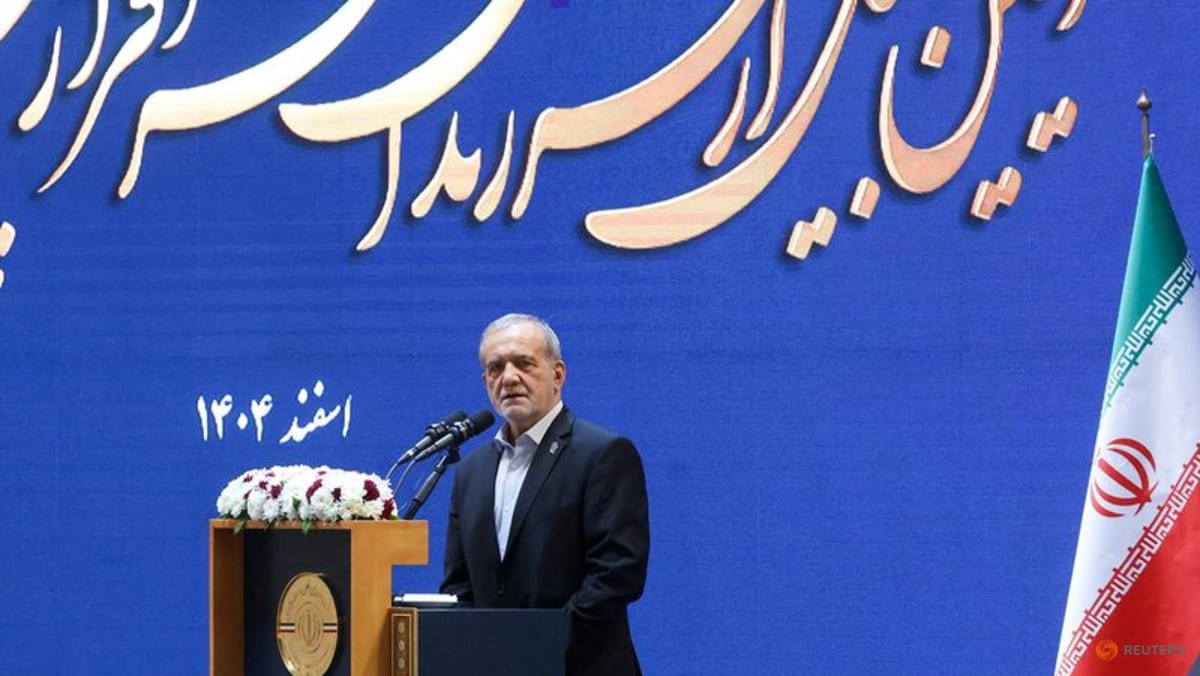
Iran's President, in Channel News Asia, demanded an "immediate cessation" of US-Israeli "aggression," framing the strikes as existential threats. Yet, the tech arms race is the true accelerant: Iran's missile now projects power to Europe, deterring Western intervention while US carrier groups deploy Aegis destroyers with SM-6 interceptors to Hormuz. Regional responses, including Bahrain's interceptions, are fostering new innovations in Gulf security amid the chaos.
The Players
At the conflict's core are three primary actors, each wielding advanced tech as a force multiplier in this pivotal Middle East strike.
Israel: Motivated by existential security, Israel leads with cutting-edge defenses like the Arrow-3 exo-atmospheric interceptor, designed for 4,000+ km threats. Prime Minister Netanyahu's government views Iran's nuclear program—exemplified by Natanz strikes—as a red line, leveraging US tech transfers for dominance. Sources confirm Israel's missile detection claims, positioning it as the regional tech vanguard.
United States: Under Trump, the US pursues deterrence through naval superiority, sinking 130+ Iranian vessels and striking Hormuz bases. Motivations blend energy security (protecting 21 million barrels/day via Hormuz) with alliance commitments. Pentagon assets like F-35s and MQ-9 Reapers enable standoff precision, degrading Iran's asymmetric naval edge.
Iran: Tehran's Islamic Revolutionary Guard Corps (IRGC) drives retaliation via long-range missiles (e.g., Sejjil or Kheibar Shekan variants) and drone fleets. President Pezeshkian's rhetoric signals resolve, promising "unprecedented" responses to Kharg and Natanz hits. Backed by proxies like Houthis, Iran's tech evolution—from imported North Korean designs to indigenous hypersonics—aims at asymmetric parity, threatening Europe to globalize the conflict.
Secondary players include the IAEA (Grossi's restraint calls), Russia (potential arms supplier), and Gulf states like Saudi Arabia (silent beneficiaries of Iran's weakening). Motivations converge on tech proliferation fears: Israel/US seek containment; Iran, empowerment. Track these dynamics via the Global Risk Index.
The Stakes
The stakes transcend territorial gains, hinging on technological supremacy with profound political, economic, and humanitarian ramifications in the context of this intensifying Middle East strike.
Politically, Iran's 4,000-km missile erodes Israel's qualitative edge, potentially emboldening proxies and fracturing US alliances if intercepts fail. A successful strike could validate Iran's "axis of resistance," pressuring Europe via reach to Berlin.
Economically, Hormuz threats risk spiking oil to $100+/barrel, as US strikes already curtailed exports. Humanitarian costs mount: Kharg attacks threaten 10% of Iran's oil output, risking blackouts and refugee flows; Natanz hits could release radiological material, per IAEA warnings.
The unique technological angle amplifies risks. Iran's missiles integrate drone swarms for saturation attacks, overwhelming defenses—echoing Ukraine's 2022 successes but scaled regionally. This leap in asymmetric warfare undermines air superiority doctrines, altering Middle East balances: Saudi/Emirati defenses scramble for Arrow equivalents. Proliferation dangers loom—Hezbollah or Houthis adopting these techs could export chaos. Original insight: In a tech-heavy conflict, sensor fusion (e.g., Israel's OTM radar with US satellites) creates "kill webs," but EMP-hardened Iranian drones risk "swarm blindness," fostering miscalculations like unintended European overflights.
Globally, this presages arms races: China eyes hypersonic counters; NATO reevaluates missile shields. Consult the Global Risk Index for ongoing assessments.
Market Impact Data
Markets are reeling from the tech-fueled escalation of the Middle East strike, with energy assets surging on supply fears while equities dive amid risk-off sentiment. Oil futures have spiked 5-7% intraday, reflecting Hormuz blockades and strikes on Kharg/Pars fields.
Catalyst AI Market Prediction
Powered by The World Now's Catalyst Engine, predictions capture causal chains from these strikes:
- OIL: + (high confidence) — Direct supply disruptions from US-Israeli hits on Tehran oil infrastructure, Iranian responses on Gulf sites, and Hormuz tensions spike risk premiums, curtailing exports. Historical: 2019 Aramco attacks +15% intraday. Key risk: Diplomatic de-escalation or OPEC+ hikes unwind premium in 24h.
- OIL: + (medium confidence) — Supply disruption fears from strikes trigger speculative buying. Historical: 2019 Aramco +15%. Key risk: Interceptions confirm no damage, reversal.
- SPX: - (medium confidence) — Risk-off from ME escalations triggers algo deleveraging. Historical: 2022 Ukraine -5% in 48h. Key risk: US policy caps downside.
- SPX: - (medium confidence) — Oil fears raise inflation/slowdown concerns. Historical: 2019 Aramco -2%. Key risk: Ceasefire unwinds positioning.
- BTC: - (medium/low confidence) — Risk asset cascades despite ETFs. Historical: 2022 Ukraine -10% in 48h. Key risk: Safe-haven or dip-buying.
- TSM: - (low confidence) — Asia supply chain fears from tensions. Historical: 2011 Fukushima -10%. Key risk: Contained impact.
- EUR: - (low confidence) — Risk-off weakens vs USD safe-haven; Europe energy exposed. Historical: 2011 Syria -2%. Key risk: ECB supports.
Predictions powered by The World Now Catalyst Engine. Track real-time AI predictions for 28+ assets. Explore more at Catalyst AI — Market Predictions.
Looking Ahead
The technological arms race portends dire trajectories in the wake of this Middle East strike. Near-term (weeks): Iran may unleash cyber retaliation—targeting US grids or Israeli ports—leveraging APT groups like those behind 2020's SolarWinds hack, or drone-missile salvos on Hormuz tankers. Allies like Russia could supply S-500 interceptors, per unconfirmed whispers.
Medium-term (months): Escalation risks Russian/Iranian hypersonic proliferation, destabilizing energy markets (OIL +20% possible) and prompting sanctions. IAEA mediation or UNSC resolutions on missile tech loom, echoing 1987's Intermediate-Range Nuclear Forces Treaty but for drones/missiles.
Scenarios: 40% de-escalation via Trump-brokered talks (post-Natanz signals); 35% cyber/Hormuz blockade; 25% wider war drawing NATO. Key dates: March 25 IAEA board; April Nowruz aftermath. Original prediction: Tech escalation forces arms control reevaluation—e.g., MTCR updates—within Q2 2026, as proliferation risks globalize conflicts.
This is a developing story and will be updated as more information becomes available.
Catalyst AI Market Prediction
Our AI prediction engine analyzed this event's potential market impact:
- OIL: Predicted + (medium confidence) — Causal mechanism: Direct supply disruption fears from Iran strikes on Gulf energy sites and shipping lanes trigger speculative buying. Historical precedent: 2019 Iranian Aramco attacks surged oil 15% in one day. Key risk: interceptions confirm no damage, sparking reversal.
- TSM: Predicted - (low confidence) — Causal mechanism: Asia manufacturing risks from Korea fire and regional tensions spill to semis via supply chain fears. Historical precedent: 2011 Fukushima dropped TSM 10% on supply disruption. Key risk: fire contained to auto, no semi impact.
- SPX: Predicted - (medium confidence) — Causal mechanism: Risk-off selling triggered by oil supply fears raising inflation expectations and economic slowdown concerns, amplified by algo flows. Historical precedent: Similar to 2019 Iranian attacks on Saudi Aramco when S&P 500 dropped 2% in one day. Key risk: swift de-escalation via ceasefire talks unwinds risk-off positioning.
- EUR: Predicted - (low confidence) — Causal mechanism: Risk-off weakens EUR vs USD safe-haven as Europe exposed to energy imports. Historical precedent: 2011 Syrian crisis saw EUR drop 2% amid volatility. Key risk: ECB hawkishness on oil inflation supports EUR.
- BTC: Predicted - (low confidence) — Causal mechanism: Correlated risk-off flows from SPX trigger BTC liquidations as risk asset. Historical precedent: Feb 2022 Ukraine invasion dropped BTC 10% in 48h. Key risk: safe-haven narrative gains traction amid USD weakness.
Predictions powered by The World Now Catalyst Engine. Track real-time AI predictions for 28+ assets.






