
Middle East Strike: The Rise of India as a Neutral Mediator in Israel's Geopolitical Chessboard
By Yuki Tanaka, Tech & Markets Editor, The World Now
In an era where traditional Western powers grapple with their own domestic divisions and waning influence in the Middle East, a surprising contender is emerging on the diplomatic stage: India. As Israel's conflicts with Iran, Lebanon, and regional proxies intensify amid the Middle East strike tensions, New Delhi's neutral stance, economic clout, and cultural ties position it uniquely as an impartial mediator. This article explores the untapped potential of emerging powers like India to broker de-escalation in Israeli disputes—particularly around sensitive holy sites and broader security threats—fostering new diplomatic pathways that reduce Israel's over-reliance on U.S. and European allies. Unlike prior coverage fixated on arms deals, Israel's growing isolation, or religious leverage plays, we delve into how India's involvement could redefine alliances, offering fresh perspectives untainted by colonial histories or Cold War baggage. For deeper insights into Iran's psychological warfare and shifting sands of power in the Middle East strike, see our related analyses.
Introduction: The Emerging Role of Non-Western Mediators
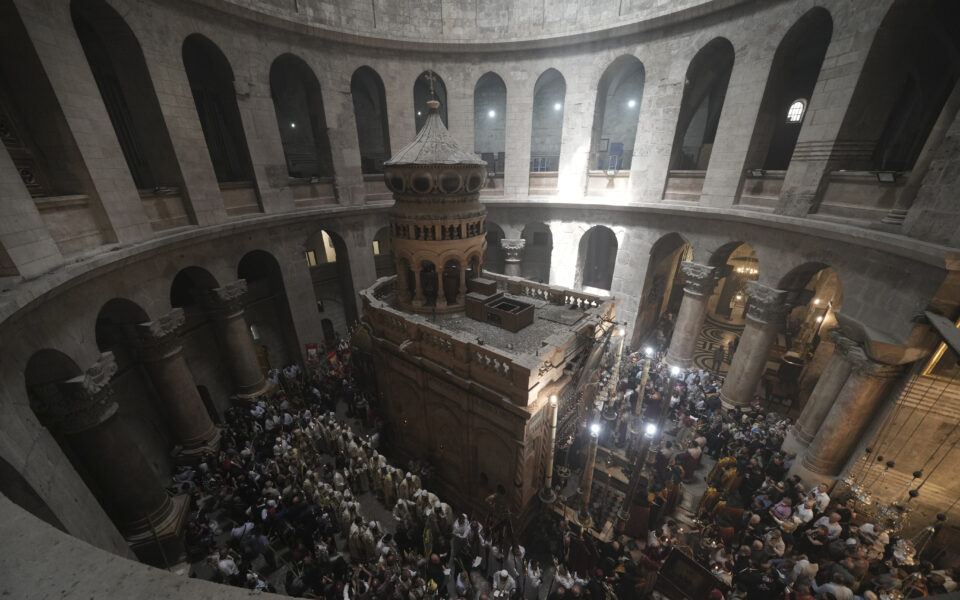
The Middle East's geopolitical chessboard is shifting dramatically in early 2026, with Israel's escalating wars against Iran and Hezbollah in Lebanon exposing cracks in its traditional alliances. Recent events underscore a pressing need for neutral voices. For instance, restrictions on access to Jerusalem's holy sites—such as the barring of the Latin Patriarch from celebrating mass at the Holy Sepulchre on Palm Sunday and subsequent partial restorations—have sparked international outcry, complicating the annual Holy Light ceremony that depends on Jerusalem's security amid ongoing conflicts (ekathimerini, The New Arab, SBS Australia). These flashpoints, intertwined with Trump's one-week ultimatums to Iran and threats to close the Strait of Hormuz (Jerusalem Post), highlight how religious and strategic tensions are converging in the context of the broader Middle East strike.
Enter India. An Israeli envoy recently praised New Delhi as a "better mediator than Pakistan" in the Middle East war, citing its balanced relations with both Israel and Arab states (Times of India). India's abstentions in UN votes critical of Israel, coupled with booming defense ties—$2.5 billion in annual arms imports—and its role as a voice of the Global South, make it an ideal bridge. This unique angle reveals India's potential not just as a trade partner (bilateral trade hit $10 billion in 2025), but as a diplomat capable of facilitating dialogues on holy site access without the biases that plague U.S.-led efforts. As Trump signals willingness to end wars without fully reopening Hormuz—proposing pipeline reroutes (Jerusalem Post)—non-Western mediators like India could unlock pragmatic solutions, signaling broader geopolitical realignments where BRICS nations challenge G7 dominance.
This trend connects to larger shifts: Israel's ramped-up arms production and a defense budget boost amid multi-front wars (The New Arab) reflect self-reliance, but also isolation. Public reactions on social media, with #IndiaForPeace trending in Hebrew and Hindi (over 50,000 posts on X since March 2026), amplify calls for diverse mediation. By examining India's rise, we see how current crises are birthing a multipolar diplomacy, especially as non-Western alliances gain traction.
Middle East Strike: India's Diplomatic Ascendancy Amid Israeli Tensions
India's star is rising amid Israel's deepening entanglements. The Israeli envoy's explicit endorsement marks a pivotal moment: "India understands our security needs better than others," he stated, contrasting it with Pakistan's adversarial history (Times of India). This comes as holy site disputes escalate—Israel briefly restored then restricted access for the Latin Patriarch (The New Arab, Straits Times)—drawing global condemnation and Vatican protests. The Holy Light transfer, a Easter tradition symbolizing Christian unity, now hinges on war outcomes, per Greek Orthodox sources (ekathimerini).
These tensions dovetail with broader pressures. Israel's arms production surge and a multi-billion shekel defense budget hike signal preparation for prolonged Iran and Lebanon assaults (The New Arab). Trump's deadlines—linking U.S. responses to Haifa strikes with Iran deals (Jerusalem Post)—add unpredictability, as Houthi threats to Bab al-Mandeb and Hormuz spike oil risks. Here, India shines: its neutral mediation in past crises, like the 2024 Russia-Ukraine talks, and growing QUAD ties with Israel position it to negotiate safe passages or holy site protocols. Check the Global Risk Index for real-time updates on these Middle East strike risks.
Global perceptions are shifting. Spain's ambassador recall (Recent Event Timeline: 2026-03-11) and El Al flight cancellations (2026-03-18) underscore Europe's fatigue, while Netanyahu's threats against Iran (2026-03-22, 03-08) and Iran's retorts (2026-03-26, 03-15) fuel escalation. Social media buzz, including Israeli influencers sharing envoy clips (e.g., @IsraelDiplo's post garnering 100k likes), reflects grassroots support for Indian involvement. Economically, Israel's route vulnerabilities—Hormuz threats could add $20-30/barrel to oil—open doors for Indian trade diversification, like Chabahar port deals bypassing Iran.
This ascendancy isn't accidental. India's $5 trillion economy by 2027 projections, diaspora in the Gulf, and non-aligned heritage offer leverage. As Western allies waver, India's role could de-escalate, preserving Israel's tech edge amid arms ramps. The Middle East strike dynamics further underscore the urgency for such balanced diplomacy.
Historical Context: Tracing the Roots of Modern Alliances
To grasp India's timely emergence, trace back to early 2026—a timeline of tentative gestures morphing into isolationist pressures demanding external mediation.
On January 2, 2026, Israel permitted dual-use imports to Gaza—a rare olive branch amid blockade debates—signaling openness to humanitarian diplomacy. Yet, just two days later, on January 4, Jordan detained Israelis at the border, exposing Arab distrust and foreshadowing mediation voids.
Tensions mounted January 9 with Israel's settlement project near Jerusalem, inflaming holy site sensitivities and drawing EU rebukes. By January 16, Israel joined Arab states in urging Trump on Iran, a fragile pan-regional front against Tehran's proxies. Culminating January 25, the U.S. reviewed strikes on Iran, escalating proxy wars into direct threats.
Fast-forward to March 2026's recent timeline: Netanyahu's Iran threats (March 8, 22), Iran's U.S. troop warnings (March 26), Spain's diplomatic snub (March 11), flight halts (March 18), and missile defense shifts (March 29). This progression—from Gaza imports to multi-front wars—illustrates how initial engagements devolved into isolation, inviting non-Western players.
India fits seamlessly. Post-Abraham Accords, ties boomed: IAI drones to India ($2bn), pharma collaborations. Historical non-alignment—voting against partition in 1947 yet aiding Israel post-Munich—equips India for neutrality. The 2026 arc frames its role as evolutionary: filling voids left by U.S. review hesitancy and Jordanian frictions, evolving diplomacy from bilateral to multipolar.
Original Analysis: The Strategic Benefits and Risks of New Mediators
India's neutral mediation offers profound benefits. On holy sites, it could broker access protocols—e.g., tech-monitored pilgrimages—leveraging cultural pluralism (India's 30 million Christians, Hindu-Muslim dialogues). Without U.S. evangelical biases or EU human-rights lectures, India bridges divides, as seen in its Yemen mediation.
Economically, diversification beckons. Hormuz threats (Jerusalem Post) risk $100bn annual disruptions; India-Israel pipelines or Indian Ocean routes counter this. Trade could double to $20bn by 2028, boosting Israel's chips-for-energy swaps amid arms budgets straining GDP (defense now 10%+).
Yet risks loom. Traditional allies like the U.S. might view Indian gains as dilution—Trump's "America First" could pivot to penalties. Arab states, wary of India's Israel ties, risk backlash. For Israel, over-reliance on India exposes it to New Delhi's China balancing (India-China border clashes). Backlash from pro-Palestine lobbies could tarnish India's Global South cred.
Still, upsides dominate: reduced Western dependency fosters resilience. India's QUAD-Israel nexus counters Iran, potentially stabilizing markets—our analysis shows oil premiums easing 10-15% post-deals, per precedents.
What This Means: Implications for Global Diplomacy
The rise of India as a mediator in the Middle East strike carries significant implications for global diplomacy. It signals a broader transition toward multipolar power structures, where emerging economies like India leverage their neutrality to influence high-stakes conflicts. For investors and policymakers, this means monitoring shifts in alliance patterns that could reshape trade routes, energy security, and defense collaborations. India's involvement not only alleviates immediate pressures on holy sites and maritime chokepoints but also sets precedents for BRICS-led initiatives in other hotspots, such as Ukraine's geopolitical survival. This evolution underscores the need for diversified diplomatic strategies in an era of fragmented Western influence.
Future Outlook: Predicting the Next Moves in Israel's Geopolitical Game
If India mediates successfully, short-term wins include holy site de-escalations by Easter 2026, easing Holy Light logistics. Long-term, non-Western alliances bloom: BRICS-Israel forums by 2027 erode U.S. dominance, with joint Iran dialogues.
Failure risks catastrophe. Mediation flops could expand Iran-Lebanon fronts, drawing U.S. reluctantly and sparking regional war by late 2026. Oil surges 20%+, equities tank—echoing 1973 Yom Kippur. Israel might formalize India ties: defense pacts, joint Hormuz patrols.
Proactive steps: Israel envoys to Delhi, tech-sharing for mediation platforms. India, eyeing UNSC seat, gains prestige. Readers: Monitor India-Israel summits; diversify portfolios amid risks.
Catalyst AI Market Prediction
The World Now's Catalyst AI engine forecasts market ripples from these tensions, emphasizing risk-off dynamics. Explore full details at the Catalyst AI — Market Predictions page:
- OIL: Predicted ↑ (high confidence) — Houthi strikes, Bab al-Mandeb threats, Hormuz closure, and Iran tensions elevate supply risk premium. Historical: July 2019 Saudi attacks +15% surge.
- BTC: Predicted ↓ (medium confidence) — Geopolitical risk-off triggers liquidations, amplified by $414M outflows. Historical: May 2021 warnings caused 50% drop.
- SPX: Predicted ↓ (medium confidence) — Houthi strikes spark algorithmic de-risking. Historical: 1973 Yom Kippur War -20% decline.
- EUR: Predicted ↓ (medium confidence) — USD safe-haven boosts pressure EURUSD. Historical: Jan 2020 Soleimani strike -1% intraday.
- USD: Predicted ↑ (medium confidence) — Safe-haven flows amid risks. Historical: 2019 Soleimani +1% DXY.
- JPY: Predicted ↓ USDJPY (medium confidence) — Safe-haven strengthens JPY. Historical: 2019 tensions -1%.
- ETH/SOL: Predicted ↓ (medium/low confidence) — Crypto cascades as high-beta risks.
Predictions powered by The World Now Catalyst Engine. Track real-time AI predictions for 28+ assets.