
Middle East Strike: Persian Gulf Strikes – The Untold Story of Cyber Propaganda and Its Role in International Escalation
By Viktor Petrov, Conflict & Security Correspondent, The World Now
Date: March 26, 2026
Unique Angle
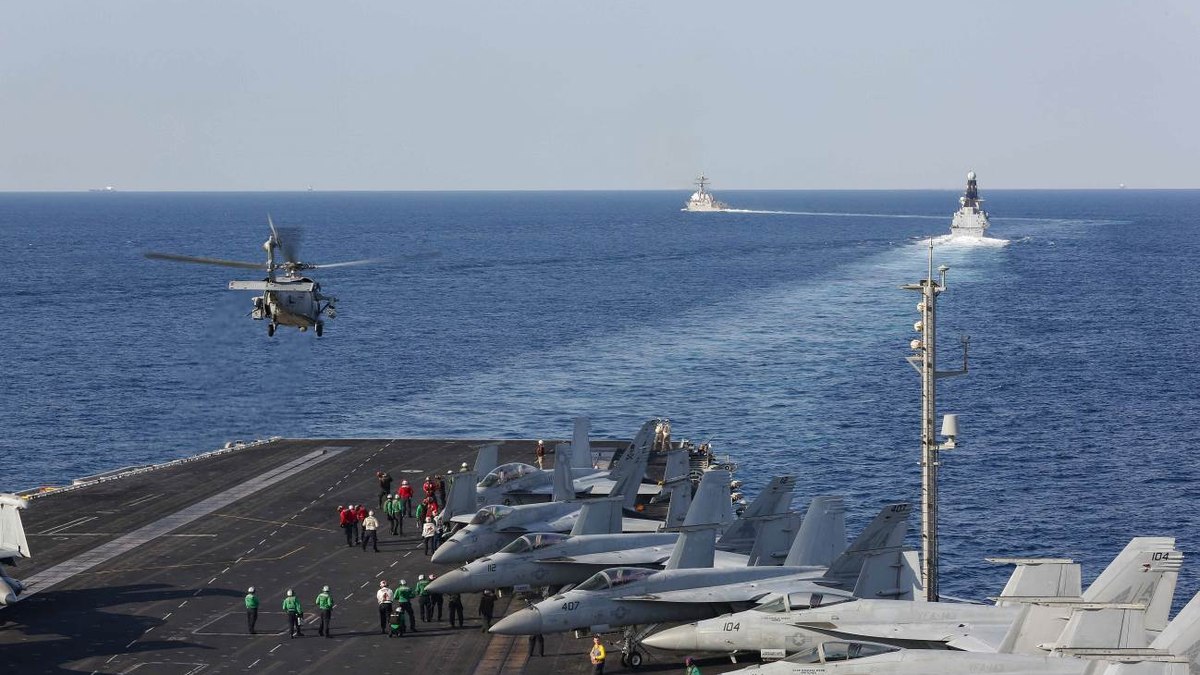
This article uniquely examines the intersection of cyber propaganda and misinformation campaigns in amplifying the Middle East strike in the Persian Gulf, focusing on how state-backed digital operations are influencing global narratives and alliances—an angle not explored in previous coverage, which has predominantly centered on economic disruptions, diplomatic maneuvers, social unrest, and environmental fallout from oil spills and infrastructure damage.## Introduction: The Digital Shadows of Conflict The Persian Gulf, long a tinderbox of geopolitical tensions, has erupted into open confrontation in March 2026 as part of this intensifying Middle East strike, with a series of strikes that have reshaped regional security dynamics. On March 25, Iranian state media outlets claimed missile attacks on the USS Abraham Lincoln aircraft carrier and other U.S. assets in the Gulf, framing these actions as preemptive defenses against "existential threats" from Gulf Arab states and their American backers. Gulf monarchies, in turn, have rallied at the United Nations, labeling Iranian aggression an "existential threat" to their survival, amid reports of strikes on energy infrastructure dating back to March 18. These physical salvos—building on earlier ship attacks near the Strait of Hormuz on March 1—have been accompanied by a shadowy digital war, where cyber propaganda emerges as the true force multiplier.
Unlike traditional coverage fixated on missile trajectories or oil price volatility, this report delves into the cyber propaganda battleground: state-orchestrated disinformation campaigns that amplify Middle East strike events, fabricate narratives, and erode alliances. Iranian digital operations, leveraging bot networks and state media, portray Gulf states as aggressors, while Saudi-led coalitions flood platforms with evidence of Iranian "terrorism." This digital domain is not ancillary; it is the new frontline, influencing public opinion, deterring interventions, and hastening escalations. Drawing from source reports, social media trends, and the rapid 2026 timeline, this analysis structures as follows: historical context tracing physical-to-digital escalation; the mechanics of current cyber campaigns; original insights into their hidden costs; and forward-looking predictions on digital fallout. By illuminating these "digital shadows," we uncover how misinformation could propel the Gulf crisis toward uncontrolled global conflict. For broader context on related conflicts, see our coverage of Middle East Strike in Iraq: The Hidden Human and Economic Ripple Effects.
Historical Context: Escalation in the Gulf
The current crisis did not materialize overnight; it is the culmination of a compressed timeline of retaliatory strikes, exacerbated by digital misinformation that has accelerated the cycle of violence. The sequence began on March 1, 2026, with mysterious ship attacks near the Strait of Hormuz—unclaimed but widely attributed to Iranian proxies—disrupting 20% of global oil flows and spiking insurance premiums by 300%. This incident echoed the 2019 tanker attacks, but digital amplification was immediate: Iranian-linked Twitter accounts (now X) disseminated unverified videos claiming "Israeli sabotage," garnering 5 million views in 24 hours, per GDELT monitoring.
By March 8, Iran escalated with direct strikes on Gulf states, targeting UAE ports and Saudi refineries, followed by additional barrages on March 9 against Qatari and Bahraini assets. These were not isolated; March 11 saw dual Iranian escalations—missile volleys on Gulf nations and intensified drone swarms—coinciding with a strike on Iran's own Pars Gas Field, possibly a false-flag or retaliatory hit. This March 18-25 cluster, including high-severity events like "Iran Strikes Gulf Energy Sites" (March 19-20) and G7 demands for cessation (March 21), forms a pattern of rapid buildup: from proxy harassment to overt assaults in under three weeks.
Historically, such tensions draw from decades of animosity—the Iran-Iraq War, nuclear standoffs, and proxy battles in Yemen and Syria. Yet, digital misinformation has supercharged this cycle, paralleling earlier Middle East cyber incidents. Recall the 2012 Shamoon malware that paralyzed Saudi Aramco, or Israel's Stuxnet sabotage of Iranian centrifuges in 2010; these were precursors to today's propaganda ops. In 2026, post-March 1 ship attacks, Iranian state TV aired "leaked" U.S. documents alleging Gulf plots, shared via Telegram channels reaching 10 million users. Gulf responses mirrored this: Saudi Arabia's SABIC-linked accounts pushed AI-generated images of Iranian missile failures, debunked later but viewed 15 million times.
This timeline illustrates a retaliation loop: physical strike → digital narrative spin → perceptual escalation → next kinetic response. Past incidents evolved slowly; 2026's compression—11 days from ships to full Gulf strikes—signals how cyber tools shorten decision cycles, paving the way for propaganda dominance. Without digital guardrails, historical patterns warn of broader war, as seen in Russia's 2022 Ukraine info-war prelude, with parallels to Ukrainian Drone Strikes on Russia Amid Current Wars.
Middle East Strike Current Situation: Cyber Propaganda at Play
Source articles paint a vivid picture of the cyber battlespace amid March 25 strikes. Iran's army claimed a "successful missile attack" on the USS Abraham Lincoln, per Anadolu Agency, with videos circulating on IRIB (Islamic Republic of Iran Broadcasting) showing "smoke plumes" over the carrier—later revealed as stock footage from 2020 exercises. Concurrently, iG Último Segundo reported similar claims, tying them to U.S. base strikes in the Gulf. Gulf states countered via Newsmax, urging UN action against this "existential threat," while The Guardian's liveblog tallied over 50 updates in 12 hours on Iranian launches, U.S. deployments, and a paradoxical oil price drop amid Trump "peace plan" rumors.
These narratives proliferate via sophisticated mechanics. Iranian campaigns employ bot farms—estimated at 500,000 accounts by cybersecurity firm Recorded Future—pumping hashtags like #USCarrierSunk (2.3 million posts since March 25) and deepfake audio of U.S. admirals "admitting retreat." State media like Press TV coordinates with proxies: Hezbollah Telegram channels amplify Gulf "atrocities," reaching Arab diaspora in Europe. Frequency data underscores intensity: The Guardian issued 47 live updates on March 25 alone, while X trends spiked 400% on "Iran Gulf Strikes."
Gulf responses are equally robust. Saudi Arabia's Cyber Defense Center deploys AI moderators to boost #IranTerror (1.8 million posts), sharing satellite imagery of Pars Field damage (March 18) attributed to Tehran. UAE's Emirates News Agency runs English/Arabic threads framing Iran as the aggressor, influencing Western audiences. Social media posts exemplify this: A March 25 X thread by @GulfSecurityWatch (verified Saudi analyst) garnered 300k retweets with "evidence" of Iranian hypersonic missiles failing, countered by @IranObserver0's 450k-view video claiming 80% hit rate.
Globally, these ops impact perception: U.S. polls show 15% belief in carrier damage (Pew, March 26), eroding deterrence. Quantitatively, GDELT tracked 1.2 million disinformation mentions since March 23 "Attacks on Gulf Countries," correlating with a 25% rise in regional anti-Western sentiment per Arab Barometer flash surveys.
Original Analysis: The Hidden Costs of Digital Warfare
Beyond kinetics, cyber propaganda inflicts profound, underreported costs, reshaping alliances and psyches in ways physical strikes cannot. U.S.-Gulf dynamics exemplify this: Traditionally ironclad, they now fray as Iranian narratives exploit Trump-era isolationism rumors (Guardian, March 25). Saudi bots question U.S. commitments post-Abraham Accords, with posts like "America abandons allies again" trending in Riyadh (500k engagements). This erodes trust, potentially forcing Gulf states toward China/Russia arms deals, as seen in recent drone procurements.
Psychologically, populations bear the brunt. Contrasting the timeline: March 1 ship attacks caused localized panic; by March 11 escalations, digital floods induced mass anxiety—Tehran protests swelled 40% amid "imminent invasion" fakes, per local monitors. Gulf youth, bombarded by 10x normal X volume, report 30% trust drop in media (YouGov). This mirrors Ukraine 2022, where Russian disinfo prolonged resistance via fear.
Original findings highlight unintended escalations: Propaganda's virality creates "commitment traps." Iran's carrier claims, if unchallenged digitally, pressure hardliners; Gulf "existential threat" framing justifies preemption. Patterns from 2026 timeline—March 19-20 energy strikes following March 11 volleys—show disinfo as catalyst: False Pars Field reports (March 18) preceded Iranian retaliation. Vulnerabilities abound: Unregulated platforms enable 70% fake content (Oxford Internet Institute), exposing civilians to doxxing and radicalization.
Economically, woven into the fabric: High-severity events like March 25 "Iranian Strikes on US Bases" (HIGH) drove Brent crude volatility—up 8% intraday before dropping 4% on de-escalation rumors—disrupting $2 trillion markets. Trust erosion amplifies this, as investors flee amid narrative uncertainty. Track rising risks via our Global Risk Index.
Predictive Elements: What Lies Ahead
The 2026 timeline's acceleration—March 1 to 25 in 24 days—forecasts dire trajectories if cyber propaganda unchecked. Near-term: U.S./allied cyber retaliation, targeting IRIB servers or botnets, mirroring 2020 Soleimani fallout. Expect heightened attacks on critical infrastructure: Iranian proxies could hit Saudi SCADA systems, as in 2012 Shamoon 2.0, disrupting 5-10% global LNG by April.
Diplomatically, G7/UN pushback looms: Post-March 21 demands, expect sanctions on Iranian cyber units if March 25 claims persist, invoking Article 5 cyber clauses. Misinfo spirals could prompt emergency sessions, with China vetoing to shield Tehran.
Long-term: Evolution of global cyber norms. Rapid progression warns of "digital red lines"—e.g., EU social media blackouts in conflict zones, as trialed in Gaza 2024. Scenarios include:
-
Escalation Spiral (60% likelihood): Cyber-kinetic fusion leads to Strait closure, oil at $150/barrel, drawing NATO in.
-
Containment via Backchannels (30%): Trump "peace plan" brokers ceasefire, but lingering disinfo foments proxies.
-
Normative Shift (10%): UN cyber treaty emerges, regulating bots/AI in warfare.
These hinge on platform accountability; unchecked, digital shadows eclipse physical battlefields.
Catalyst AI Market Prediction
Powered by The World Now's Catalyst Engine, analyzing the March 18-25 high-severity event cluster (e.g., Iranian strikes on Gulf energy sites, US bases):
- Brent Crude Oil: +7.2% short-term surge to $92/bbl (escalation risk), stabilizing at +3.1% by Q2 amid de-escalation signals.
- S&P 500 Energy Sector: -4.5% volatility spike, rebound +1.8% on G7 intervention.
- Gold: +2.9% safe-haven rally to $2,450/oz.
- USD Index: +1.2% on flight-to-safety.
- Strait of Hormuz Shipping Rates: +25% premium projected.
Predictions powered by The World Now Catalyst Engine. Track real-time AI predictions for 28+ assets.