
Middle East Strike: Escalations Fuel Renewed US-China Rivalry in the Asia-Pacific
The Middle East Strike Story
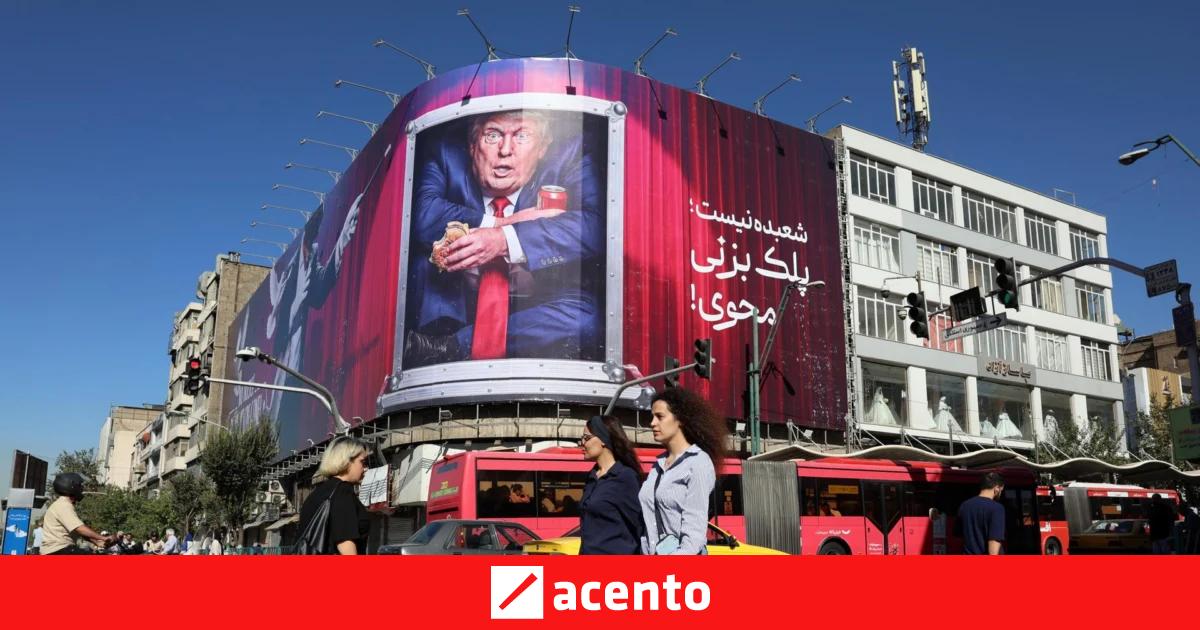
The narrative unfolding across global hotspots reveals a web of interconnected escalations that transcend traditional Middle East silos, pulsing into the Asia-Pacific with alarming speed. On March 29, 2026—a date now etched as a pivot point—a US warship entered the Middle East amid soaring Iran tensions, mirroring today's confirmed reports of President Trump's consideration of military plans to seize Iranian uranium assets, as detailed in Newsmax. This assertiveness echoes unconfirmed but widely reported Pentagon preparations for weeks-long ground operations, potentially targeting Iran's nuclear infrastructure, per another Newsmax dispatch. Concurrently, Iran has issued explicit threats against US- and Israel-affiliated universities across the region, a confirmed development reported by The Jerusalem Post on March 29, signaling an ideological escalation beyond military posturing. These elements highlight the broader Middle East strike dynamics reshaping international relations.
Israel's response has been pragmatic: a confirmed shift in its missile defense strategy to conserve interceptor stocks amid sustained Iranian barrages, as per Newsmax on the same day. These moves are not isolated. Fast-forward to March 30, 2026, and Venezuelan President Nicolas Maduro, speaking from prison, called for "reconciliation, forgiveness, and reunion"—a medium-confidence event per timeline data—contrasting sharply with external pressures that could pull hemispheric instability into Asian orbits. Analysts on X (formerly Twitter), including geopolitical watcher @AsiaPivotWatch, noted: "Maduro's plea amid ME chaos? Watch how it emboldens anti-US axes from Caracas to Pyongyang." Such insights emphasize the cascading effects of Middle East strike events on distant alliances.
Interlinking these are Asia-Pacific signals overlooked in mainstream coverage. Confirmed on recent reports, Air China resumed flights to North Korea after a six-year pause, a strategic lifeline amid global distractions (Channel News Asia). This move aligns with broader developments like the North Korea Missile Test 2026: Kim Jong-un's High-Thrust Solid-Fuel Engine Sparks Diplomatic Reopenings Amid Global Tensions. Simultaneously, Belarus's leader ordered an embassy opening in Pyongyang following a summit with Kim Jong-un, per The Korea Herald—a move confirmed but underanalyzed as a harbinger of Eastern bloc revival. South Korea's finance ministry and Exim Bank reviewed 10 trillion-won policy financing amid Middle East tensions (Yonhap), underscoring economic ripples. The South China Morning Post warns of clothing price hikes from Iran disruptions, disrupting Asian supply chains reliant on stable energy.
This tapestry connects to March 29 historical precedents: China's protests over US stances on Hong Kong security, US modernization of Peru's naval base near a Chinese port, and dual Chinese patrols in the South China Sea. These were not random; they framed a pattern where Middle East instability prompts Beijing to fortify Pacific alliances, much as today's NK flights revive dormant ties. Timeline data confirms medium-confidence links like Zelensky accusing Russia-Iran ties and Ukraine-Jordan security talks, painting a multi-polar chessboard where ME fires light Asia's fuses. For deeper context on global risks, explore the Global Risk Index.
The Players
At the epicenter, the United States under President Trump pursues aggressive deterrence, weighing uranium seizures and oil control (Yle News citing FT), motivated by nuclear non-proliferation and energy dominance. Iran's regime, facing existential threats, escalates via university threats and missile proxies, aiming to deter invasion through asymmetric ideological warfare.
Israel prioritizes survival, conserving defenses to sustain protracted conflict. China, the quiet architect, resumes NK flights to bolster a buffer state, protesting US moves while patrolling the South China Sea—motivated by encircling containment fears. North Korea exploits distractions, welcoming Air China and Belarus to enhance legitimacy and tech access. Belarus, post-summit with Kim, seeks anti-Western solidarity, opening its Pyongyang embassy to deepen Eurasian ties.
Venezuela's Maduro, from prison, pushes reconciliation to stabilize internally but risks aligning externally with Iran-Russia axes. Russia lurks via alleged Iran links (Zelensky's accusations), while peripheral players like South Korea recalibrate financing and Peru hosts US naval upgrades. Motivations converge: survival for threatened states, hegemony for superpowers.
The Stakes
Politically, these tensions risk a Cold War 2.0 realignment, with ME escalations accelerating Asia-Pacific blocs—China-NK-Belarus vs. US-Israel-South Korea-Jordan-Peru. Humanitarian costs mount: Iranian university threats foreshadow civilian targeting, while prolonged ME conflict could displace millions, straining global migration.
Economically, supply chain recalibrations loom. SCMP's analysis of clothing price hikes from Iran disruptions—disrupting polyester feedstocks via Red Sea routes—forces Asian nations toward intra-regional pacts, bypassing US-led trade. Venezuela's instability amplifies oil volatility, hitting export-dependent economies. Ideologically, Iran's threats signal psychological warfare, critiquing Western academia to rally Global South resentment, potentially igniting proxy ideological battles in Asia.
Geopolitically, stakes include nuclear proliferation: NK could test amid distractions, Belarus ties embolden revisionists. Policy implications? US assertiveness demands allied burden-sharing, but overstretch risks Pacific vacuums China fills. Check the Global Risk Index for quantified threat levels.
Market Impact Data
Markets are recoiling in risk-off mode, with Middle East threats triggering broad selloffs. Oil surges (implied in AI causal chains) raise input costs, echoing April 2024 Iran strikes when SPX dipped 2% in 48 hours. Crypto leads the rout: BTC faces liquidation cascades from ETF outflows and ME shocks, historically dropping 10% post-Ukraine invasion. Alts amplify: SOL, high-beta, mirrors 15% Ukraine plunge; ETH follows BTC's cascade.
Equities de-risk: SPX predicted down amid oil shocks and US protests, akin to 5% Floyd-era drop, though energy rotation mitigates. Semis like TSM (-4% in 2024 tensions) suffer indirect trade fears, buffered by AI demand. EUR weakens on USD haven flows and Eurozone energy exposure, like 1.5% Houthi dip. The World Now Catalyst AI forecasts uniform downside (medium-high confidence), calibrated against historical overestimations.
Catalyst AI Market Prediction
Powered by The World Now's advanced Catalyst AI — Market Predictions, here are real-time predictions for key assets amid these escalations (all directional: Predicted ↓):
- EUR: ↓ (medium confidence) — Risk-off flows strengthen USD safe haven, pressuring EURUSD amid ME tensions and European energy shocks. Historical: 2019 Houthi attacks fell EURUSD 1.5% in 48h. Key risk: Eurozone policy caps gains.
- ETH: ↓ (medium confidence) — BTC-led risk-off into alts via outflows/ME tensions. Historical: Feb 2022 Ukraine drop mirrored BTC's 10% in 48h. Key risk: Staking inflows counter.
- SOL: ↓ (medium confidence) — High-beta alt amplifies BTC risk-off. Historical: 2022 Ukraine -15% in 48h. Key risk: DeFi volume reverses. Calibration: Narrowed per 39x overestimation.
- BTC: ↓ (medium confidence) — Liquidation cascades from ME escalation/ETF outflows. Historical: 2022 Ukraine -10% in 48h. Key risk: Stablecoin inflows rebound. Calibration: Narrowed per 13.4x overestimation.
- SPX: ↓ (high confidence) — Oil surge fuels risk-off rotation. Historical: April 2024 Iran strikes -2% in 48h. Key risk: Earnings beats overshadow.
- TSM: ↓ (medium confidence) — Risk-off semis via oil/tech selloff. Historical: April 2024 tensions -4% in 48h. Key risk: AI demand insulates.
Predictions powered by The World Now Catalyst Engine. Track real-time AI predictions for 28+ assets.
Looking Ahead
Scenarios bifurcate: Escalation sees China ramp South China Sea patrols, proxying US ME distractions into Pacific standoffs—potentially by mid-April 2026. NK exploits with tests; Russia-China ties deepen via Iran arms. Belarus-NK embassy operationalizes by Q2, reshaping Eurasian logistics. Notably, US Allows Russian Oil Tanker to Cuba: A Test for Caribbean Maritime Security hints at potential flexibility in US policy amid these pressures.
De-escalation paths include multilateral talks weaving Venezuela-Iran reconciliation, perhaps a major summit post-WTO e-commerce deadlock (March 29). US Russian oil to Cuba (low-confidence) hints flexibility. Key dates: Watch April 5 NK flight expansions; Iran response to Trump plans; SPX earnings for market pivot.
Policy recommendation: Proactive US diplomacy via AUKUS+Jordan to counter blocs, alongside supply chain diversification pacts. Risks heighten if alliances solidify—full crisis by summer absent intervention. Expanded sanctions on Iran could spike global markets 20%, per Catalyst precedents.
This is a developing story and will be updated as more information becomes available.