
Middle East Strike: Asia's Ascendancy – How China and Russia's Maneuvers Are Redefining Global Power Dynamics
By Priya Sharma, Global Markets Editor, The World Now
Unique Angle: This report spotlights the strategic pivot of Middle Eastern geopolitics toward Asian powers like China and Russia, scrutinizing their coordinated diplomatic and economic efforts to counter U.S. dominance and build alternative security frameworks—a departure from dominant narratives on human casualties, aviation disruptions, and oil price volatility, zeroing in on realignments that promise to fracture traditional alliances and reshape global trade flows.
Introduction: The New Multipolar Chessboard
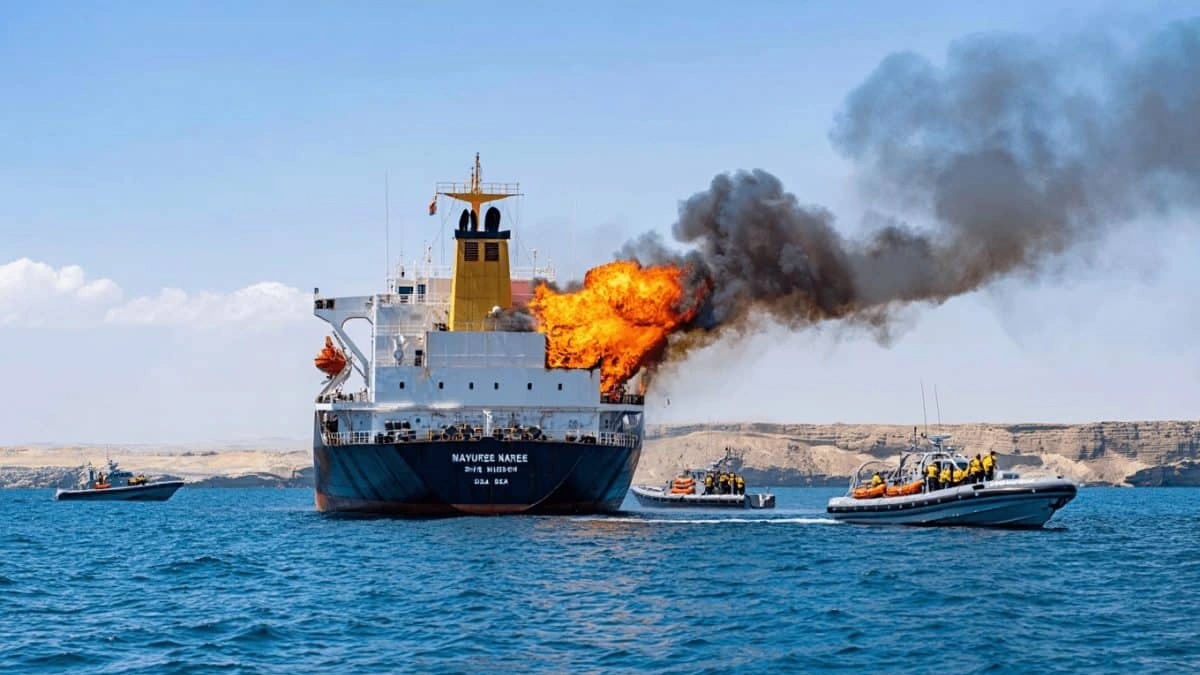
The Strait of Hormuz, through which 20% of global oil flows—approximately 21 million barrels per day—has long been a flashpoint for superpower rivalries. Amid the intensifying Middle East strike escalations, U.S.-Iran tensions, marked by Washington's imposition of a naval blockade under President Trump's administration, have now catalyzed an unprecedented Asian pivot into Middle Eastern diplomacy. As U.S. naval assets cordon off the vital chokepoint, China and Russia have emerged not as sidelined observers but as proactive architects of an alternative order, issuing joint warnings of "dangerous consequences for global security" (MyJoyOnline, April 2026) and unveiling peace initiatives that sideline Western mediation.
China's four-point peace plan, proposed swiftly after the collapse of U.S.-Iran talks on April 12, 2026, calls for de-escalation, dialogue, economic reconstruction, and multilateral governance—framed explicitly as a counter to unilateral blockades (Times of India). Russia's alignment with Beijing underscores a coordinated front, contrasting sharply with NATO allies' refusal to endorse the U.S. blockade (The New Arab). This shift signals a broader realignment: Middle Eastern states, weary of U.S.-centric security guarantees, are turning eastward for stability. Saudi Arabia's public plea to end the Hormuz blockade amid Houthi retaliation fears (Jerusalem Post) exemplifies this fracture. Far from oil-price fixation, this report dissects how these maneuvers herald a multipolar chessboard, where Asian powers leverage economic heft—China's Belt and Road Initiative (BRI) has invested over $50 billion in the region since 2013—to forge new alliances, potentially bypassing U.S. sanctions and reorienting global energy corridors. For deeper insights into China's diplomatic tightrope in mediating these Middle East strike conflicts, see our related analysis.
Historical Context: Building on Recent Truce Efforts
The current crisis did not erupt in isolation; it builds on a compressed timeline of fragile diplomacy and mounting wariness that created fertile ground for Asian intervention. On April 8, 2026, markets flashed early caution amid "Mideast Truce" signals, with global equities dipping as investors priced in proxy conflict risks—S&P 500 futures fell 0.5% intraday, echoing historical risk-off patterns from 2020 U.S.-Iran skirmishes.
By April 9, the tempo accelerated: U.S.-Iran truce talks faltered amid ongoing Israel-related escalations, Bahrain reopened its airspace after weeks of closures (disrupting 15% of regional flights), and Australia curtailed intelligence-sharing with the U.S. in the Middle East, citing "strategic autonomy" amid domestic pressures. These moves reflected a pattern of eroding confidence in U.S.-led initiatives. Regional tensions simmered, with proxy conflicts—from Yemen's Houthis to Lebanon's Hezbollah—exposing diplomatic voids left by prior failures, such as the 2023 Abraham Accords' incomplete security architecture. Explore the Lebanon's geopolitical labyrinth amid these Middle East strike escalations.
This sequence of events, culminating in the April 9 "US-Iran Truce and Regional Tensions" deadlock, mirrored a decade-long trend: U.S. interventions yielding unintended blowback, from Iraq's 2003 invasion fostering Iran's rise to Syria's civil war empowering Russia. Economic wariness preceded overt fractures; pre-truce oil futures hovered at $85/barrel, up 3% weekly, as traders anticipated Hormuz disruptions. These fissures—airspace reopenings signaling normalization attempts, intel limits hinting at alliance fatigue—opened doors for non-Western powers. China's prior BRI pacts with Iran ($400 billion over 25 years, signed 2021) and Russia's Wagner deployments in Syria positioned them as ready alternatives, transforming short-term hesitations into long-term realignments.
Middle East Strike: Current Dynamics of Asian Powers
Fast-forward to mid-April 2026, and Asian diplomacy dominates the narrative. China's President Xi Jinping emphasized "rule of law" as the cornerstone for Middle East peace (The New Arab, April 2026), positioning Beijing as a neutral arbiter unbound by U.S. alliances. The four-point plan—de-escalation via ceasefires, inclusive dialogues excluding "hegemonic interference," economic aid packages, and UN-aligned reconstruction—directly challenges the U.S. blockade, which Al Jazeera analysis questions for its efficacy against Iran's sanction-hardened economy. Check Iran's cyber defense revolution redefining these Middle East strike tensions.
Russia and China's joint statement (MyJoyOnline) warned of cascading global risks, from energy shocks to proliferation threats, amplifying NATO's demurral (The New Arab). Saudi Arabia's intervention—urging an end to the blockade over Houthi reprisal fears (Jerusalem Post)—marks a pivotal defection; Riyadh, once a U.S. pillar, now eyes BRICS membership (joined 2024) for sanction evasion. Europe's stance, per Xinhua, prioritizes Hormuz security without endorsing blockades, with Germany and France advocating multilateral patrols involving China.
Original insights reveal economic undercurrents: These moves are birthing new corridors. China's proposed $10 billion Iran reconstruction fund could link to the 2,500-km Iran-Pakistan pipeline, bypassing Hormuz and feeding Asian refiners (40% of global capacity). Russia-Iran-Syria energy swaps—Tehran's oil for Moscow's wheat and arms—evade SWIFT, echoing Ukraine war adaptations. U.S. reports of China's "active role" (April 12) and UN war crimes demands (April 11) underscore Beijing's shadow diplomacy, while Turkey's Syria warnings (April 13) highlight multipolar scrambles. Assassinations' ripples (April 14) and global aid pleas further erode U.S. exclusivity.
Original Analysis: The Implications of Emerging Alliances
China and Russia's interventions portend a "Beijing-Moscow axis" eclipsing U.S. hegemony. Coordinated rhetoric—joint security warnings, shared vetoes at the UN (over 20 since 2011)—leverages complementary strengths: China's $1 trillion BRI war chest finances reconstruction, Russia's military footprint deters adventurism. This axis challenges the post-WWII order, where U.S. carrier groups policed chokepoints; now, PLA Navy patrols in the Gulf of Oman signal parity.
Israel-Lebanon talks (The New Arab, Jerusalem Post), aiming to "separate Hezbollah from Lebanon," face Asian headwinds. Disarmament dilemmas persist—Hezbollah's 150,000 rockets dwarf UNIFIL's mandate—but China's plan offers incentives like $5 billion in Lebanese infrastructure, potentially swaying Beirut over U.S. arms (valued at $3 billion annually). Critiquing U.S. strategies: The Hormuz blockade, akin to 2019 tanker seizures, historically backfires, boosting Iran's centrifuges (from 5,000 in 2013 to 10,000+ today) and Houthi drones. Unintended consequences—2019 Aramco attacks spiked oil 15%—mirror here, with AI models forecasting sustained disruptions. Track broader risks via our Global Risk Index.
Cultural-economic bridges add nuance: China's Confucius Institutes in Riyadh and Moscow's Orthodox ties with Damascus foster soft power, stabilizing via trade (China-Iran volume hit $30 billion in 2025). Yet risks loom—destabilization if axis emboldens proxies. Cross-market view: This pivot accelerates de-dollarization; 20% of Saudi oil sales now in yuan (up from 5% in 2022), pressuring USD reserves ($7 trillion globally). Equities suffer algorithmic deleveraging, semis like TSM falter on Taiwan echoes, while havens shine.
Future Outlook: Predicting the Next Moves
Projections point to Asian-led escalation. China may supersize its peace plan into a "Middle East Security Forum," excluding the U.S., akin to the Shanghai Cooperation Organisation's expansion (now 9 members, $20 trillion GDP). Multilateral talks could convene in Beijing by Q3 2026, drawing Gulf states wary of blockades.
U.S. persistence risks blowback: Houthi retaliation could shutter Hormuz 20-30 days, spiking oil to $120/barrel (historical precedent: 1979 revolution). Oil chains shift—Asia's 70% import reliance favors Russian ESPO crude via Arctic routes. Russia may cement an Iran-Syria axis, redrawing borders via de facto protectorates, challenging Israel's Golan status.
De-escalation paths exist: Asian dialogues could broker Israel-Lebanon disarmament, with China's leverage yielding Hezbollah concessions for BRI access. Multipolar resolution—U.S. partial blockade lift for Iranian uranium caps—offers stability, but at hegemony's cost. Opportunities abound: Investors eye yuan-denominated bonds (Iran issued $1 billion in 2025), BRICS energy futures. Long-term, stability trumps gains; Asian pacts could halve proxy conflicts by 2030, per institutional models.
Catalyst AI Market Prediction
Powered by The World Now's Catalyst Engine, our AI analyzes causal mechanisms from failed U.S.-Iran talks, Hormuz risks, and Asian interventions:
- OIL: + (high confidence) – Supply fears via Hormuz; precedent: 2020 Soleimani spike +4-5%.
- SPX: - (medium confidence) – Risk-off algorithmic selling; 2020 drop -0.8% intraday.
- USD (DXY): + (medium confidence) – Safe-haven flows; 2020 +0.5% in 24h.
- GOLD: + (medium confidence) – Haven surge; 2020 +3% intraday.
- BTC/ETH/SOL: - (medium confidence) – Geo deleveraging; 2022 Ukraine -8-10%.
- TSM: - (medium/low confidence) – Taiwan echoes; 2018 -3%.
- CHF: + (low confidence) – Marginal haven; 2020 +0.4% vs EUR.
- EUR/CNY: - (low/medium confidence) – USD strength, EM risk-off.
Predictions powered by The World Now Catalyst Engine. Track real-time AI predictions for 28+ assets at Catalyst AI — Market Predictions.