
Mediazona Confirms 225,019 Russian Soldiers Killed in Ukraine
Confirmed Russian Death Toll Reaches 225,019
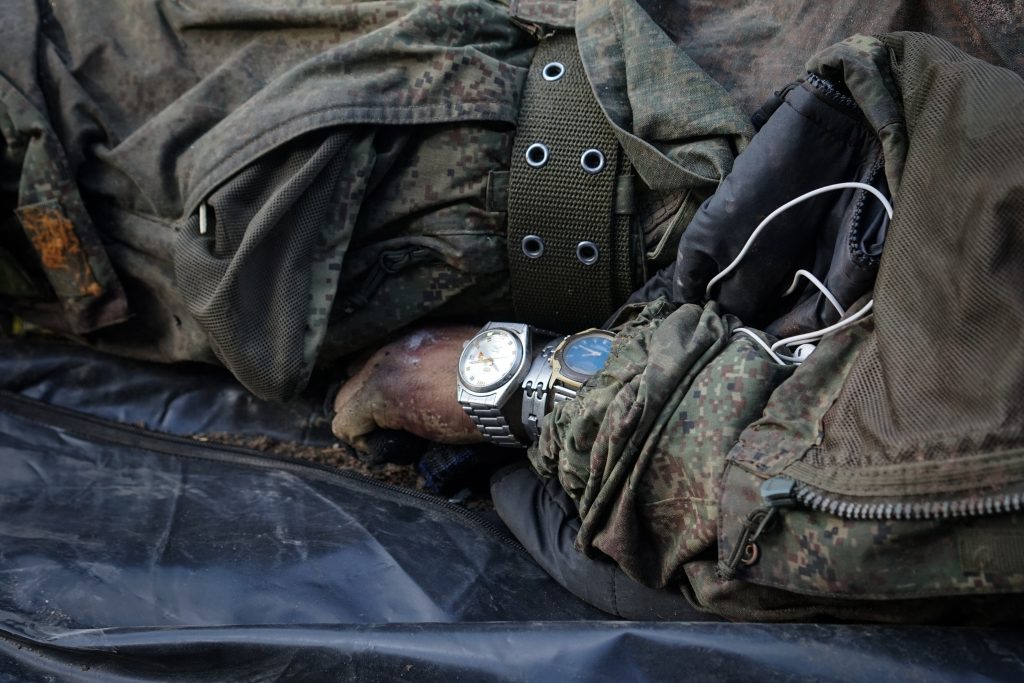
Russian independent media outlet Mediazona, in collaboration with the BBC Russian service, has confirmed the identities of 225,019 Russian military personnel killed in Ukraine. [1] Since the media outlets' last update in late May, the names of 3,813 Russian soldiers have been added to the list of casualties. [1] The journalists note that the actual figures are likely significantly higher, as their verified information comes from public sources such as obituaries, posts by relatives, regional media reports, and statements from local authorities. [1] The Kyiv Independent cannot independently verify the reporting. [1]
Breakdown of Russian Casualties by Category
The confirmed death toll now includes over 82,400 volunteers, 25,400 recruited prisoners, and 19,000 mobilized soldiers, according to the media outlets. [1] A total of 7,226 officers have also been confirmed to have been killed. [1] Since the start of the full-scale invasion, Russian authorities have refused to release figures on their army's losses. [1]
Daily Ukrainian Military Updates
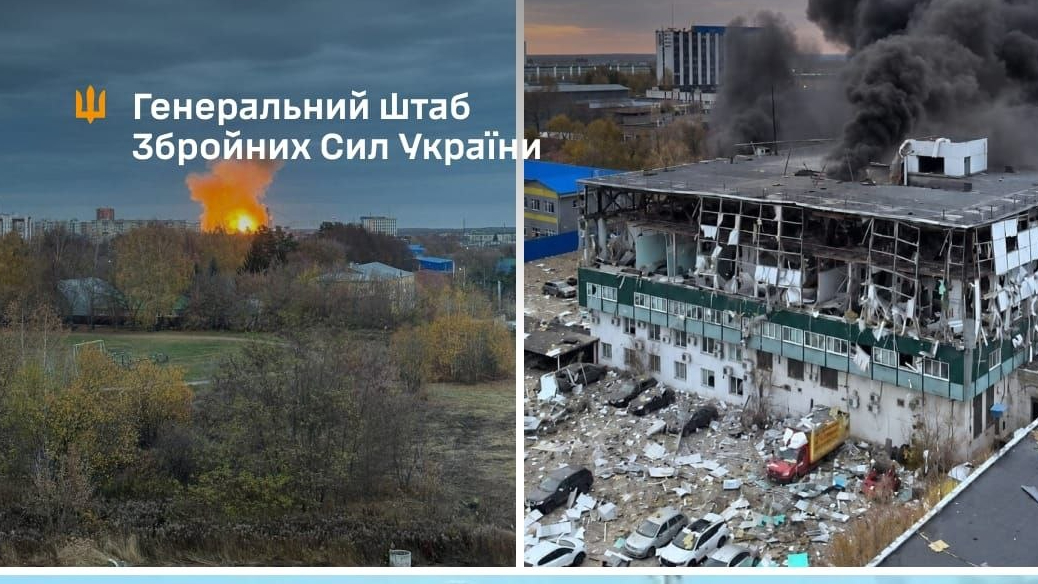
Russia has lost 1,310 soldiers killed and wounded and 88 artillery systems over the past day. [2] The total combat losses of the Russian forces between 24 February 2022 and 13 June 2026 are estimated to be approximately 1,381,430 military personnel. [2] The figures also include 12,015 tanks, 24,739 armoured combat vehicles, 43,953 artillery systems, 1,865 multiple-launch rocket systems, 1,418 air defence systems, 436 fixed-wing aircraft, 353 helicopters, 1,648 ground robotic systems, 347,033 operational-tactical UAVs, 4,733 cruise missiles, 33 ships/boats, 2 submarines, 106,274 vehicles and fuel tankers, and 4,287 special vehicles and other equipment. [2] The information is being confirmed. [2]
War Exceeds Length of World War I
The Russia-Ukraine war has reached 1,569 days, surpassing the duration of World War I. [3] What began as a military operation that the Kremlin believed would bring Kyiv to its knees within days has instead evolved into Europe's longest and bloodiest conflict since World War II. [3] The extensive use of modern military technology, from drones and precision-guided missiles to electronic warfare systems, has made it one of the most technologically advanced wars in recent history. [3] In 2022, Moscow expected a swift victory. [3] Instead, the invasion has turned into a prolonged and costly confrontation, reshaping Europe's security landscape and defying nearly every early prediction about its trajectory. [3] For years, analysts and military observers have compared the war in Ukraine to World War I. [3] The similarities are difficult to ignore: trench warfare, brutal infantry assaults, staggering casualties and the relentless struggle for incremental territorial gains. [3] The Economist described the anniversary as a "sombre milestone", mentioning the irony that a conflict many expected to last only days has now outlived the war that people in 1914 believed would be "over by Christmas". [3]
Contrasting Casualty Assessments
While casualty estimates have varied, independent Western assessments have consistently concluded that Russian losses significantly exceed Ukrainian casualties. [1] The Washington-based think tank Center for Strategic and International Studies said in a January 2026 report that Russian casualties were roughly double to 2.5 times greater than Ukraine's losses. [1] While President Volodymyr Zelensky suggested in an open letter to Russian President Vladimir Putin that the rate compared to Ukrainian losses amounts to "one to five or one to six." [1] The head of the United Kingdom's intelligence, cyber and security agency, Anne Keast-Butler, said on May 27 that nearly 500,000 Russian soldiers have been killed since the start of Russia's war in Ukraine. [1] Russian media outlets Mediazona and Meduza also released their own estimates in early May suggesting that 352,000 Russian men between the ages of 18 and 59 have been killed since the start of the full-scale invasion in February 2022. [1] At its current rate, President Volodymyr Zelensky said earlier this year that Russian soldiers upwards of 35,000 losses per month. [1] Commander-in-chief Oleksandr Syrskyi also reported that more than 83,000 Russian were killed in 2026, as of May 20. [1] The latest casualty estimates comes as Ukraine has gained the upper hand on the battlefield in recent months, with Kyiv's forces recapturing nearly 100 square kilometers more territory than they lost along the front line in May. [1] Since the start of the full-scale invasion, Russian authorities have refused to release figures on their army's losses. [1] While Zelensky said in February that at least 55,000 Ukrainian soldiers have been killed on the battlefield since the start of Russia's full-scale war. [1] The General Staff of Ukraine's Armed Forces estimates that as of June 12, Russia has lost around 1,380,120 troops in Ukraine since Feb. 22, 2022. [1]
Stalled Peace Efforts and Uncertain Future
So far, numerous attempts have been made to cool tensions between Moscow and Kyiv. [3] None has succeeded in bringing the war any closer to a durable peace. [3] American commander-in-chief Donald Trump, who has often cast himself as a dealmaker capable of resolving some of the world's toughest conflicts, also sought to play mediator. [3] Yet the Ukraine problem proved far more hard-nosed than expected. [3] In one of the conflict's most closely watched diplomatic moments, Trump rolled out the red carpet for Russian counterpart Vladimir Putin in Alaska, hosting him on American soil for the first time in a decade. [3] The optics included handshakes, bilateral talks, joint appearances and promises of engagement. [3] But when the cameras were switched off, little changed on the battlefield. [3] Putin returned to Moscow, and the war machine kept moving. [3] Zelenskyy, meanwhile, continued to shuttle between capitals in search of support. [3] Dependent on Western military aid and financial assistance to sustain Ukraine's resistance, the Ukrainian leader made repeated visits to Washington. [3] Yet some of those visits generated as much discussion about his trademark wartime attire as they did about the substance of diplomacy, a reminder of how symbolism often competed with strategy in the public narrative surrounding the war. [3] The war between Russian President Vladimir Putin, the former KGB officer who has dominated Russian politics for more than two decades, and Ukrainian President Volodymyr Zelenskyy, the comedian-turned-politician who became the face of Ukraine's wartime resistance, has stretched far beyond initial expectations. [3] Few would have predicted that Ukraine, a country outside Nato and without nuclear weapons, would be able to withstand Russia's military power for so long. [3] Equally, the Kremlin is unlikely to have anticipated that a campaign expected to last days or weeks would still be raging more than four years later. [3] Russia launched the invasion seeking to bring Ukraine firmly within its sphere of influence. [3] However, Kyiv's resistance, backed by extensive Western military and financial support, transformed the conflict into a grinding war of attrition, consuming lives, resources and political capital on a vast scale. [3] "I thought maybe two or three years, and then politicians will find some kind of consensus," a Ukrainian soldier identified only by his call sign "France" told The New York Times. [3] Instead, the war continues with no clear end in sight. [3] Despite the symbolic milestone, peace remains elusive. [3] According to The Economist, recent battlefield developments have marginally improved Ukraine's position. [3] Ukrainian drone strikes are reaching deeper into Russian territory, while Europe is preparing substantial financial assistance for Kyiv even as American support appears less certain than before. [3] Yet diplomatic efforts remain stalled. [3] Putin has shown little willingness to engage in meaningful negotiations despite repeated calls from Ukraine and its Western allies. [3] The war continues with neither side appearing ready to make the concessions necessary for a breakthrough. [3] For The Economist, the lessons of World War I's aftermath may ultimately prove as important as the lessons of the war itself. [3] The Treaty of Versailles ended the fighting in 1919 but left behind grievances and unresolved tensions that contributed to another, even more devastating global conflict two decades later. [3] That history, the publication argues, should weigh heavily on policymakers seeking an end to the Ukraine war. [3] A future settlement is unlikely to resemble a decisive victory by either side. [3] Russia is not a defeated state facing unconditional surrender, while Ukraine's allies will eventually confront difficult questions involving territory, sanctions, reconstruction and long-term security guarantees. [3] The challenge will be to construct a peace that prevents future conflict rather than merely freezing the current one. [3] More than four years after the invasion began, the war has already transformed Europe. [3] The war has tested Western unity, strengthened Ukrainian national identity and exposed the limits of military forecasting. [3] Above all, it serves as a reminder that wars often outlast the ambitions, assumptions and timelines of those who start them. [3]
What to watch next: Recent battlefield developments have marginally improved Ukraine's position with Ukrainian drone strikes reaching deeper into Russian territory, while Europe prepares substantial financial assistance for Kyiv even as American support appears less certain than before.