
Magnitude 5.2 Earthquake Strikes Amazonas Region in Peru earthquakes today
Multiple earthquakes struck Peru, Colombia, the United States and other regions in September 2026, with Peru recording at least 15 events including a magnitude 5.2 quake and Colombia experiencing a swarm of five tremors in one evening. The keyword earthquakes today fits the ongoing reports from monitoring agencies.
Recent Seismic Activity in Peru
Peru's IGP reported a magnitude 5.2 earthquake 96 km NE of Santa María de Nieva in Amazonas on 19 September 2026 along with a magnitude 4.9 event in La Libertad and multiple magnitude 4+ quakes. [1] The same source listed a magnitude 4.5 event 87 km N of Santa María de Nieva on the same date. [1] On 20 September 2026 the IGP recorded a magnitude 4.9 quake 26 km SW of Salaverry in La Libertad and a magnitude 4.0 event 12 km E of Cusco. [1] Additional magnitude 3.4 events occurred that day in Cusco and Áncash. [1] On 21 September 2026 the agency noted three magnitude 3+ events in Lima, Cajamarca and Piura. [1] The following day brought a magnitude 4.2 quake in Arequipa and a magnitude 3.7 event in Tumbes. [1] On 24 September 2026 the IGP documented a magnitude 4.4 quake 48 km SW of Huacho in Lima and a magnitude 3.9 event in San Martín. [1] These reports form part of the 15 most recent events tracked by the institute up to 24 September 2026. [1]
Earthquake Swarm in Colombia

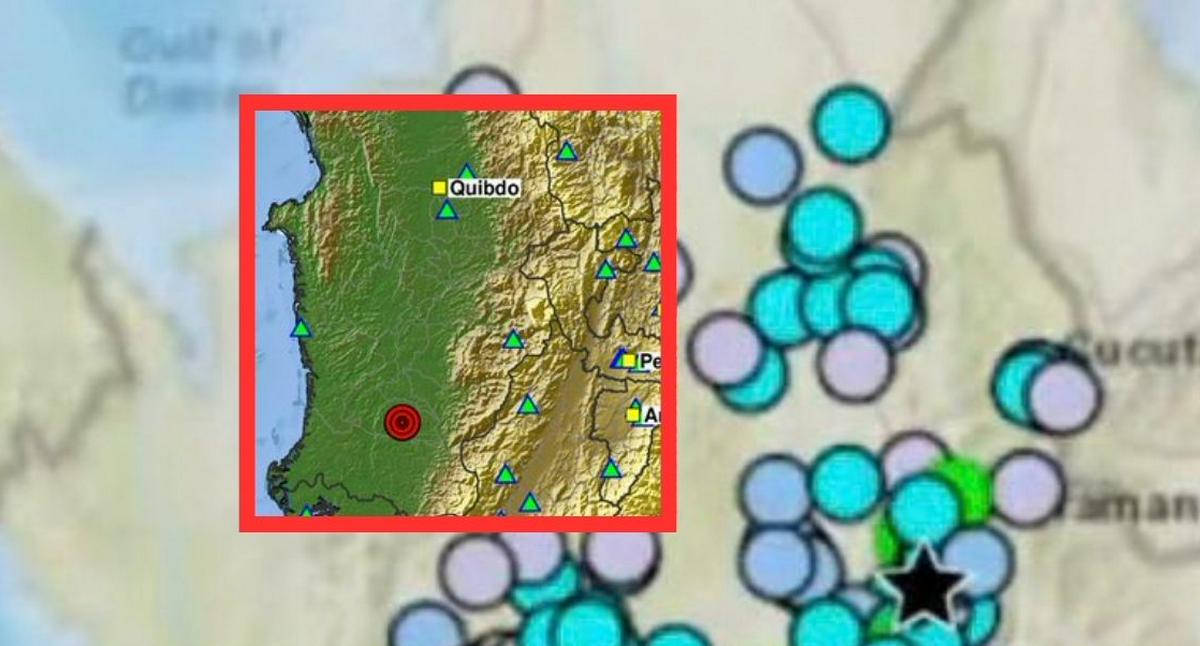
Residents in Ibagué, Colombia, experience a strong tremor during the September 2026 seismic swarm. — Source: gdelt A series of five earthquakes struck Colombia's Tolima and Chocó departments on 24 September 2026, including a magnitude 4.1 near Chaparral that was felt in Ibagué. [2] The first tremor registered at 7:37 p.m. with magnitude 4.1 and superficial depth under 30 km near Chaparral, Tolima. [5] Twenty minutes later a magnitude 4.0 event struck at 37 km depth near Istmina, Chocó. [2] At 8:18 p.m. a magnitude 3.0 quake occurred again near Chaparral with superficial depth. [2] The sequence continued at 8:55 p.m. with a magnitude 3.6 event near Chaparral. [2] The fifth tremor hit at 9:22 p.m. with magnitude 3.4 and superficial depth near Chaparral. [2] A later magnitude 3.1 event was recorded at 10:28 p.m. near Istmina at 40 km depth. [2] Citizens reported feeling the movements in Ibagué, Cali and La Tebaida, with comments noting repeated shaking throughout the evening. [2]
Minor Earthquakes Recorded in the United States
USGS recorded a magnitude 2.5 earthquake 16 km NE of House, New Mexico and a magnitude 3.1 earthquake 3 km NW of Little America, Wyoming. [3] The New Mexico event occurred at a depth of 9.4 km. [3] The Wyoming event registered at a depth of -3.4 km. [4] Both detections came from the USGS monitoring network on the dates covered in the reports.
Geological Context of Frequent Earthquakes
Peru lies on the Pacific Ring of Fire where the Nazca Plate subducts under the South American Plate, causing frequent seismic activity and the formation of the Andes. [1] The IGP explained that this subduction process concentrates nearly 85 percent of global seismic activity along the Pacific belt and leads to energy accumulation that releases as seismic waves. [1] The same mechanism has shaped the Andes mountain range over geological time. [1] The institute noted that displacement of tectonic plates, reactivation of geological faults and volcanic activity can all generate quakes, though subduction produces the largest magnitude events. [1] The Nazca Plate continues its movement beneath the continent, extending influence even into Amazonian sectors of Peru. [1]
Official Monitoring and Public Guidance
Colombian authorities urged residents to report felt earthquakes via the Sismo Sentido platform while Peru's IGP issued preparedness recommendations including family emergency plans and official information sources. [1] The IGP maintains constant monitoring and updates technical reports with magnitude, depth, epicenter coordinates and estimated intensity for each event. [1] Recommended steps include keeping an updated family emergency plan, identifying evacuation routes in advance, preparing an emergency backpack, participating in national drills and consulting only official sources. [1] Emergency contact numbers listed are 116 for firefighters, 105 for Policía Nacional del Perú, 106 for SAMU and INDECI through local and regional authorities. [1] In Colombia the Servicio Geológico Colombiano invited felt reports through its Sismo Sentido platform to assess intensity and effects. [2] The agency continues permanent monitoring through the Red Sismológica Nacional.
What to watch next includes continued updates from the IGP on the latest 15 recorded events and further reports from the SGC on sequences in Tolima and Chocó.