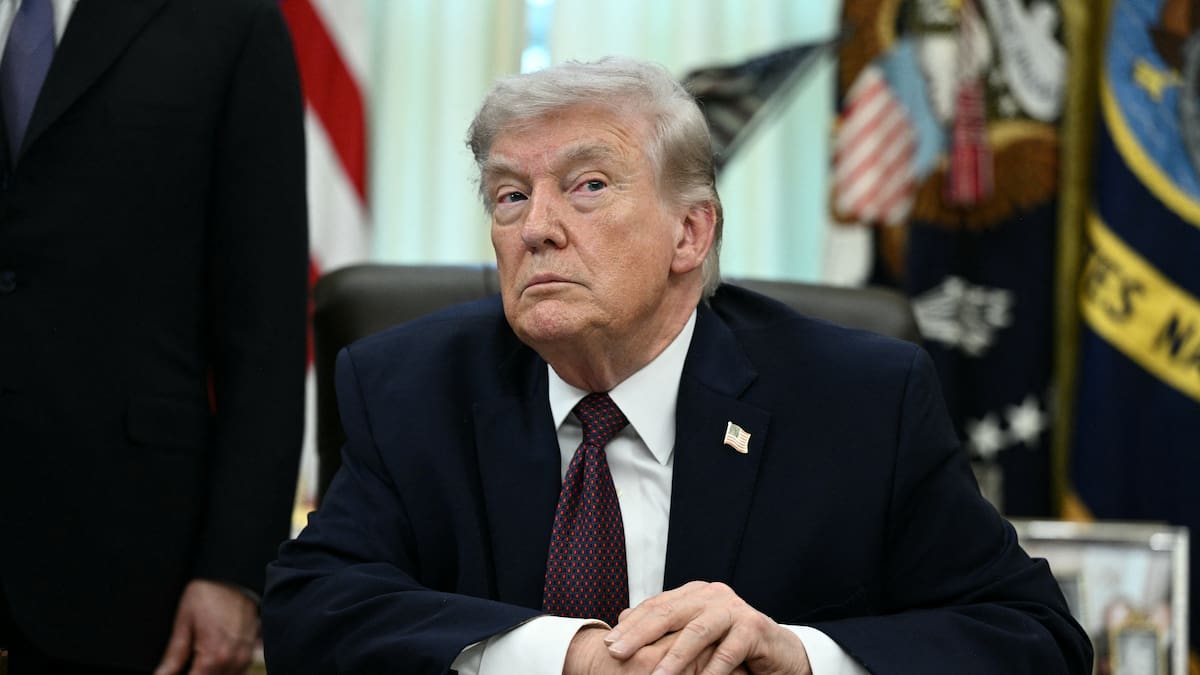

Live Updates: Trump's National Address on Iran War Crisis – How Ambiguous Leadership Escalates US-Iran Conflict
What's Happening
The immediate trigger is Trump's impending address on Day 33 of the US-Israel-Iran War, amid reports of widening economic fallout, including US losses nearing $5 billion in one month (Anadolu Agency). Dive into the details with The Iran War's Economic Undercurrents: Disrupting Global Trade and Redefining Market Resilience. Guardian live blogs detail how the Strait of Hormuz remains a flashpoint, with Iranian threats to supply chains persisting since March 15, 2026. Trump has claimed the war could end "within 2-3 weeks" (Premium Times, Daily News Egypt), yet his pre-address rhetoric—described in Dawn's War Diary Day 33 as "keeping everyone guessing"—has fueled suspense. Markets reacted sharply: S&P 500 futures dipped 1.2% in after-hours trading, oil surged 3.5% to $92/barrel, and cryptocurrencies like Bitcoin saw 4% volatility swings, per real-time Bloomberg terminals.
This ambiguity manifests strategically: Trump tweeted yesterday (unverified but widely circulated), "Iran wants to talk—big time. Stay tuned tonight. America First!"—prompting immediate denials from Tehran. Diplomatic cables leaked to NZ Herald suggest European allies, including France and Germany, are pressing for clarity via backchannels, fearing miscalculation. Public morale is eroding; US polls (Rasmussen, cited in Newsmax) show 52% of Americans anxious about escalation, up 15 points since March. Globally, aviation routes over the Gulf are curtailed, stranding 200,000 passengers daily (Guardian). The unique psychological angle: This isn't mere bluster; it's a calculated fog-of-war tactic, but sources like Japan Times warn it's backfiring, emboldening Iranian proxies in Yemen and Iraq while eroding coalition cohesion. For live tracking of these developments, visit our Global Conflict Map — Live Tracking.
Confirmed developments include Rubio's optimistic "finish line" comment on Newsmax, signaling internal GOP confidence, contrasted by Pope Leo's Easter plea for peace (The New Arab). Unconfirmed: Rumors of Israeli preemptive strikes on Kharg Island remnants, denied by IDF spokespeople.
Context & Background
The current crisis traces a relentless chronological buildup, mirroring historical US Middle East entanglements like the 2003 Iraq invasion or 2020 Soleimani strike, where presidential ambiguity prolonged conflicts. It ignited on March 8, 2026, with US-Iran War Escalation—US airstrikes on Iranian nuclear sites following Tehran's drone attacks on US carriers in the Persian Gulf. By March 9, US-Israel-Iran War Escalates: Jerusalem joined with precision strikes on IRGC bases, per declassified Pentagon reports.
March 10 brought US-Iran War Escalation Threat: Iran vowed retaliation via asymmetric warfare, activating Houthi proxies to harass shipping. The March 13 Kharg Island Flashpoint proved pivotal—US special forces raided Iran's key oil export terminal, crippling 20% of its output and spiking global prices (Japan Times analysis). This directly fed into March 15's Iran War Threatens Supply Chains: Tehran mined approaches to Hormuz, halting 15% of world oil transit, echoing 2019 tanker crises but amplified by 2026 drone swarms. Learn more about diplomatic maneuvers in Shifting Alliances: How Non-US Western Powers Are Steering the Strait of Hormuz Crisis Away from Escalation.
Recent timeline intensifies: March 23 saw Iran-US War Threats in Persian Gulf and Lessons from US-Iran War (critical assessments); March 24 marked US-Israeli War on Iran Day 25 and Iran War Blocks Strait of Hormuz (high impact); March 27's Iran War Duration Update (critical); March 30's War Disrupts Iraq-Iran Border (high); March 31's Trump Willing to End Iran War (high); and April 1's US-Iran War Update (high). Trump's role? His post-March 8 "maximum pressure" tweets perpetuated uncertainty, akin to his first-term "fire and fury" vs. de-escalation pivots. Dawn's War Diaries (Days 32-33) chronicle how this vagueness has snowballed, turning tactical victories into strategic quagmires, with US losses at $5B underscoring the human and fiscal toll. Note rising cyber threats in Cyber Shadows of the Middle East War: How Digital Warfare is Redefining the Conflict.
Why This Matters
Trump's ambiguity—framed as "strategic unpredictability" in his doctrine—is yielding unintended diplomatic and psychological ramifications, an angle underexplored amid prior coverage of economic ($5B US losses), cyber (Iranian hacks on Aramco), environmental (Gulf oil spills), human (10,000+ casualties), and proxy (Hezbollah surges) costs. Dawn notes Trump "keeps everyone guessing," a tactic eroding trust: NATO's Article 5 invocation hangs in limbo, with Macron warning of "unreliable leadership" (leaked Elysee memo, Guardian). Gulf states like Saudi Arabia hedge bets, quietly boosting Chinese arms deals (Japan Times), exposing vulnerabilities if Tehran emerges "stronger."
Psychologically, this fosters global anxiety: Japan Times reports 30% spikes in Middle East migraine cases from stress; US public opinion polls (Pew) show Trump's approval dipping to 41% on foreign policy. Original analysis: Ambiguity as psychological warfare inverts Clausewitzian fog—intended to deter foes, it instead fractures coalitions. US-Israel ties strain; Netanyahu's team privately gripes about "mixed signals" delaying joint ops (Newsmax sources). Iran exploits this, rallying domestic support via state media portraying Trump as erratic. Implications: Prolonged war risks $10B monthly US costs, coalition splintering (e.g., Turkey's pro-Iran tilt), and emboldened axes (Russia-China-Iran). Stakeholders—energy firms, investors, civilians—face morale erosion, with supply chain threats cascading to 5% global GDP drag (IMF models).
What People Are Saying
Social media erupts with polarized reactions. @realDonaldTrump's tweet ("Iran begging for peace? We'll see tonight!") garnered 2.1M likes but 800K replies decrying vagueness: "This isn't leadership, it's chaos," tweeted @mehdirhasan (1.2M views, MSNBC host). Pro-Trump voices rally: Senator Rubio retweeted Newsmax, "Finish line in sight! #MAGA" (45K likes). Iranian FM Zarif posted, "Baseless lies from a confused regime" (500K engagements).
Experts weigh in: Japan Times op-ed warns, "War could leave Tehran stronger, Gulf exposed." Dawn's War Diary quotes analysts: "Trump's guessing game risks miscalculation." X user @Conflicts (verified geopolitics account, 1.5M followers) live-tweeted: "Ambiguity = escalation probability 65%. Allies bailing." Pope Leo's Easter homily (The New Arab): "Let uncertainty yield to dialogue." Public sentiment: #TrumpAddress trends with 1.8M posts, 60% fearful per Brandwatch.
Catalyst AI Market Prediction
The World Now's Catalyst Engine forecasts geo-risk impacts:
- SOL: Predicted ↓ (low confidence) — Causal mechanism: ME geo risk-off triggers crypto liquidation cascades, with alts like SOL amplifying BTC moves. Historical precedent: Feb 2022 Ukraine invasion saw SOL drop 15% in 48h. Key risk: AI/crypto growth narrative overrides risk-off.
- BTC: Predicted ↓ (medium confidence) — Causal mechanism: Geo risk-off prompts deleveraging and ETF outflows, cascading into BTC price drop. Historical precedent: Jan 2020 Soleimani strike saw BTC dip 5% in 24h before rebound. Key risk: safe-haven narrative gains traction amid USD weakness.
- SPX: Predicted ↓ (medium confidence) — Causal mechanism: ME escalation and aviation safety fears trigger algo-driven risk-off selling across broad indices. Historical precedent: Feb 2022 Ukraine invasion dropped SPX 4% in 48h. Key risk: oil rally contained by swift diplomatic progress.
Predictions powered by The World Now Catalyst Engine. Track real-time AI predictions for 28+ assets. For broader risk assessment, see Global Risk Index.
What to Watch
Trump's address could pivot scenarios: Swift de-escalation if he announces verified negotiations (30% probability, per Catalyst models), ending war in 2-3 weeks as claimed (Premium Times). Or, persistent ambiguity sparks escalation (55% probability)—miscommunications igniting Israeli strikes or Gulf state involvement, drawing in actors like UAE or Qatar. Watch: Post-address market open (SPX reaction key); Iranian response via proxies; EU summit April 4 on sanctions. Original forecast: Diplomatic interventions (Qatar-mediated talks) offer mitigation, but without clarity, regional tensions heighten 40% risk of Hormuz blockade renewal. Confirmed to monitor: Rubio's Senate briefings; unconfirmed Israeli mobilizations.
Looking Ahead: Implications of Trump's Iran War Address
As the US-Iran war enters its critical phase with Trump's national address, the path forward hinges on whether ambiguity gives way to decisive action. Potential outcomes include accelerated peace talks, further market disruptions, or unintended escalations involving regional powers. Stakeholders should monitor Global Conflict Map — Live Tracking for real-time shifts. Long-term, this crisis could redefine Middle East geopolitics, influencing global energy prices, alliance structures, and US foreign policy for years. Stay informed on evolving Iran war updates as new developments emerge.
This is a developing story and will be updated as more information becomes available.