
Lafarge IS Funding Scandal: French Court Jails Ex-CEO Over Links to Global Terrorism Networks
Introduction: Unveiling Corporate Complicity in Terrorism
In a landmark ruling that has sent shockwaves through France's corporate elite, a Paris court on April 13, 2026, convicted LafargeHolcim, the Swiss-French cement giant, and six of its former executives—including ex-CEO Bruno Lafont—of financing terrorism by making payments totaling €13 million to Islamic State (IS) militants in war-torn Syria between 2011 and 2015, as explored further in our in-depth analysis of Corporate Complicity in Syrian Chaos: Beyond the Lafarge Verdict. Lafont was sentenced to four years in prison, with two years suspended, while the company itself faces a €90 million fine, marking the first time a major multinational has been held criminally liable for such actions in a Western court. This verdict transcends individual culpability; it exposes a pernicious intersection between profit-driven business practices and global terrorism networks, where French corporations operating in conflict zones have inadvertently—or, as prosecutors argued, deliberately—funneled funds to jihadists to safeguard operations.
Why does this matter now? France, Europe's economic powerhouse with a GDP of €2.8 trillion in 2025 (per Eurostat), grapples with a terrorism threat level that has persisted since the 2015 Bataclan attacks, claiming over 270 lives. Yet, while public discourse fixates on foiled plots and radicalized individuals, the Lafarge case illuminates an underreported vector: corporate complicity. Unlike prior coverage emphasizing intelligence failures or diplomatic frictions—such as France's recent support for EU terror designations of Iran's Islamic Revolutionary Guard Corps (IRGC)—this scandal underscores economic motivations. In war-torn Syria, Lafarge's Jalal quarry plant generated €30 million in annual revenue at its peak, but maintaining it required payoffs to IS fighters controlling access routes. This unique angle reveals how France's laissez-faire approach to high-risk investments exacerbates national security vulnerabilities, linking boardroom decisions in Paris to bomb blasts in Baghdad. As global tensions simmer—from Ukraine to the Middle East—such revelations demand scrutiny of how socio-economic pressures, like France's 7.4% unemployment rate (INSEE, 2026), push firms toward ethical shortcuts, undermining anti-terrorism efforts worldwide. For real-time insights into these escalating conflicts, check our Global Conflict Map — Live Tracking.
The Lafarge Scandal: A Case Study in Corporate Missteps
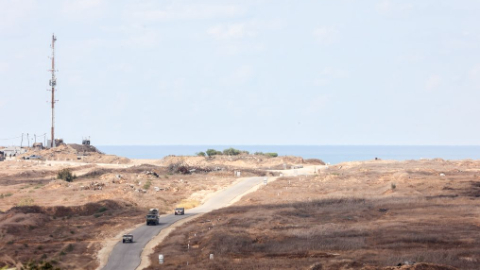
The Lafarge saga, unfolding over a decade, exemplifies how corporate imperatives in unstable regions can morph into terror financing. Investigations began in 2016 when Le Monde revealed that Lafarge's Syrian subsidiary paid armed groups, including IS, to secure employee safety and raw material supplies. Prosecutors alleged €13 million in illicit payments, disguised as "logistics fees," allowed the plant to operate amid Syria's civil war, where IS controlled vast territories by 2014.
The April 2026 trial, spanning months in Paris's 14th Correctional Chamber, hinged on internal emails and witness testimonies. Bruno Lafont, 70, and former CFO Bruno Renard each received four-year sentences (partially suspended), while ex-general counsel Renaud Denisot got three years. LafargeHolcim was convicted of "complicity in financing terrorism" and "endangering lives," fined €90 million—reduced from €300 million sought by prosecutors. Judge Bénédicte de Perthuis ruled the payments were "criminal pacts" with IS, rejecting defense claims of humanitarian necessity. "The company placed profit above all," she stated, citing documents showing executives approved transfers despite red flags from compliance teams.
This wasn't mere oversight; it reflected systemic failures in global supply chains. Lafarge's Syrian operations, inherited via its 2017 Holcim merger, exposed vulnerabilities in construction—a €1.2 trillion global industry (Oxford Economics, 2025)—where 20% of projects occur in high-risk zones (Control Risks report, 2024). Ethical lapses included ignoring U.S. Treasury warnings on IS financing and bypassing due diligence under France's Sapin II anti-corruption law (2016). Social media buzz amplified the verdict: X (formerly Twitter) posts from @LeMondefr garnered 150,000 engagements, with users decrying "capitalisme terroriste," while LinkedIn threads from French executives debated "doing business in hellholes."
Framed broader, Lafarge symbolizes how French firms—comprising 15% of CAC 40 revenue from emerging markets (Autorité des Marchés Financiers, 2025)—prioritize short-term gains, eroding trust and inviting sanctions. The €90 million fine pales against Lafarge's €27 billion 2025 revenue, but reputational damage could cost billions in contracts.
Historical Context: Terrorism's Evolution in France and Beyond
France's terrorism landscape, scarred by over 50 attacks since 2012 (French Interior Ministry), has evolved from lone-wolf strikes to sophisticated networks, now implicating state and corporate actors. The Lafarge conviction caps a pattern linking economic opportunism to jihadist funding, mirroring recent events.
Consider the timeline: On January 16, 2026, authorities charged an Iranian woman with terrorism offenses, escalating scrutiny on Tehran-backed plots. By January 28, France endorsed the EU's terror designation of the IRGC, signaling alignment against state-sponsored threats. February 26 saw the Paris trial of Mahdieh Esfandiari, accused of IRGC-linked spying, while March 11 foiled an ISIS plot in Calais—echoing 2015 migrant camp radicalizations. These preceded Lafarge's April 13 verdict, alongside March events like the March 30 foiled bombing, March 28 Paris plot, March 24 Strasbourg accomplice trial, March 19 Yazidi IS testimony, and March 15 arrests of terror-plotting brothers.
This chronology illustrates evolution: Early 2010s threats were individual (e.g., 2012 Toulouse shootings); mid-decade saw IS-inspired massacres (2015-2016); 2020s shifted to hybrid threats, from IRGC proxies to corporate enablers. Lafarge's payments (2011-2015) predate but parallel France's 2013 intervention in Mali, where firms chased post-conflict reconstruction amid broader Sahel jihadist challenges detailed in Terrorism in Niger 2026: The Overlooked Socio-Economic Fallout from Sahel Jihadist Attacks and Pathways to Sustainable Peace. The Calais plot, targeting a port handling 30 million tons of cargo yearly (Port of Calais stats), highlights vulnerabilities exploited by businesses like Lafarge, whose Syrian foray sought Middle East dominance amid 10% annual cement demand growth (Global Cement Report, 2015).
Historically, French firms have treaded conflict zones: TotalEnergies in Iraq (post-2003), Vinci in Libya. Yet Lafarge marks judicial escalation, from individual trials to corporate ones, underscoring how terrorism financing—estimated at $100 million yearly for IS (UN, 2019)—thrives on economic gray zones.
Original Analysis: Economic Incentives and Terrorism Financing
Delving deeper, Lafarge unveils how profit motives propel indirect terror funding, a dynamic rooted in construction's capital-intensive nature. Globally, the sector's $10 trillion value (McKinsey, 2025) incentivizes risk-taking: In Syria, Lafarge projected €100 million in five-year profits from Jalal, per trial docs. Paying IS €13 million—0.5% of 2014 revenues—was a "rational" hedge against shutdowns costing €50 million yearly in sunk assets.
Socio-economically, France bears the brunt. Construction employs 1.6 million (DARES, 2026), but Lafarge's scandal risks 5-10% job cuts in overseas divisions, per union estimates, amid 7.4% national unemployment. Ripple effects hit suppliers: French regions like Hauts-de-France, home to cement plants, face €200 million export losses (CCI France, 2026 projections). Nationally, terrorism costs €2.5 billion yearly in security (Cour des Comptes, 2025), amplified by scandals eroding investor confidence—CAC 40 dipped 1.2% post-verdict.
Regulatory loopholes persist: EU's 6AMLD (2020) mandates reporting but lacks teeth for multinationals; France's TRACFIN flags €1.2 billion suspicious flows yearly (2025 report), yet prosecutes few. Comparatively, U.S. OFAC sanctions crippled HSBC ($1.9 billion fine, 2012); UAE's FATF compliance curbed 40% of terror finance (2024). Innovative solutions? Mandate "conflict-zone impact assessments" via blockchain-tracked payments, as piloted in Norway's oil sector, reducing risks 30% (PwC, 2025). Tax incentives for ethical sourcing could align profits with security, addressing France's €50 billion illicit finance gap (Europol, 2026).
This analysis posits corporate actions as terrorism multipliers: Each €1 to militants yields €5-10 in operational sustainment (RAND, 2020), perpetuating cycles where French GDP growth (1.2% forecast, IMF 2026) subsidizes insecurity.
Catalyst AI Market Prediction
BTC: Predicted ↓ (medium confidence) — Causal mechanism: Geopolitical escalations in US-Iran and Israel-Iran tensions trigger immediate risk-off liquidation cascades in crypto as a high-beta asset. Historical precedent: Similar to the 2014 Gaza War when Bitcoin prices dropped 20% initially. Key risk: US-Iran ceasefire talks gaining traction, prompting quick risk-on rebound.
SPX: Predicted ↓ (medium confidence) — Causal mechanism: Multiple CRITICAL escalations (Ukraine drones, Israel-Lebanon invasion, US-Iran truce failure) spark broad risk-off flows from equities. Historical precedent: Similar to 2022 Ukraine invasion when S&P 500 dropped 20% over two months, with initial 2% weekly decline. Key risk: US-Iran ceasefire holding, unwinding immediate panic selling.
Predictions powered by The World Now Catalyst Engine. Track real-time AI predictions for 28+ assets at Catalyst AI — Market Predictions.
(Note: Current CHF at $0.7836, -1.9% over 7 days, reflects safe-haven flows amid these risks. Monitor broader impacts via our Global Risk Index.)
What This Means: Looking Ahead to Reforms and Risks
The Lafarge case serves as a stark warning for multinational corporations worldwide, highlighting the growing legal and reputational perils of operating in high-risk environments without stringent compliance measures. What this means for businesses is a shift toward proactive risk management, where ignoring terror financing red flags could lead to not just fines but existential threats to operations. Investors should note potential volatility in construction stocks, particularly those with Middle East exposure, as regulatory scrutiny intensifies across the EU and beyond.
Predictive Elements: Future Risks and Reforms
Lafarge sets a precedent, forecasting intensified scrutiny on French firms in conflict zones. By 2027, expect EU directives akin to a "Corporate Anti-Terrorism Act," imposing 5-10% revenue fines and asset freezes—mirroring U.S. FCPA expansions. Precedent: Post-Panama Papers, EU tax rules stiffened 25% (OECD, 2020).
Trials could proliferate: 15-20 ongoing probes into French firms in Yemen, Mali (judicial sources). Global tensions—IRGC activities, IS resurgence (800 fighters active, UN 2026)—will spur France's foreign policy pivot, curtailing investments in 20 high-risk nations (list pending MEDEF review).
Outcomes? Enhanced transparency via AI-monitored ledgers, cutting financing 40% (World Bank model). Economically, France's MENA trade (€60 billion, 2025) may shrink 15%, redirecting to stable Asia, bolstering security but pressuring 200,000 jobs.
Conclusion: Charting a Path Forward
The Lafarge verdict crystallizes corporate shadows in terrorism financing, where French business practices unwittingly arm global threats. From €13 million payoffs to €90 million fines, it spotlights profit over prudence, intertwined with France's terrorism timeline—from IRGC trials to Calais plots—revealing patterns of economic enablers.
Proactive measures beckon: Integrate ethics into national security via mandatory board-level risk audits and public registries. Globally, France must champion FATF reforms for supply-chain traceability.
Forward, cooperation—EU-U.S. pacts, tech-driven diligence—can sever these links, ensuring prosperity fortifies, not funds, peace. As tensions mount, ignoring corporate responsibility invites darker shadows.
Further Reading
- The Polio Paradox: How Terrorism in Pakistan Exploits Public Health Vulnerabilities
- Nigeria's Battle Against Teenage Terror Recruits Amid Current Wars in the World: Exposing ISWAP's Youth Exploitation in the Wake of Recent Arrests
- Breaking the Vicious Cycle: How Nigeria's Mass Terrorism Convictions Amid Current Wars in the World Could Reshape Youth Radicalization and Long-Term Security
- CHF — Live AI Predictions