Kyiv Mayor Urges Temporary Evacuations as Russian Strikes Intensify Ahead of Winter
Reporting based primarily on bbc.com.
Kyiv Mayor Vitali Klitschko has urged residents to consider temporarily leaving the Ukrainian capital as Russian strikes on infrastructure intensify ahead of winter, exacerbating power and heating shortages. [2]
Klitschko Warns of Worsening Conditions
Kyiv Mayor Vitali Klitschko has warned that worsening Russian attacks on Ukraine’s capital are threatening residents’ access to electricity and heating as winter approaches. [2] In an interview with AFP, Klitschko said Russian strikes on buildings and critical infrastructure had made daily life increasingly difficult. [2] “Every day there are new reports of destroyed buildings and of [critical infrastructure],” he stated, noting that the situation had become very dramatic by the end of September. [2] The mayor’s comments came as authorities faced mounting challenges in maintaining basic services amid the intensified campaign. [2]
Escalating Attacks on the Capital
As Russia’s attacks on Ukraine’s cities intensify and autumn’s cooler temperatures hint at another tough winter to come, Ukrainians are wrestling with how to meet the twin challenges ahead: Russian drone and missile strikes and the biting cold. [1] “It was a very difficult winter last year in Kyiv,” says mother of two Mariia Shostak. [1] With prolonged periods of sub-zero temperatures and frequent power cuts brought about by Russia’s attack on the country’s power grid, last winter was one of the hardest so far. [1] “There were some days and weeks that were unbearable. I started thinking I’m not going through another winter like this.” [1] Mariia is not even waiting for winter. Russia’s latest assaults on the capital have forced her hand. [1] “Everything changed in late August and the beginning of September, when Kyiv started being attacked around the clock,” she said. [1] “Earlier, the drones and missiles were intercepted somewhere on the outskirts. Now it was happening in the centre, right above our heads.” [1] Wreckage from Russian drones can be found on the streets of the capital. [1] After weeks of escalating Russian attacks, which by the end of September had included petrol stations, power plants and key bridges over the Dnipro river, Kyiv mayor Vitaly Klitschko said the city was facing a “very dramatic situation.” [1]
Families Fleeing Another Harsh Winter
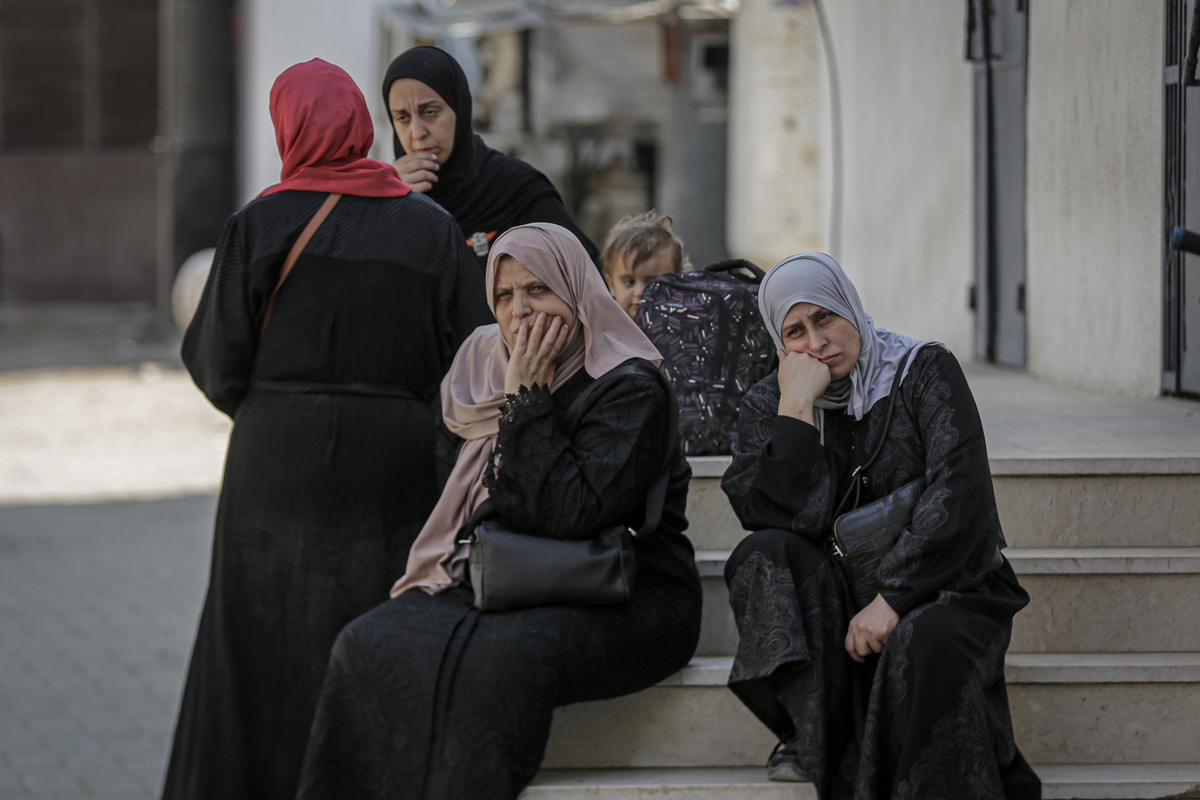
Mariia’s children, four-year-old Artur and Kira, who’s two, were both born after Russia’s full-scale invasion in 2022. [1] Unwilling to subject them to another miserable, dangerous winter, she’s taking them abroad. [1] They plan to spend the winter in Hurghada, on Egypt’s Red Sea coast. [1] It’s cheaper than Europe, Mariia explains, and warmer too. [1] “I don’t feel safe in Ukraine in any way,” she says. [1] Last winter, Iryna, who asked us not to use her surname, says her three-year-old daughter Polina found it hard to cope. [1] “Sometimes we didn’t have heating for weeks and the temperature inside the apartment was zero or five degrees,” she tells us. [1] “So being here with a little child that is sick all the time was not OK.” [1] The family’s recent experiences have only compounded Polina’s difficulties. [1] “We had two missile attacks this year,” Iryna says. [1] The first explosion, in early June, blew out several windows in the family’s home on the north-western edge of Kyiv. [1] A month later, after some of the damage had been repaired, a second blast, close to the foot of their 10-storey apartment block, propelled a wave of earth into the flat, forcing the family to move into temporary accommodation. [1] Polina’s health has deteriorated. [1] She suffers from extreme anxiety, which has brought on bouts of incontinence, vomiting and uncontrollable shaking. [1] “Now we have this neurological problem with her so that’s the reason we’re thinking about leaving,” Iryna says. [1] “There are new symptoms after each shelling.” [1] Iryna, whose husband is in the army, has not yet decided where to go. [1] Her work with an international NGO may allow her to work remotely from Poland. [1] “Our president says that it is better to leave Kyiv because this is target number one,” she says. [1]
Rural Relocations and Public Sentiment
Polls show that many Ukrainians are feeling the same way, even if not everyone has yet made such a radical decision. [1] A September survey by the Gradus research company found that 40% of Ukrainians were considering relocating if living conditions continued to deteriorate; 35% said they would not move elsewhere, while 25% were undecided. [1] “People are thinking about a combination of stress factors,” Evgeniya Blyznyuk, Gradus’s founder and CEO, told us. [1] “Not just about electricity and blackouts like last winter. Russians are targeting big logistics centres, which means that the population is worrying about products, about food during the winter.” [1] Russia’s recent attacks on Kyiv’s bridges, petrol stations and schools have increased the sense of danger and foreboding. [1] For families with young children, the situation feels especially urgent. [1] For other Kyiv residents, the solution lies closer to home: in the vast open spaces of Ukraine’s countryside. [1] Olena Konoplia tells us she spent weeks looking for a suitable location before settling on a cottage in a rural community two hours outside the capital. [1] “I decided the better option will be a little village without any factories, any [warehouses] and any railway stations,” Olena explains. [1] “Everything that can be a Russian target.” [1] On the day we visited, Olena was busy ferrying supplies to the house and supervising the installation of a new door. [1] In keeping with Ukrainian tradition, a priest has already been around to bless her new home. [1] The cottage has gas-powered convection heaters, but in an adjacent barn a stack of firewood will help to keep Olena warm in the event of power cuts. [1] She has already installed high-speed internet, necessary for her work at a Kyiv-based charitable foundation. [1] At a time when air raid sirens sound constantly in Kyiv and explosions can be heard almost every day, the peace and quiet of the village is what Olena says she needs most. [1] “After several nights here, when I can sleep, just sleep, without any explosions, without any sirens, I feel better,” she says. [1] “I can work, write my articles, I feel good.” [1] Olena’s elderly mother will soon be joining her. [1] “She lives in a pretty dangerous district in Kyiv and it’s harmful for her health,” she explains. [1]
Preparations and Limits in Kyiv
Of course, not everyone can afford a cottage in the countryside or a months-long trip abroad. [1] Most Kyiv residents will do what they can to survive another tough winter in the capital, just as they have before. [1] The authorities are taking steps to prepare. [1] Some of Kyiv’s most vulnerable citizens – the elderly and women with young children – are being offered places in converted sanatoriums and rehabilitation centres in the city’s forested outskirts. [1] Meanwhile, a network of around 15 small-scale power plants has been constructed around the city over the past 18 months in an effort to shore up Kyiv’s battered power grid. [1] The plants, constructed in fortified bunkers and protected from drone attack by huge steel cages, are each capable of providing electricity and heat to several hundred of the city’s high-rise apartment blocks. [1] But with energy companies already talking about scheduled power cuts and supermarkets experiencing periodic shortages of some goods, the pressures to leave are growing. [1] Evgeniya Blyznyuk says she does not expect to see a mass exodus from the capital and says most people have yet to make up their minds, reluctant to jeopardise their jobs or take children out of school. [1] “They will postpone it until conditions become really unliveable,” she says. [1]
Broader Strike Toll and Zelenskyy Criticism
One of the two passenger buses struck by projectiles in Kramatorsk, near the front line in eastern Ukraine, on Thursday. [3] Ukrainian President Volodymyr Zelenskyy accused the U.S. of being unwilling to help Ukraine after a Russian bomb attack on Thursday killed at least 35 people in the east, sending the two-day death toll from Russian strikes to over 70. [3] Hours after the strike on the embattled city of Kramatorsk tore through two buses, Zelenskyy criticized Washington’s effort to pursue economic ties with Russia while also seeking to mediate the more than four-year war. [3] City authorities reported a new drone attack in the evening that killed two people. [3] That brought to 35 the total death toll in the city. [3]
What to watch next: Evgeniya Blyznyuk says most people have yet to make up their minds and will postpone decisions until conditions become really unliveable, while energy companies continue discussing scheduled power cuts. [1]