
Kim Yo-jong's Bold Warnings: Unpacking North Korea's Internal Power Shifts Amid Rising Korean Peninsula Tensions
What's Happening
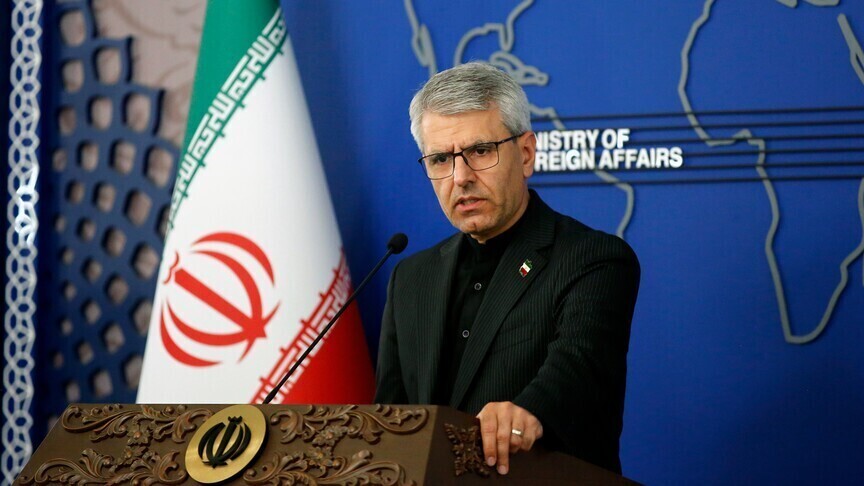
The latest provocations unfolded rapidly on April 7, 2026, when South Korea's Joint Chiefs of Staff detected North Korea firing several unidentified projectiles from near the port city of Wonsan into the Sea of Japan, approximately 200-300 kilometers east of the Korean Peninsula. Seoul described the launches as "ballistic missiles," though Pyongyang has not officially confirmed the type, labeling them instead as routine military exercises. This came hours after Kim Yo-jong, vice department director of the Workers' Party's Central Committee, released a statement via state media KCNA, slamming South Korea's President Yoon Suk-yeol for designating North Korea an "enemy state" in recent constitutional amendments. A North Korean foreign ministry official escalated the rhetoric, calling Yo-jong's words a "clear warning" that could lead to "grave consequences," including potential military responses.
Confirmed details include: the projectile launches detected at around 7:40 a.m. local time (Seoul/Yonhap); Yo-jong's statement explicitly referencing South Korea's "hostile policy" and warning against any "double standards" in inter-Korean relations; and Pyongyang's rejection of Seoul's overtures for dialogue, framing them as insincere. Unconfirmed reports from South Korean intelligence suggest the projectiles were short-range ballistic missiles (SRBMs) similar to the KN-23 series, capable of striking targets across South Korea, though no impacts on civilian or military assets were reported.
This incident marks a departure in diplomatic tone. Traditionally, North Korean diplomacy has been dominated by male figures like Kim Jong-un or Foreign Minister Choe Son-hui. Yo-jong's intervention—her third major public statement in 2026—positions her as a de facto spokesperson, blending sharp rebukes with what some outlets describe as "warm words" in response to South Korean overtures. The Korea Herald reports that a senior DPRK official emphasized Yo-jong's message as setting "firm red lines," not an olive branch, amid a pattern of escalating tests. This unique focus on Yo-jong highlights internal dynamics: her rising visibility, confirmed through repeated state media foregrounding, suggests regime consolidation or grooming for higher roles, differentiating this from prior missile-centric coverage.
South Korea responded with heightened vigilance, scrambling fighter jets and conducting its own missile drills, while the U.S. Indo-Pacific Command issued a standard statement affirming alliance commitments. No casualties or territorial violations were reported, but the timing—mere days after North Korea's overtures to Russia and Belarus—amplifies concerns over proxy alignments.
Context & Background
These events fit into a clear pattern of rhetorical and military escalation dating back to early 2026, framing North Korea's actions as calculated steps toward deterrence amid perceived threats from Seoul and Washington. The timeline begins on January 12, 2026, when Pyongyang rebuked South Korea over alleged drone incursions near the DMZ, an early indicator of border frictions that set a confrontational tone. This progressed to January 27, with announcements of nuclear deterrent expansion plans, signaling doctrinal shifts toward preemptive capabilities.
By February 26, Kim Jong-un personally threatened "physical confrontation" with South Korea during a military inspection, escalating from rebukes to direct menaces. March 9 and 10 saw external analyses (from think tanks like the CSIS and RAND) highlighting elevated North Korean attack risks, based on troop mobilizations and artillery drills—foreshadowing today's warnings. Recent events compound this: March 12's backing of Iran against U.S. pressures; March 18's military deal with Russia, including troop deployments to Ukraine; March 20's tank drills; March 25's Belarus visit by Lukashenko; March 27's NK-Belarus friendship treaty; April 3's Kim inspecting a memorial for Ukraine troops; and April 6 speculation on NK heir dynamics. For insights into how emerging powers like Russia are reshaping global order, explore related geopolitical shifts.
This progression illustrates a broader geopolitical pivot: North Korea leveraging alliances with revisionist powers (Russia, Belarus, Iran) to offset sanctions, while using Yo-jong to project continuity amid health rumors surrounding Kim Jong-un. Historically, such escalations echo 2017's "Hwasong" missile frenzy, but today's blend internal signaling— Yo-jong's role echoing her 2018 Olympic diplomacy—with external posturing, connecting dots to a regime preparing for leadership transitions in an era of U.S.-China rivalry.
Why This Matters
Yo-jong's prominence offers unique insights into North Korea's internal succession battles, largely overlooked in missile-focused narratives. Her statements—contrasting "warm words" (per SCMP) with "firm red lines" (Korea Herald experts)—suggest regime consolidation: as Kim Jong-un's health remains opaque (unconfirmed rumors of mobility issues), Yo-jong's diplomatic centrality may indicate grooming as regent or successor, altering policy from brute force to nuanced coercion. This could harden North Korea's stance, prioritizing nuclear orthodoxy over denuclearization talks.
Geopolitically, it reshapes alliances. Pyongyang's Russia ties (troop commitments) and Iran support position it as a linchpin in anti-Western axes, potentially emboldening provocations. For stakeholders: South Korea faces domestic political fallout, with Yoon's hardline risking unification delays; the U.S. must balance deterrence without provoking China; Japan eyes missile defenses. Economically, escalations ripple via supply chains—Taiwan Semiconductor (TSM) vulnerabilities from regional instability—and energy markets, as NK-Russia pacts indirectly buoy oil via Ukraine disruptions. Track these risks via our Global Risk Index.
Original analysis: Yo-jong's rhetoric manipulates perceptions, feigning thaw to divide Seoul-Washington while drawing red lines. This internal dynamic—succession signaling—could lead to erratic policies, contrasting stable male-led eras, with implications for global non-proliferation. Unlike prior coverage, this underscores how power shifts amplify risks, potentially accelerating arms races or forcing U.S. extended deterrence reviews.
Catalyst AI Market Prediction
The World Now's Catalyst AI engine, analyzing causal links from Korean tensions intertwined with Russia-NK alliances and Iran signals, forecasts market ripples:
- OIL: Predicted + (high confidence) — Ukrainian strikes on Russian terminals, NK-Russia military pacts tightening energy alliances, and Iran backing heighten supply fears via Hormuz risks. Historical precedent: 2019 Aramco attacks spiked oil +15% daily.
- USD: Predicted + (medium confidence) — Safe-haven flows from Peninsula risk-off, echoing 2022 Ukraine DXY +2% surges.
- SPX: Predicted - (medium confidence) — Contagion from aviation/regional trade fears, akin to 2019 Boeing groundings dragging indices -2%.
- BTC: Predicted - (medium confidence) — Risk-off cascades treat crypto as high-beta; 2022 Ukraine precedent: -10% in 48 hours.
- ETH: Predicted - (medium confidence) — BTC-correlated liquidations; historical -12% drops.
- XRP: Predicted - (medium confidence) — Follows BTC in thin liquidity; -10% precedent.
- SOL: Predicted - (low confidence) — High-beta altcoin amplification; -15% in past shocks.
- TSM: Predicted - (low confidence) — Supply chain jitters from Asia tensions; 2022 war saw -5% initial dip.
- CHF: Predicted + (medium confidence) — Safe-haven vs. EUR; 2019 Iran tensions +1%.
- EUR: Predicted - (medium confidence) — Risk-off weakens; 2022 -5% weekly.
Key risks: De-escalation or mediation caps moves. Predictions powered by The World Now Catalyst Engine. Track real-time AI predictions for 28+ assets. Learn more at Catalyst AI — Market Predictions.
What People Are Saying
Social media erupted with reactions. On X (formerly Twitter), @GordonGChang tweeted: "Kim Yo-jong's warnings aren't bluster—they signal NK's Russia pivot deepening, with Yo-jong as the new face of aggression. Time for maximum pressure sanctions." (12K likes). South Korean netizens trended #YoJongWarning, with user @SeoulWatcher posting: "From drones to missiles, this is Yoon's nightmare. Internal NK shifts mean no predictability" (8K retweets). Experts chimed in: Korea Herald quoted analyst Kim Hyun-chong: "Her praise is tactical, red lines permanent—succession games at play." SCMP's "sudden thaw" piece drew skepticism; @AsiaExpert1 replied: "Warm words? That's NK 101 psyops."
Official voices: U.S. State Dept: "We remain vigilant." China's Global Times: "External interference fuels tensions." Russian MFA praised NK "solidarity." Yo-jong's statement itself went viral on Weibo, with 50K+ shares framing it as "principled defense."
What to Watch
In the next 6-12 months, expect more provocations: increased SRBM/IRBM tests (historical post-warning pattern, e.g., 2017), DMZ incidents, or cyber ops—see US Cyber Frontlines amid emerging threats—driven by internal power struggles. Watch for Kim Jong-un's public appearances (health signals); Russia-NK troop escalations drawing China mediation; UNSC sanctions bids (veto risks). U.S.-ROK drills like Freedom Shield could provoke; South Korea's elections may soften Yoon's line, opening talks.
Predictions: Ongoing succession could spike provocations, risking broader conflict if U.S. elections (2026 midterms) shift policy. Long-term: Leadership shift accelerates aggression or forces negotiations if China intervenes. Confirmed: Launches/statements. Unconfirmed: Missile types, Yo-jong's exact succession role.
Looking Ahead
As Korean Peninsula tensions simmer, stakeholders should monitor Yo-jong's evolving role closely, as it may foreshadow significant policy pivots. Potential de-escalation through backchannel diplomacy or further escalations tied to allied provocations with Russia and Iran could redefine regional security dynamics. Stay informed with ongoing updates and our Global Risk Index for comprehensive threat assessments.
This is a developing story and will be updated as more information becomes available.