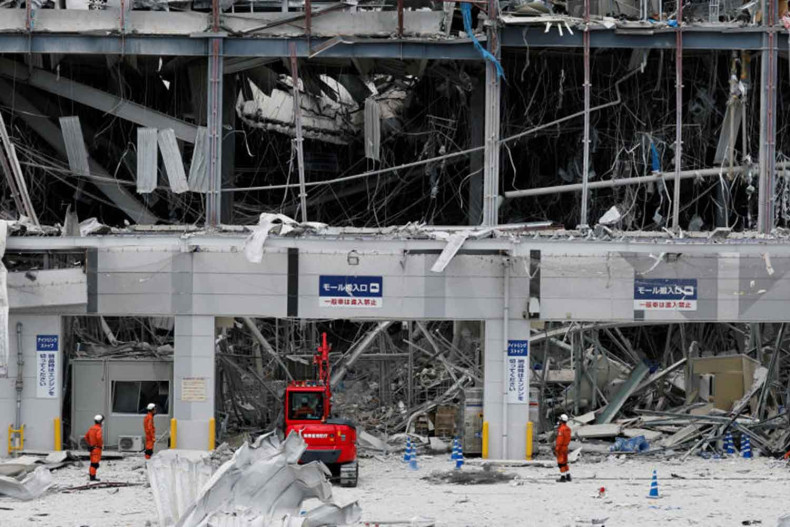

Japan Earthquake Kills at Least 12 and Triggers Aeon Mall Explosion in Kumamoto
A magnitude 7.1 Japan earthquake struck Kumamoto Prefecture in southern Japan on July 28, 2026, killing at least 12 people, causing building collapses including an explosion at an Aeon Mall, widespread infrastructure disruptions, and prompting evacuations of around 300,000 residents. [3]
Initial 7.1 Quake Strikes Kumamoto
The quake's epicenter was in Hikawa City at a depth of about 16 km, with maximum Japanese seismic intensity of 7 recorded in Uki and Hikawa; tremors were felt across Kagoshima, Fukuoka, Saga, Nagasaki, Miyazaki, Oita, and Yamaguchi. [1] [2] The Japan earthquake hit at 4:27 p.m. local time on Tuesday, and the Japan Meteorological Agency reported that the epicenter was located about 12 miles south of Kumamoto city, at a depth of just over six miles. [3] The tremor reached the highest end of the seismic intensity scale in the affected zones inside Kumamoto Prefecture. [2] Reports based on the agency placed the main event in the region of Kumamoto with a revised depth of 16 kilometers. [2] Dozens of subsequent movements with perceptible intensity followed the initial shock, and the agency had recorded 61 such events by Tuesday night. [2]
Casualties and Mall Explosion
At least three deaths were confirmed after an explosion and partial collapse at the Aeon Mall in Kashima Town; rescue operations continue with hundreds of soldiers deployed, and Prime Minister Sanae Takaichi said the government is prioritizing saving lives. [2] [3] The Japan earthquake left 12 people dead and six in cardiac arrest according to data from the Kumamoto prefecture, with the phrase cardiac arrest often used in emergency reports before formal medical confirmation. [2] Some updates from international media raised the toll toward 18 deaths, though the figure remains subject to change as rescue work proceeds. [2] Firefighters worked outside the damaged Aeon Mall shopping center where the explosion occurred after the magnitude 7.1 event, and part of the building collapsed. [2] Several people were trapped in the collapsed mall, and multiple deaths have been confirmed there. [3] A spokesperson for Aeon noted that customers and employees had been evacuated after the first tremor, while authorities investigated a possible gas explosion. [2]
Infrastructure Damage and Disruptions
Damage included collapsed buildings, road damage, fires, power outages affecting 48,000 homes, suspension of train and high-speed rail services, closure of Kumamoto and Aso Kumamoto airports, and temporary loss of water and gas supplies. [1] [2] [3] The Japan earthquake prompted the evacuation of approximately 300,000 people in the Kumamoto prefecture. [3] Public services and infrastructure were disrupted across wide areas, with train and high-speed rail services suspended and Kumamoto Airport closed. [1] The Aso Kumamoto Airport was also shut down. [3] Power outages affected 48,000 homes, and temporary outages of electricity, water, and gas supplies occurred in multiple locations. [1] [3] Road damage, building collapses, and fires were reported among the structural impacts. [2] A tsunami advisory was issued for the Ariake and Yatsushiro seas but was later lifted. [3] No abnormalities were reported at nearby nuclear power plants. [3]
Aftershock and Continued Alerts
A follow-up magnitude 5.8 quake hit the Amakusa islands area of Kumamoto on July 29 with intensity level 5; the Japan Meteorological Agency warned of possible strong aftershocks for about one week. [2] The new tremor was recorded in the afternoon on Wednesday and reached intensity level 5 on the Japanese scale. [2] The agency warned that zones with greater shaking should remain alert for new strong movements during approximately one week, especially in the first two or three days after the main event. [2] The Japan earthquake left the region under continued vigilance because the area of seismic activity is wide, and new movements could be felt with varying force depending on location and magnitude. [2] Residents in zones hit hardest were advised to take precautions regarding damaged homes and landslide risk, avoid entering dangerous places, and follow local authority instructions. [2]
Government Response and International Notes
Prime Minister Sanae Takaichi stated that the government is prioritizing saving lives and has urged residents to remain vigilant for potential aftershocks. [3] The Japanese Cabinet Office's disaster management division coordinated rescue efforts, with hundreds of soldiers dispatched to assist in the recovery. [3] China expressed its condolences for the victims of the earthquake in Kumamoto, with the spokesperson of the Chinese Ministry of Foreign Affairs saying Beijing regrets the lives lost and expresses solidarity with affected families and the injured while following the situation closely. [2] Rescue teams continued working in zones impacted by the Tuesday event that caused collapsed buildings, road damage, service cuts, and missing persons. [2]
Impact on Thai Nationals
No Thais were hurt among the 455 living in Kumamoto, though some relocated to shelters; no abnormalities reported at nearby nuclear plants, and a tsunami advisory for nearby seas was issued then lifted. [1] The Foreign Affairs Ministry activated emergency contact channels for Thai citizens in Japan after the magnitude 7.1 earthquake. [1] The Royal Thai Consulate-General in Fukuoka reported widespread damage and confirmed that all 455 Thai nationals in Kumamoto are safe, although some temporarily relocated to local shelters as advised by Japanese authorities. [1] Others faced short-term utility disruptions but remained unharmed, and no serious impact was reported among Thais in other prefectures where tremors were felt. [1] Consular staff continued coordinating support, and Thai nationals in Japan could reach the consulate in Fukuoka directly for assistance. [1]
What to watch next: The Japan Meteorological Agency warned that the zone could register new strong tremors during approximately one week, and authorities will continue search, rescue, and damage review operations while casualty and damage figures may update as reports advance. [2]







