
Japan Earthquake Death Toll Rises to 34 in Kumamoto Prefecture
The death toll from the magnitude 7.1 earthquake that struck Kumamoto Prefecture in southwestern Japan on Tuesday has risen to 34, with six others seriously injured. The Japan earthquake caused widespread structural failures and infrastructure disruptions across the region, according to authorities.
Rising Death Toll and Injuries
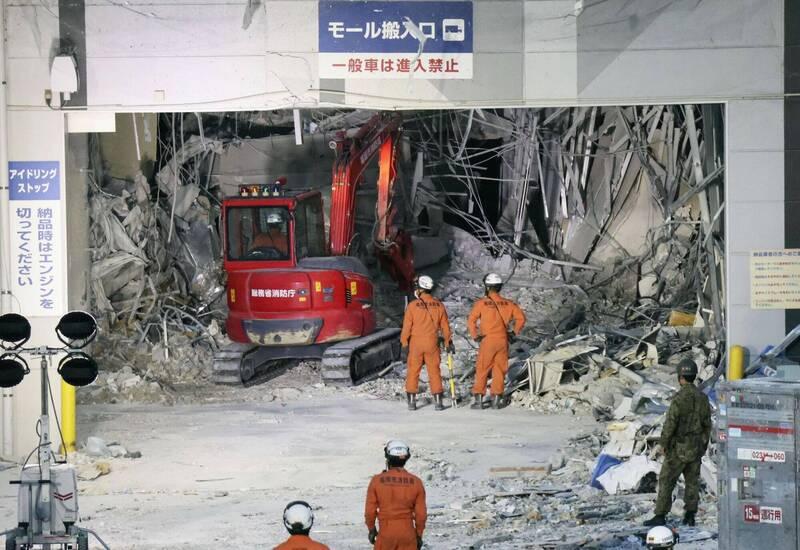
The Kumamoto prefecture government confirmed the updated death toll of 34 on Friday, up from 25 earlier, while noting that six people were seriously injured. [2] Nearly half of the deaths resulted from structural damage at Nippon Paper Industries' paper mill and a possible gas explosion at an Aeon mall in Kashima. [3] Authorities are investigating whether one additional death was related to the disaster. [1] Firefighters conducted search and rescue operations at the Nippon Paper Industries Yatsushiro mill following the collapse. [3] The two major incidents at the paper mill and the Aeon shopping mall accounted for a significant portion of the fatalities in the Japan earthquake. [2] Officials continue to assess the full extent of injuries and casualties tied directly to building failures and the suspected gas explosion.
Scope of Damage and Immediate Impacts
The magnitude 7.1 earthquake struck near the city of Uki on Tuesday afternoon, knocking out power to about 40,000 homes. [2] Rail services were halted, roads were ruptured, and supply chains became snarled as buildings collapsed in multiple locations. [3] Tsunami warnings were triggered in areas of Japan’s southern island of Kyushu. [2] Workers cleared debris at the AEON Mall in Kashima after the possible gas explosion linked to the Japan earthquake. [1] The quake damaged roads, buildings and other infrastructure throughout Kumamoto Prefecture. [1] These immediate effects left communities isolated and complicated initial response operations in the affected zones.
Ongoing Challenges for Residents
The affected area continues to face the threat of aftershocks following the Japan earthquake. [1] Communities in the region are facing water shortages amid ongoing summer heat, which is complicating relief efforts. [2] Prime Minister Sanae Takaichi has urged residents to remain vigilant for further strong aftershocks. [2] The combination of disrupted utilities and high temperatures has slowed the delivery of essential supplies to impacted neighborhoods. [1] Search and rescue teams worked through debris at key sites while residents dealt with limited access to clean water. [3] These conditions have prolonged the strain on local resources in the days after the initial shaking.
Taiwan Pledges Financial Assistance
Taiwan's Ministry of Foreign Affairs plans to donate NT$5 million to support relief and reconstruction efforts after the magnitude 7.1 earthquake struck Japan's Kumamoto Prefecture on Tuesday. [1] The funding will help affected residents return to normal life as quickly as possible. [1] MOFA has launched a public fundraising campaign through the International Cooperation and Development Fund, with donations accepted at Mega Bank account No. 021-09-01-7741 from tomorrow through Aug. 31. [1] President William Lai, Vice President Hsiao Bi-khim and Premier Cho Jung-tai have each pledged NT$200,000 to the account. [1] Minister of Foreign Affairs Lin Chia-lung stated that Taiwan would continue to stand with Japan and provide assistance when needed. [1] The ministry invited the public to support the campaign to aid reconstruction.
Japan's Seismic Context
Japan is one of the world’s most earthquake-prone countries. [2] A previous major quake in Kumamoto a decade ago killed 275 people. [2] The recent magnitude 7.1 event has renewed attention to the region's vulnerability to strong seismic activity. [2] Officials have highlighted the need for ongoing preparedness given the history of destructive quakes in the same area.
What to watch next includes continued monitoring for aftershocks and the progress of relief operations amid water shortages in the summer heat.