Japan Earthquake Death Toll Rises to 34 as Heat Hinders Kumamoto Rescue
The death toll from the magnitude 7.1 earthquake that struck Kumamoto Prefecture in southwestern Japan on Tuesday has risen to 34, with rescue teams continuing to search for survivors amid power outages, water shortages and a severe heat wave. [1] The Japan earthquake caused widespread damage across the region, including collapsed buildings and disrupted services. [2]
Rising Death Toll and Key Sites of Fatalities
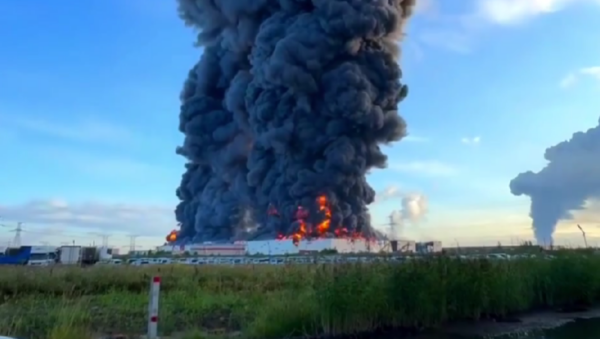
The Kumamoto prefectural disaster management office raised the death toll to 34 after recovering seven bodies from the Aeon Mall in Kashima, where a post-quake gas explosion caused part of the building to collapse. [1] Eight additional deaths occurred at the Nippon Paper Industries factory in Yatsushiro when a chimney fell. [2] Local authorities included these figures in their updated count, while the central government spokesperson Minoru Kihara reported 30 fatalities based on police information. [1] Five people remain in critical condition. [4]
Ongoing Rescue Operations Under Extreme Heat
Rescue teams continued searching for survivors more than 48 hours after the tremor, using dogs to comb through rubble at the Aeon Mall and the Nippon Paper Industries factory. [1] The Ministry of Environment issued warnings urging rescuers in Kumamoto and nearby prefectures to avoid heat exposure and hydrate frequently amid forecasts of 35–38 °C temperatures. [3] The Self-Defense Forces and local government installed air-conditioning units in evacuation centers to address the heat. [1]
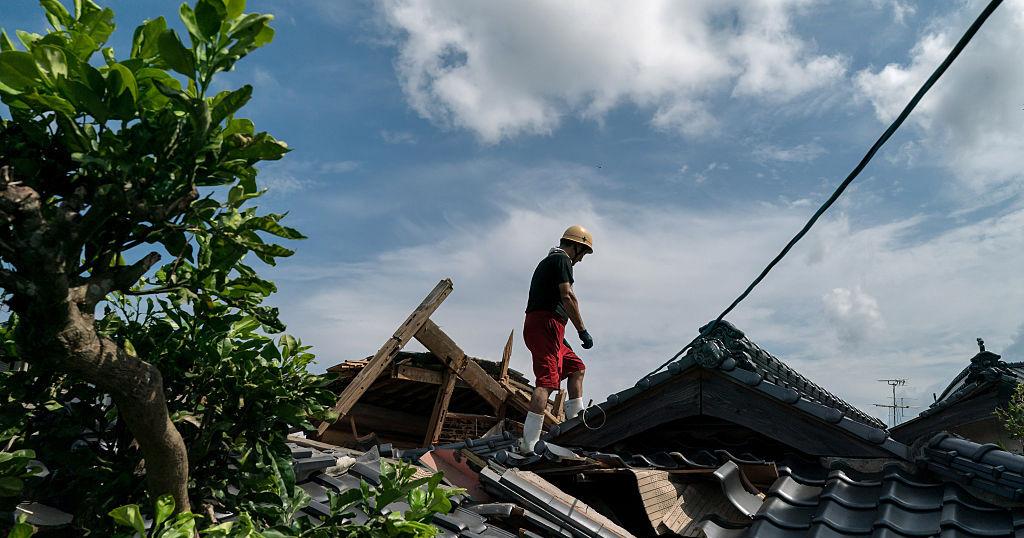
Rescue teams search for survivors amid rubble from the Kumamoto earthquake that killed 34 people. — Source: gdelt
Evacuations, Power and Water Disruptions
More than 9,500 people remain in roughly 400 evacuation centers, with the total number of evacuees reported as high as 10,500 across 415 shelters. [2] Approximately 13,500–22,900 households lack electricity and up to 74,800 lack water, forcing authorities to dispatch water trucks while crews repair pipelines. [3] The Self-Defense Forces delivered at least 300 air-conditioning units to shelters. [3]
Aftershocks and Seismic Context
Hundreds of aftershocks have struck the region, including a magnitude-5.8 event on Wednesday night, and officials warn that a stronger quake remains possible in coming days. [1] Japan lies on the Pacific Ring of Fire and experiences frequent quakes, with infrastructure designed to withstand them. [2] The current event follows the 2016 Kumamoto quakes and the 2011 magnitude-9 disaster. [2]
Impact on Residents and Local Economy
Survivors described severe hardship, with supermarket employee Hiroyuki Matsushima noting the difficulty of life without electricity or air conditioning in the heat. [2] Retiree Kenji Ota has slept in his car due to damaged homes, while 85-year-old Kinuko Uemura reported the lack of toilets as a major issue. [4] Business owner Soshiro Okawa saw his roadside shop sustain cracks after the ground rose during the quake. [4] Twenty-five cats from a cat café inside the Aeon Mall were rescued unharmed, drawing widespread online attention. [4]
International and Domestic Relief Efforts
Taiwan’s Ministry of Foreign Affairs established a relief fund with a dedicated bank account accepting donations through August 31. [5] President William Lai, Vice President Hsiao Bi-khim and Premier Cho Jung-tai each donated NT$200,000, and Democratic Progressive Party secretary-general Hsu Kuo-yung pledged one month’s salary. [5] The Japanese government and Self-Defense Forces coordinated broader domestic response efforts including shelter support. [4]
What to watch next: Officials continue to monitor aftershocks and warn of the possibility of a larger quake in the coming days while crews work to restore power and water.