
Israel's Iran Ceasefire Amid Current Wars in the World: Forging Uncharted Alliances with Asia
By Yuki Tanaka, Tech & Markets Editor, The World Now
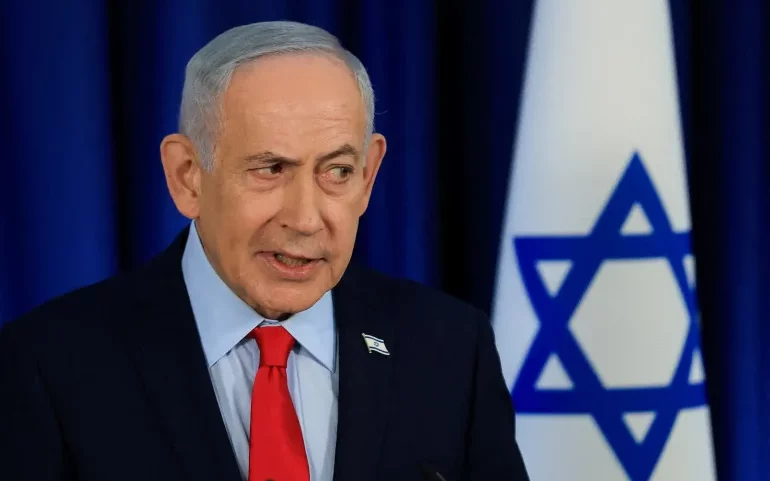
In a geopolitical landscape marked by rapid shifts and unexpected de-escalations amid current wars in the world, Israel's acceptance of a U.S.-brokered ceasefire with Iran on April 8, 2026, has sent shockwaves far beyond the Middle East. Prime Minister Benjamin Netanyahu endorsed the truce, explicitly stating it excludes ongoing operations against Hezbollah in Lebanon, a move that has drawn sharp domestic criticism but opened doors to uncharted diplomatic horizons. Reports from Newsmax and Premium Times highlight Netanyahu's backing of the deal while insisting on continued military pressure on Lebanon's border, amid Hezbollah's own halt in hostilities but Netanyahu's firm rejection of its inclusion. Gulf states, as noted by the Jerusalem Post, have welcomed the ceasefire and called for an end to all regional attacks, while the Israeli army confirmed observance of the truce with Iran via Anadolu Agency.
This ceasefire arrives after months of escalating tensions, including Iran's threats against U.S. troops and Netanyahu on March 26 and 15, respectively, El Al flight cancellations amid the Israel-Iran war on March 18, Israel's missile defense shifts on March 29, and resumption of Leviathan gas exports on April 3—signaling a fragile return to normalcy. Israeli opposition leaders, per Anadolu Agency and Middle East Eye, have labeled it a "worst strategic failure" and "political, strategic failure," underscoring Netanyahu's domestic woes as detailed by France 24.
Yet, amid the headlines of Middle Eastern brinkmanship in the context of current wars in the world, a subtler trend is emerging: Israel's pivot toward Asia. With immediate Iranian threats diminished, Jerusalem is poised to deepen economic and technological ties with powerhouses like India and China. This unique angle—overlooked in favor of traditional conflict narratives—positions the ceasefire not as an end to hostilities, but as a catalyst for diversified alliances. As global uncertainties mount, from U.S. policy flux under President Trump to supply chain realignments, Israel's Asian outreach could redefine its economic resilience, making this a trending topic in tech and markets circles. For deeper insights into how such developments fit into broader current wars in the world, explore our Global Risk Index.
Historical Context: Building Blocks of Israel's Geopolitical Strategy Amid Current Wars in the World
Israel's path to this ceasefire is rooted in a deliberate escalation pattern, traceable to early 2026. On January 9, 2026, Israel's settlement expansion near Jerusalem set a tone of assertive territorial policy, drawing international scrutiny but reinforcing domestic hardline stances. By January 16, Israel joined Arab nations in urging President Trump to address Iran, echoing historical patterns of leveraging U.S. involvement—much like the Abraham Accords era—to counter Tehran's influence without direct confrontation.
Tensions intensified on January 25 when the U.S. reviewed a possible strike on Iran, signaling military readiness. This was followed by a U.S. destroyer docking in Eilat on January 30 amid regional flare-ups, a clear show of force that bolstered Israel's position. Interwoven was Netanyahu's January 27 call for Hamas disarmament, linking Iran's proxy network (including Hezbollah) to broader security threats. These events formed a sequential buildup: diplomatic prodding of the U.S., military posturing, and proxy confrontations.
Fast-forward to March 2026, the timeline accelerated. Iran's threats against Netanyahu (March 15) and U.S. troops (March 26) prompted Israel's missile defense recalibrations (March 29) and flight halts (March 18, April 5). Netanyahu's own threats against Iranian leaders on March 22 culminated in the "Israel-Iran War Challenges" peak on April 5. Israel's resumption of Leviathan gas exports on April 3 hinted at war fatigue, as The New Arab opined that Israel was "hurting" economically from the conflict.
This progression—from January's U.S.-centric diplomacy to spring's direct clashes—foreshadowed the ceasefire as a pragmatic pivot. Historically isolated in Middle Eastern conflicts, Israel has long sought external balances. The Abraham Accords diversified Arab ties, but Asia beckons now: India's defense pacts since 2017 (e.g., $2 billion Spike missile deals) and China's Belt and Road investments in Haifa port (despite U.S. concerns) lay groundwork. The ceasefire evolves this strategy, reducing Iranian shadows to free bandwidth for Eastern horizons. This strategic shift highlights how current wars in the world are prompting nations like Israel to explore new alliances beyond traditional foes.
Current Shifts: Israel's Pivot to Asian Partnerships
With the ceasefire in effect—Israeli forces observing per Anadolu Agency, yet Lebanon excluded as Netanyahu emphasized to Newsmax—the immediate Iranian threat recedes. Hezbollah's fire halt (In-Cyprus) offers breathing room, but Netanyahu's insistence on operations signals calculated ambiguity. Gulf welcomes (Jerusalem Post) stabilize the south, allowing a northward gaze? No—eastward, to Asia. For more on Israel's strategic exclusions, see Israel's Ceasefire Calculus Amid Current Wars in the World.
This pivot is no abstraction. India, Israel's third-largest trading partner ($10.7 billion in 2025), has deepened defense ties: joint ventures like the Barak-8 missile system and IAI drones. Post-ceasefire, reports suggest accelerated talks on semiconductor fabs, countering global chip shortages. China, despite tensions, invests heavily: $1.2 billion in tech parks and EVs. Exclusion of Lebanon acts as catalyst—freeing diplomatic capital from endless proxy wars.
Economically, it's timely. Israel's tech sector, 18% of GDP, craves stability amid war's toll (Leviathan exports resumed but disrupted). Asia counters Western dependencies: U.S. aid ($3.8 billion annually) wanes under Trump’s "America First," Europe frets settlements. Global supply chains realign post-Ukraine and COVID; Israel's rare-earth tech and cybersecurity (e.g., NSO Group) align with India's "Make in India" and China's "Dual Circulation." These alignments are crucial in navigating the complexities of current wars in the world.
Emerging reports (unverified social media buzz on X from analysts like @GeoTechWatch) highlight Netanyahu's virtual meets with Indian PM Modi post-ceasefire, eyeing energy-tech swaps. China's Haifa stake, paused in 2024, could revive sans U.S. veto. This diversified diplomacy mitigates risks, positioning Israel as Asia's Middle East tech bridge.
Original Analysis: Economic and Technological Repercussions
The ceasefire's true ripple? A resource reallocation bonanza for Israel's $50 billion tech ecosystem. War drained $10-15 billion (estimates from war's aviation halts, per April 5 events), per The New Arab's critique. Freed, R&D budgets—already 5.4% GDP—could fuel Asian hubs. Imagine joint Israel-India AI chips: combining Tower Semiconductor with Tata, capturing 10% of $500 billion market by 2030.
China angle: Tech investments ($4 billion since 2010) in agritech and EVs. Ceasefire boosts confidence; Haifa port as BRI node handles 20% more Asia trade. Yet, risks loom: Over-reliance on China (U.S. blacklists NSO) echoes Huawei woes. Netanyahu's domestic bind—France 24 calls it a "major problem"—accelerates this: Economic wins placate critics slamming the "strategic failure" (Middle East Eye).
Fresh perspective: This contrasts Israel's historical isolation. Post-1973 Yom Kippur, it built U.S. ties; now, Asia offers multipolarity. Tech repercussions: Quantum computing ventures with India's IISc, 6G with Huawei rivals. Domestically, war fatigue (settlements, Hamas calls) pushes diplomacy; success could shore Netanyahu's coalition. Globally, it realigns supply chains—Israel's desalination tech to China's water crisis, energy from Leviathan to India's imports (12% global LNG).
Critique: Volatility persists. Lebanon exclusion risks Hezbollah resurgence, pulling resources back. Still, upside trumps: 20-30% trade growth with Asia feasible, per pre-war trends. Track these evolving dynamics with our Catalyst AI — Market Predictions.
Predictive Outlook: Future Scenarios for Israel and Beyond
Over 12-24 months, formalized pacts loom. India: Free-trade upgrade by 2027, defense to $5 billion annually. China: Tech corridor, $10 billion investments if U.S. distracts. Trump's Middle East retreat (echoing January urgings) enables this; reduced focus frees bilateral deals.
Optimistic: Stabilized geopolitics. Ceasefire holds, Lebanon contained; Israel exports stability via tech, boosting GDP 2-3%. Asia hedges U.S.-China rivalry.
Pessimistic: Escalation. Lebanon flares (Hezbollah rearm), Iran competes in Asia (cheaper oil to India). New conflicts—Gaza redux—drag back. Iran pivots to Pakistan/China arms, undercutting Israel.
Long-term: By 2030, Asia 40% of Israel's trade (from 25%). U.S. policy shifts: Trump tariffs hit Europe, pushing Israel east. Risks: Overdependence amid Taiwan Strait tensions. Yet, upside—tech leadership in AI/semiconductors—positions Israel resilient.
Global: Destabilizes if Iran feels cornered, or stabilizes via economic interdependence. Markets watch: Oil volatility (Leviathan key), tech semis.
Catalyst AI Market Prediction
The World Now's Catalyst AI engine, analyzing causal chains from the ceasefire and prior tensions, forecasts impacts across key assets (as of April 2026 data):
- OIL: + (high confidence) — Direct supply threats from prior Iran clashes and Hormuz risks tighten balances. Precedent: 2019 Aramco attacks (+15% intraday). Risk: De-escalation caps gains.
- USD: + (high/medium confidence) — Safe-haven flows amid Mideast geo-risks. Precedent: 2022 Ukraine (+2% DXY in 48h); 2019 Soleimani (+1% intraday). Risk: Swift truce shifts to risk-on.
- SPX: - (high/medium confidence) — Risk-off from aviation disruptions (El Al halts) and oil shocks hit airlines (5-10% weight), semis. Precedent: 2019 Boeing (-2% initial); 2022 Ukraine (-3% week). Risk: Isolated fixes rebound.
- BTC: - (medium confidence) — High-beta risk-off cascades. Precedent: 2022 Ukraine (-10% in 48h). Risk: ETF dip-buying.
- ETH: - (medium confidence) — BTC-correlated liquidations. Precedent: 2022 (-12% initial). Risk: Staking inflows.
- XRP: - (low confidence) — Crypto cascades. Precedent: 2022 (-10-12%). Risk: Regulatory positives.
- SOL: - (low confidence) — Altcoin beta. Precedent: 2022 (-15%). Risk: Meme rebounds.
- TSM: - (low confidence) — Supply chain fears from Mideast/Asia spillovers. Precedent: 2022 Ukraine (-5%); 2011 Fukushima (-10% indices). Risk: De-escalation boosts.
Predictions powered by The World Now Catalyst Engine. Track real-time AI predictions for 28+ assets.