
Israeli strikes kill 12 in southern Lebanon village of Kfar Roummane
Casualties in Kfar Roummane strikes
Israeli airstrikes on the southern Lebanese village of Kfar Roummane killed at least 12 people, including two children, four women and a paramedic, according to the Lebanese health ministry. [1] A strike destroyed a three-storey residential building in Kfar Roummane shortly after midnight, killing 11 people and injuring eight others including three children and a paramedic. [1] A second strike hit a vehicle carrying paramedics from the Islamic Risala Scout Association, killing one and injuring two. [1] The Lebanese health ministry said the death toll serves as further irrefutable evidence of the grave violations of international humanitarian law committed by the Israeli occupation, targeting medics and children. [1] The ministry initially reported eight people killed in the strike on the building, including an infant and two women, before later raising the death toll at the house to 11. [5] Another 11 people were wounded in the strike, including four children, two women and a paramedic from the Islamic Health Authority. [5] In a separate attack, the ministry said an Israeli drone targeted a vehicle in Kfar Roummane, killing a paramedic from the Islamic Risala Scouts Association and injuring two others. [5] One of the wounded paramedics was reported to be in critical condition. [5] The health ministry said at least 27 people have been killed and 69 wounded over the past three days in Israeli attacks across southern Lebanon. [5]
Israeli military statement
The Israeli military said the strikes targeted Hezbollah infrastructure sites and terrorists transferring weapons in retaliation for two explosive drones launched at Israeli troops in the Ali al-Taher ridge area inside its declared security zone. [1] The Israel Defense Forces said it struck several Hezbollah terrorist infrastructure sites across southern Lebanon overnight after the group's fighters launched two explosive drones towards Israeli troops operating in the Ali al-Taher ridge area. [1] Additionally, the IDF struck several terrorists who were identified transferring weapons in the area of Kfar Roummane, in order to remove the threat they posed to IDF soldiers. [1] The claim that several uninvolved individuals were harmed as a result of the strikes is being reviewed, the IDF added. [1] The IDF also said it had struck the Nabatieh area and killed several Hezbollah fighters on Sunday following a separate drone attack. [1]
Broader toll and recent strikes
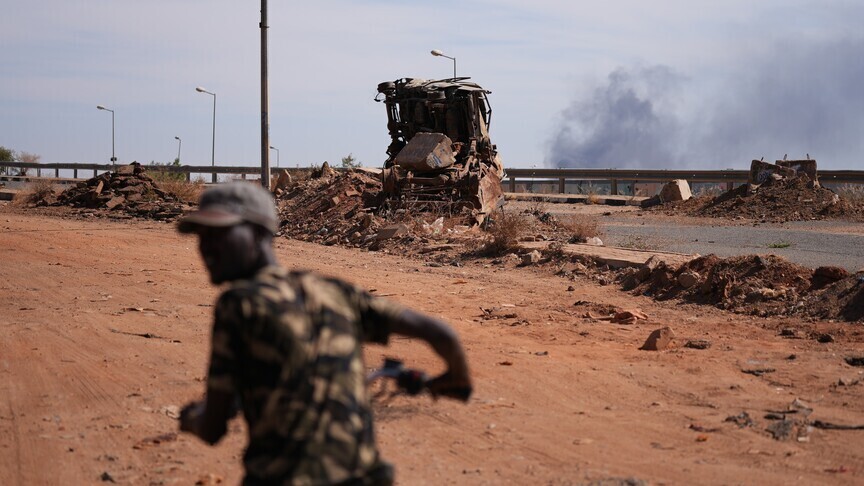
Lebanese health ministry figures show at least 27 people killed in Israeli attacks across southern Lebanon over the past three days, with the overall death toll since March 2 now at 4,381. [2] Death toll from Israeli attacks since March 2 so far reached 4,381, plus over 12,400 injured. [2] Lebanon's health ministry said 11 people were killed in Israeli strikes across the south of the country on Sunday. [1] They included nine people in Nabatieh al-Fawqa, which is south of Kfar Roummane, and two women in Arab Salim, to the north of the village. [1] Israeli jets also carried out a series of strikes on Nabatiyeh al-Fawqa, Arabsalim and Deir al-Zahrani. [5] The Israeli military issued an evacuation order for Deir al-Zahrani before the attack, claiming the strike was in response to Hezbollah firing a drone. [5] On Sunday, Israel issued its first evacuation order since June, saying it responded to two Hezbollah drones that struck its forces without causing casualties. [3] The announcement identified a residential building that the Israeli military destroyed in Arab Salim. [3] Other strikes without prior warning beyond the occupied zone killed four people, including two women, and wounded another 20, including children. [3] Israel demolished a hospital near the southern town of Nabatieh that had fallen out of use but previously provided services and shelter to displaced people, saying Lebanese militiamen were hiding there. [3] It also damaged a building belonging to the Finance Ministry in that same municipality. [3]
Lebanese government reaction
Lebanese President Joseph Aoun condemned the strikes as a dangerous escalation that jeopardises the US-brokered June ceasefire framework and urged international pressure on Israel to stop the attacks. [1] Aoun said the attacks were targeting the framework agreement and undermining efforts to halt the escalation in southern Lebanon and the wider region. [5] He said what Israel is doing in terms of repeated attacks, killing innocent people, children and women, destroying and burning homes and bulldozing property are condemned, rejected and unjustified crimes. [5] Aoun urged the U.S., as mediator and guarantor of the pact, to stop those violations. [3] The attacks have happened in places near the strip of territory that is occupied by Israeli troops, and large numbers of residents have again been fleeing those areas. [1]
Context of stalled ceasefire
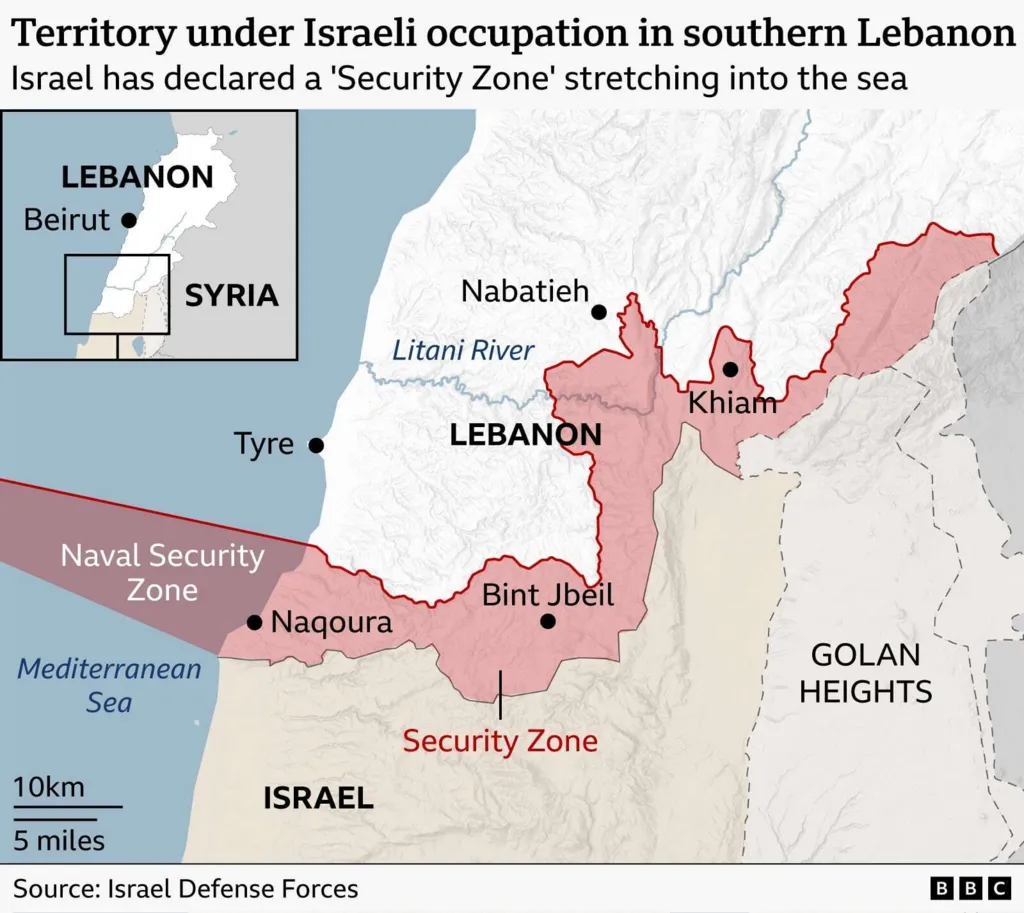
The ceasefire agreement between Lebanon, Israel and the US calls for Hezbollah to disarm, Israeli forces to withdraw gradually from southern Lebanon, and the Lebanese army to deploy across the area. [1] Hezbollah has rejected the framework, saying the provisions linking Israel's withdrawal to the group's disarmament cross all red lines. [1] The two ceasefire agreements the United States promoted in recent months in Lebanon have de-escalated the war between Israel and the fundamentalist party-militia Hezbollah, but the conflict continues in the country’s south, where Israeli forces still occupy 600 square kilometers about 6% of Lebanese territory. [3] That pact, which the U.S. imposed on the Israeli government, aims to disarm Hezbollah and lift the occupation through reciprocal progress in several pilot areas, so far implemented in only one of the 68 occupied municipalities. [3] Both parties reject that gradual approach and demand that the other side concede first, pushing any end to hostilities further away. [3] The Israeli army continues to expand its ground operations beyond the so-called security zone, without issuing any official statements. [3] Israel has occupied swathes of Lebanese territory since its invasion began in October 2024 during the previous all-out war on Lebanon. [5] In March this year, when full-fledged fighting between Israel and Hezbollah resumed, Israel expanded its invasion and has since established what it describes as a security zone along the entire border. [5] Israeli officials, including Defence Minister Israel Katz, have said that Israeli forces will not withdraw from Lebanon. [5] Talks between Beirut and Tel Aviv were set to resume at the start of this month, but their status remains unclear amid the recent escalation in southern Lebanon and Israel's refusal to implement the trilateral framework. [5]
Resident accounts
A resident of Kfar Roummane, Sara Moallaem, 35, told the BBC that she had been asleep with her five children in their rental home when she heard the explosions. [1] She immediately grabbed her children and moved them into the home's safe room while they waited for the booms and the sirens to stop. [1] Residents of villages that remain under occupation are forbidden from going back, and those in nearby areas live under Israeli aviation and its occasional bombardments. [3] We spend the day hearing the explosions with which Israel destroys the nearby occupied villages, one resident said. [3]
What to watch next: Talks between Beirut and Tel Aviv were set to resume at the start of this month, but their status remains unclear amid the recent escalation in southern Lebanon and Israel's refusal to implement the trilateral framework.