Israeli Strike Kills Two in Beirut Suburb After Hezbollah Launches Projectiles
In the latest Lebanon strikes, Israel conducted a targeted strike on Hezbollah targets in Beirut's southern Dahiyeh suburb on June 14, 2026, in response to three projectiles launched by the group into northern Israel, which it described as a ceasefire violation. [1] The Israeli military said earlier that Hezbollah had launched three projectiles towards communities in northern Israel, calling it a blatant ceasefire violation. [2]
Israeli Strike Hits Beirut Suburb
Israel said its military attacked Hezbollah targets in Beirut’s southern suburbs on Sunday after the Lebanese armed group fired into Israeli territory. [1] The Israeli military stated it carried out a precise strike on a Hezbollah command centre. [4] A joint statement from Prime Minister Benjamin Netanyahu and Defense Minister Israel Katz confirmed the action, stating that the IDF attacked terrorist targets of the Hezbollah terrorist organization in the Dahiyeh neighborhood of Beirut in response to Hezbollah’s firing into Israeli territory. [3] Lebanon’s state news agency reported two people killed and four wounded in the strike on an apartment in Dahiyeh. [4] Lebanese security sources described the attack as involving two missiles and said it appeared to be a targeted strike. [5] The Israeli military said it conducted a precise strike on a Hezbollah command centre. [5]
Hezbollah's Response and Initial Attack
Hezbollah reported launching missiles and drones towards Israeli troops in southern Lebanon but issued no immediate comment on the Israeli strike statement. [2] The group said it launched missiles and drones towards Israeli troops in southern Lebanon after the initial projectiles. [3] There was no immediate comment from Hezbollah on the Israeli statements. [5] The Israeli military said earlier that Hezbollah had launched three projectiles towards communities in northern Israel. [1]
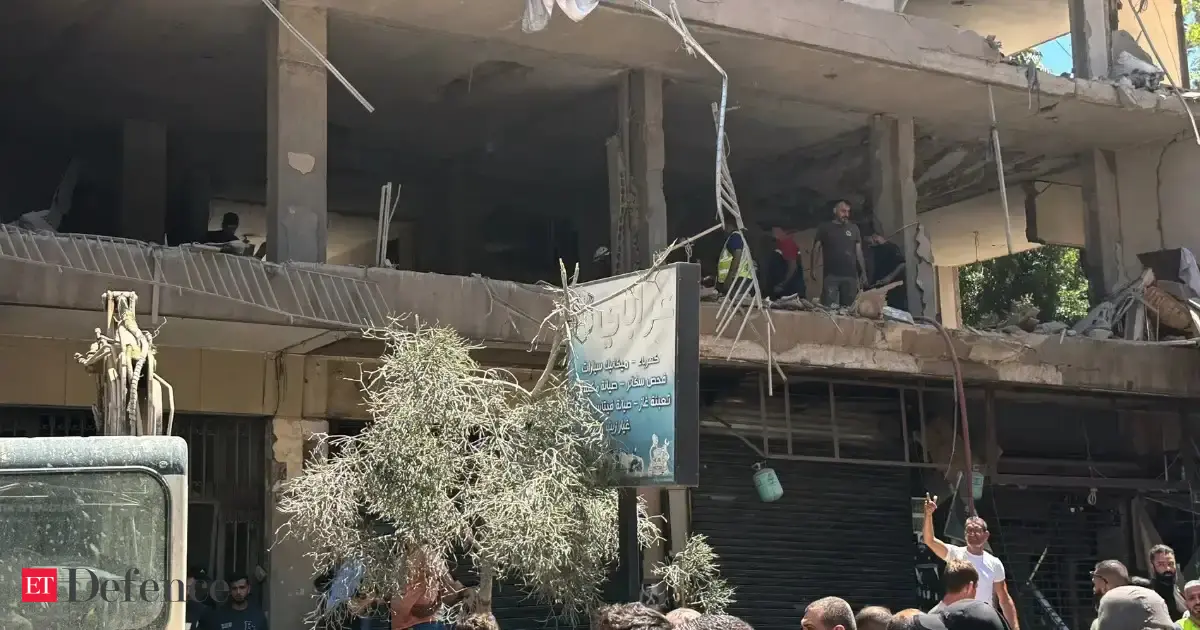
Israeli strike targets Hezbollah command centre in Beirut's southern Dahiyeh suburb. — Source: gdelt
Context of Ceasefire Violations
Israel characterized Hezbollah's actions as a blatant ceasefire violation. [1] Netanyahu said in a post on X after the attack that Israel will not tolerate firing into its territory. [4] The Israeli military had issued a wide-scale evacuation warning earlier on Sunday for residents of at least 30 towns and villages in southern Lebanon. [5] Israeli forces have occupied swathes of southern Lebanon, and Israel says it is seeking to dismantle Hezbollah infrastructure on its borders. [4] Fighting with the Iran-backed group has not halted in the area despite the Lebanese government holding ceasefire talks with Israel in Washington. [4]
Impact on U.S.-Iran Negotiations
The incident follows a similar Israeli strike on Dahiyeh last week that triggered exchanges between Israel and Iran, threatening to derail a nearing U.S.-Iran deal to end the wider conflict, with a signing possibly on Sunday. [1] Washington and Tehran appear to be getting closer to a deal to end the more than three-month-long conflict, with U.S. and Pakistani leaders forecast a signing on Sunday. [2] Iran has conditioned any wider agreement with the United States on cessation of fighting in Lebanon. [3] Last week, an Israeli strike on Dahiyeh triggered an exchange of fire between Israel and Iran that threatened to derail a U.S.-Iran deal that would end the wider war. [5]
Background of the Wider Conflict
Hezbollah entered the conflict in March by firing at Israel after U.S.-Israeli strikes on Iran. [4] Hezbollah entered the war by firing at Israel on March 2, two days after the United States and Israel began airstrikes against Iran. [5] Israel said it would respond forcefully and has since carried out airstrikes that have killed thousands in Lebanon and displaced more than a million people. [4] Hezbollah has rejected the negotiations and said any ceasefire with Israel should secure an end to all hostilities, including in southern Lebanon and the withdrawal of Israeli troops. [4] Earlier this month, Israel said fighting in south Lebanon would continue and warned Lebanese residents against moving back to the south. [5]
What to watch next: Washington and Tehran appear close to reaching a deal to end the more than three-month conflict, with both U.S. and Pakistani leaders suggesting an agreement could be signed on Sunday, while Iran has long maintained that an end to fighting in Lebanon is a condition for any broader agreement with the United States.