
Israel Strikes Nabatieh in Southern Lebanon Killing at Least 16 Despite Announced Ceasefire
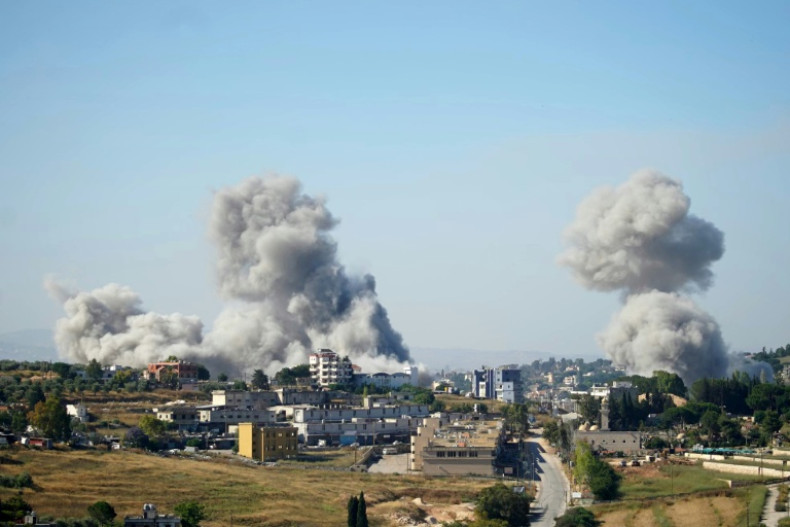
Israel carried out deadly Lebanon strikes in southern Lebanon on Saturday, including in the Nabatieh area, despite a new ceasefire between Israel and Hezbollah announced by the United States just hours earlier. [1] Lebanese state media reported Israeli air raids on around 20 locations, with the country’s civil defence agency saying 16 people were killed in the Nabatieh area. [1] An AFP photographer saw smoke rising over the city after strikes. [1] Another AFP journalist on the Israeli side of the border reported multiple explosions in Lebanon, with smoke billowing behind the historic Beaufort Castle. [1]
Israeli Strikes Hit Southern Lebanon After Ceasefire Announcement
The strikes followed the killing of four Israeli soldiers and accusations that Hezbollah launched more than 50 projectiles overnight, with the Israeli military stating it was responding on the basis of “fire being answered with fire.” [1] Lebanese authorities reported 47 people killed in Israeli airstrikes on Friday, the highest toll since a US-Iran deal to halt the wider regional war, and at least 16 more killed in Nabatieh on Saturday. [1] Hezbollah lawmaker Hassan Fadlallah stated the group has the full right to confront Israel as the aggressor and occupier if the ceasefire is not fully respected. [1] The Israeli military said it began striking multiple targets in southern Lebanon following a Hezbollah attack that killed four soldiers. [2] Lebanese state-run National News Agency reported that Israeli military aircraft and drones carried out a series of strikes across Nabatieh overnight and into Saturday morning, destroying residential buildings and homes. [2] Officials in the Nabatieh district said attacks had killed 16 people and injured at least a dozen more, after Israeli warplanes, drones, and artillery targeted numerous areas. [5]
US-Brokered Ceasefire Collapses Amid Mutual Accusations

Smoke rises over Nabatieh in southern Lebanon after Israeli strikes killed at least 16 people. — Source: aljazeera A US official on Friday afternoon announced a new ceasefire between Israel and Hezbollah, brokered by US and Qatari mediators, with Israel’s ambassador to Washington saying it would respect the truce if Hezbollah did. [1] On Saturday an Israeli military official said it was conducting fresh attacks against the Iran-backed movement, which it accused of having “launched more than 50 projectiles at Israeli forces in southern Lebanon” overnight. [1] Hezbollah has not officially claimed any attacks on Israel or its troops in Lebanon since the ceasefire was announced. [1] An Israeli military official cited by the public broadcaster Kan similarly described his country’s approach to the truce as being “on the basis of fire being answered with fire.” [1] A Hezbollah official told the BBC it does not recognise the ceasefire that was announced by US officials on Friday afternoon, and it rejects the Israeli objective to operate freely inside Lebanon. [5] Senior Hezbollah official Hassan Fadlallah said his group had the right to respond to Israeli attacks. [5]
Humanitarian Crisis Worsens in Nabatieh
MSF described conditions in Nabatieh as a “death trap” with severe injuries, heavy shelling preventing rescues, and paramedics among the wounded. [2] The aid group said it is responding to an influx of attack victims in Nabatieh, including paramedics wounded in rescue missions. [2] MSF warned that responders were unable to evacuate many more people caught under heavy shelling in the area because of the risk of coming under fire. [2] “People are arriving with severe head injuries, heavy bleeding, shrapnel injuries and in need of amputations,” the MSF emergency coordinator in Lebanon, Pierre Boulet-Desbareau, said in a statement. [2] “The ongoing situation in Nabatiyeh is devastating. What our teams are describing resembles a death trap. People are caught under heavy shelling, while rescue teams are unable to safely reach them,” he said. [2] At Najdi Hospital in Nabatieh, ambulances bypass the emergency room and head straight to the morgue. [5] Ali, a Red Cross first responder in Nabatieh, told the BBC that it was “the most intense night” he can remember. [5]
Impact on US-Iran Deal and Switzerland Talks
The strikes have strained a preliminary US-Iran agreement signed by President Donald Trump and Iranian counterpart Masoud Pezeshkian to end fighting on all fronts including Lebanon, leading to the postponement of follow-up talks in Switzerland. [1] Follow-up talks scheduled for Friday in Switzerland were postponed indefinitely as Israel launched a wave of strikes in Lebanon that left dozens of people dead. [1] Vice President JD Vance had been expected to represent the American side at the talks in Switzerland, but he put off his trip. [1] Instead, US envoy Steve Witkoff was heading to Switzerland to get the talks back on track, with Trump’s son-in-law Jared Kushner also expected there. [1] Tehran insists any final peace agreement requires Israel and the United States to end the conflict on all fronts, including in Lebanon. [2] Tehran reportedly delayed sending delegates to Switzerland ahead of postponed face-to-face talks due to Israel’s escalated attacks. [2] Washington fears that the continuing tensions between Israel and Lebanon could undermine the US peace deal with Iran. [5]
Lebanese and Israeli Positions on the Conflict
In a call with US Secretary of State Marco Rubio on Friday, Lebanese President Joseph Aoun stressed “the need for Israeli attacks on Lebanese territory to cease,” his office said. [1] Rubio, according to the State Department, insisted on the importance of Lebanon carrying through on its efforts to disarm Hezbollah and “re-establish control over all Lebanese territory.” [1] Hezbollah lawmaker Hassan Fadlallah said on Saturday that his group insisted “that the enemy fully and comprehensively respects the ceasefire.” [1] “The resistance has the full right to confront this enemy when it attacks us, as it is the aggressor and the occupier,” he added. [1] Israel and Lebanon, which have no official diplomatic ties, have held multiple rounds of US-mediated direct talks in Washington, with another scheduled next week, according to Rubio. [1] A Hezbollah official told the BBC it does not recognise the ceasefire and rejects the Israeli objective to operate freely inside Lebanon. [5]
Broader Context of the Lebanon-Israel Fighting
Hezbollah had pulled Lebanon into the conflict in early March when it fired rockets at Israel in retaliation for the killing of Iran’s supreme leader in US-Israeli strikes. [1] A previous ceasefire meant to take effect in Lebanon in April was never honoured, with both sides justifying their ongoing attacks by the other’s violations. [1] The two countries first agreed to a ceasefire in April, but this failed to stop the fighting. [5] Prime Minister Benjamin Netanyahu ordered the Israeli military to intensify its strikes on Hezbollah and advance deeper into Lebanon, after Hezbollah struck communities in northern Israel with drone and rocket attacks. [5] Ceasefire commitments have been repeatedly renewed since then, but followed by airstrikes and attacks from both sides. [5] Netanyahu has been under domestic pressure to continue military action against Hezbollah. [5] Hezbollah has vowed to continue its attacks while Israel’s occupation of southern Lebanon persists. [5] It is occupying around 5% of the country’s territory in the south. [5] Around a million people remain displaced. [5]
What to watch next: Talks in Switzerland were due to kick off a two-month period of negotiations to discuss outstanding issues not covered by the initial deal, notably Iran’s nuclear programme, while another round of US-mediated direct talks between Israel and Lebanon is scheduled next week.