
Iran's Strikes Ignite Environmental Crisis in UAE Waters: Oil Spill Threats and Marine Ecosystem Disruptions
What's Happening
The latest barrage, reported on March 31, 2026, involved Iranian drones and missiles striking multiple UAE sites, with the most alarming impact on the Kuwaiti oil tanker docked near Dubai. According to Kuwaiti officials cited by Channel News Asia, the vessel—carrying significant crude oil cargo—was struck by what they described as an Iranian projectile, igniting fires and prompting urgent warnings of a potential oil spill. The UK Maritime Trade Operations (UKMTO) confirmed the incident via Anadolu Agency, noting the tanker was hit by a projectile and that investigations are underway, with crew safely evacuated but the structural integrity of the hull compromised. Explore how such incidents are fueling Kuwait's Drone Defenses: How Iranian Strikes Are Sparking a Regional Tech Arms Race.
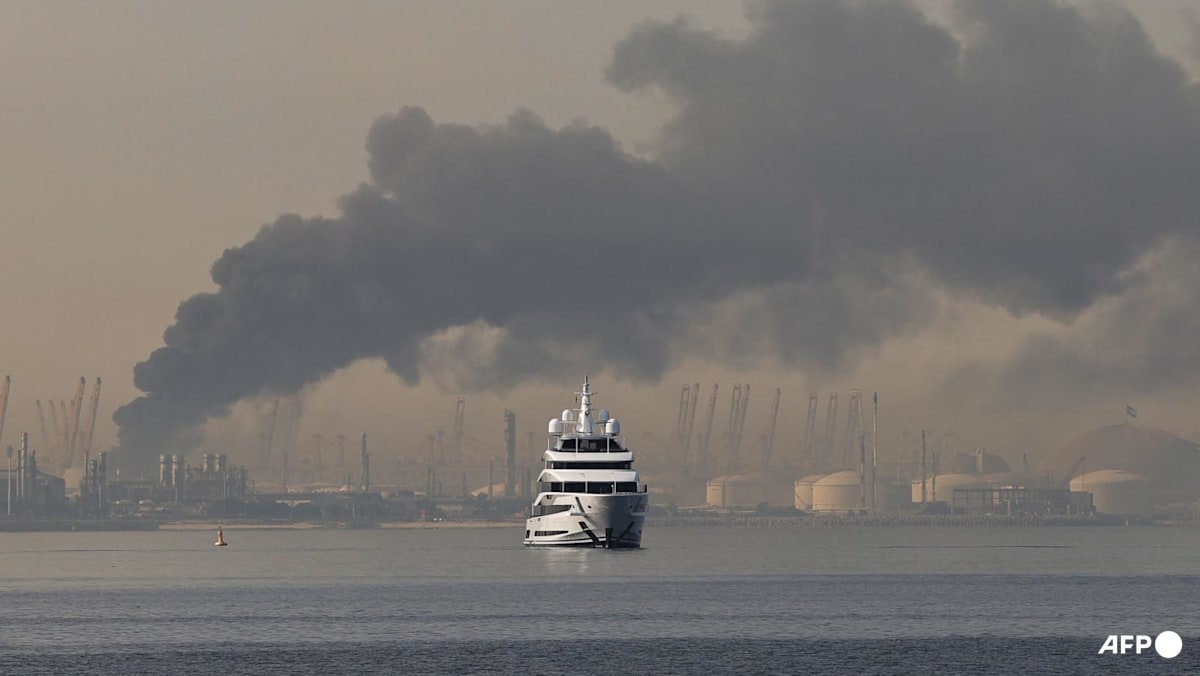
Eyewitness accounts and Al Jazeera live updates describe thick black smoke billowing from the tanker, with initial fires contained by UAE firefighting teams but persistent risks of oil leakage into the Persian Gulf waters. UAE's Ministry of Defense, as reported by Anadolu Agency, confirmed interceptions of several incoming missiles and drones over Sharjah and Dubai regions, preventing widespread devastation. However, one drone struck an administrative building in Sharjah, per Jerusalem Post reports, causing minor structural damage and scattering debris.
Broader strikes targeted industrial sites, including aluminum smelters in the Gulf region, as analyzed by South China Morning Post. These facilities, critical to UAE's economy, now pose secondary environmental hazards: potential chemical leaks from damaged storage tanks and airborne pollutants from fires could contaminate soil and waterways. Debris from intercepted missiles has already fallen into coastal areas, exacerbating pollution risks.
Immediate aftermath includes environmental monitoring teams deployed by UAE authorities, with satellite imagery showing oil slicks forming near the tanker—though not yet confirmed as a full spill. Marine biologists warn that even a partial leak could release thousands of barrels into the Gulf, a semi-enclosed sea with limited tidal flushing, leading to rapid ecosystem contamination. UAE Coast Guard vessels are encircling the site to contain any spread, but high winds and currents threaten to carry pollutants toward sensitive coral reefs off Dubai and Abu Dhabi.
This environmental angle emerges as a stark, underreported dimension: while defenses mitigated human casualties, the unintended ecological fallout—from oil slicks suffocating marine life to industrial toxins entering food chains—could linger for decades, distinct from the humanitarian focus of prior coverage.
Context & Background
These strikes represent a direct escalation in a pattern of Iranian aggression tracing back to late February 2026. On February 28, potential attacks loomed on US bases in Abu Dhabi and Bahrain, followed by actual Iranian missile launches targeting US installations across the Middle East, including interceptions over Dubai. This set a tense precedent, with debris from downed projectiles killing civilians in Dubai on March 8 amid a larger Iranian barrage on UAE targets. For more on the escalating narrative, check Iran Strikes 2026: The Untold Story of Social Media's Role in Escalating Tensions.
The March 31 events build on a relentless timeline of provocations: March 10 saw a drone strike on an Abu Dhabi refinery; March 14 Iranian attacks injured foreigners; March 15 a UAE port was hit; March 16 drones neared Dubai Airport; March 21 and 24 featured UAE interceptions of Iranian missiles; March 29 strikes hit UAE and Bahrain facilities; and March 30 a drone targeted Sharjah. This chronology illustrates a ratcheting hostility, where Iran's proxy and direct actions have compounded risks to the UAE's coastal ecosystems—already vulnerable due to the Gulf's hypersaline waters and reliance on desalination plants.
Historically, Gulf conflicts have inflicted environmental scars: the 1991 Gulf War spilled over 10 million barrels of oil, forming the largest offshore spill ever, which smothered mangroves and fisheries for years. Iran's current campaign echoes this, with repeated strikes on energy infrastructure heightening cumulative pollution. The UAE's 1,000+ km coastline, home to 15% of the world's coral reefs and migratory bird routes, faces compounded threats from debris accumulation and now potential oil inundation, transforming a geopolitical feud into an ecological siege. Track these risks via our Global Risk Index.
Why This Matters
The environmental ramifications of these strikes introduce a unique crisis layer, largely overlooked amid diplomatic and economic narratives. A confirmed oil spill from the tanker could devastate Gulf biodiversity: toxic hydrocarbons would coat coral reefs, already stressed by warming waters, killing polyps and disrupting symbiosis with algae—essential for reef health. Fish populations, including commercially vital species like hammour and kingfish, face mass die-offs via bioaccumulation, rippling through UAE's $10 billion seafood industry and food security.
Strikes on smelters, as SCMP notes, risk fluoride and heavy metal leaks, contaminating sediments and entering the base of the food web. This pollution could clog desalination intakes, threatening freshwater supplies for 90% of UAE's population. Globally, contaminated shipping lanes near the Strait of Hormuz—through which 20% of world oil flows—could hike insurance premiums, delay tankers, and spike energy costs. See related economic impacts in 2026 Iran Strikes: Hidden Economic Ripple Effects Sparking Domestic Upheaval in Iran.
Original analysis reveals deeper vulnerabilities: the UAE's low-lying coasts, projected to lose 10% of land to sea-level rise by 2050, amplify spill impacts. Oil-contaminated waters would accelerate erosion and salinization, compounding climate stressors. For stakeholders, this means insurers facing $billions in claims; fisheries collapsing, displacing 50,000 jobs; and tourism—UAE's $40 billion sector—hit by "black beaches." Iran risks pariah status under international environmental law, like UNCLOS, while UAE must pivot to resilient infrastructure, potentially accelerating green energy transitions.
Market-wise, disruptions foreshadow volatility: oil prices could surge 10-15% if lanes close, but contaminated crude discounts exports. Crypto and equities, as risk assets, brace for deleveraging amid safe-haven gold rallies.
Catalyst AI Market Prediction
The World Now's Catalyst AI engine forecasts risk-off pressures across key assets due to Middle East escalation and environmental uncertainties:
- SOL: Predicted decline (low confidence) — Causal mechanism: Crypto risk-off cascades from BTC amid outflows, SOL amplifies as high-beta alt. Historical precedent: May 2021 regs dropped alts 50%+. Key risk: selective buying in Solana ecosystem. Calibration adjustment: Narrowed given 18% accuracy.
- BTC: Predicted decline (medium confidence) — Causal mechanism: Geopolitical risk-off triggers liquidation cascades in crypto as risk asset, amplified by $414M fund outflows. Historical precedent: May 2021 regulatory warnings caused 50% BTC drop over month initially. Key risk: institutional dip-buying on ETF flows reverses sentiment. Calibration adjustment: Narrowed range given 36% historical direction accuracy.
- SPX: Predicted decline (medium confidence) — Causal mechanism: Houthi missile strike on Israel sparks broad risk-off, prompting algorithmic de-risking across equities. Historical precedent: Oct 1973 Yom Kippur War declined global stocks 20% in months initially. Key risk: contained escalation limits selling. Calibration adjustment: Maintained given 63% accuracy.
Additional predictions reinforce downside: SOL drops amplified by BTC moves (Ukraine 2022 precedent: 15% in 48h); BTC via ETF outflows (Soleimani 2020: 5% dip); SPX from aviation/geo shocks (Ukraine 2022: 4% drop). Energy offsets may cap losses, but spill fears exacerbate.
Predictions powered by The World Now Catalyst Engine. Track real-time AI predictions for 28+ assets at Catalyst AI — Market Predictions.
What People Are Saying
Social media erupts with alarm over ecological threats. Greenpeace tweeted: "Iran's tanker strike risks Gulf catastrophe—oil slicks already visible. Demand UN monitoring! #SaveTheGulf" (12K retweets). UAE activist @EcoGulfVoice posted: "Dubai reefs can't take another spill. From 1991 scars to now—enough! #IranStrikes" (8K likes). Official statements underscore urgency: UAE Environment Minister posted on X: "Mobilizing response teams; no spill yet, but vigilance key." Kuwaiti Oil Minister warned via Al Jazeera: "Catastrophic if uncontained."
Experts weigh in: Dr. Samira Al-Khalili, marine biologist at NYU Abu Dhabi, told Reuters: "Gulf recovery from spills takes 20+ years—biodiversity loss irreversible." On X, @OceanGuardian: "Smelter hits = toxic soup for turtles/migratory birds. Global shame." Iranian denial via state media: "Defensive actions; no intent for eco-harm." Public sentiment mixes outrage (@DubaiEco: "War on our seas!") with calls for de-escalation.
What to Watch
Ongoing tensions predict a major oil spill crisis if winds push slicks offshore, prompting UN interventions or sanctions on Iran for ecological warfare under Geneva Conventions. International coalitions—EU, US, GCC—may form environmental task forces, mirroring Exxon Valdez responses. Economically, shipping disruptions could lift oil to $100/barrel, hitting SPX/BTC as Catalyst AI forecasts.
Regionally, further strikes risk broader disaster, spurring UAE's $50B green pivot: renewables to 50% by 2030, desalination safeguards. Watch IAEA probes on smelter fallout and UAE retaliation—cyber or proxy—that avoids eco-harm. Diplomatic breakthroughs via Oman mediation possible by mid-April, but spill confirmation could galvanize global pressure.
Looking Ahead: What This Means
In conclusion, the environmental stakes demand urgent diplomacy to avert irreversible Gulf damage. Balancing security with preservation is imperative; post-crisis, UAE eyes green recovery—solar-powered defenses, reef restoration—turning tragedy into resilience. Monitor evolving risks through our Global Risk Index for comprehensive geopolitical and environmental threat assessments.
This is a developing story and will be updated as more information becomes available.