
Iran's Middle East Strike on Diego Garcia: Unraveling the Overlooked Environmental and Sovereignty Crisis in the Indian Ocean
By Viktor Petrov, Conflict & Security Correspondent, The World Now
March 22, 2026
Introduction
On March 21, 2026, Iran executed what has been described as an unprecedented long-range Middle East strike targeting Diego Garcia, the strategic US-UK military base in the heart of the Indian Ocean. This audacious Middle East strike, reportedly involving precision-guided ballistic missiles launched from Iranian territory over 4,000 kilometers away, marks a dramatic escalation in Tehran's shadow war with Western powers. While global headlines have fixated on the military dimensions—potential interceptions, base defenses, and retaliatory rhetoric—this situation report shifts focus to the overlooked environmental catastrophe and sovereignty crisis it has ignited. For the latest on escalating Middle East strike tensions and their global ripple effects, see our in-depth coverage.
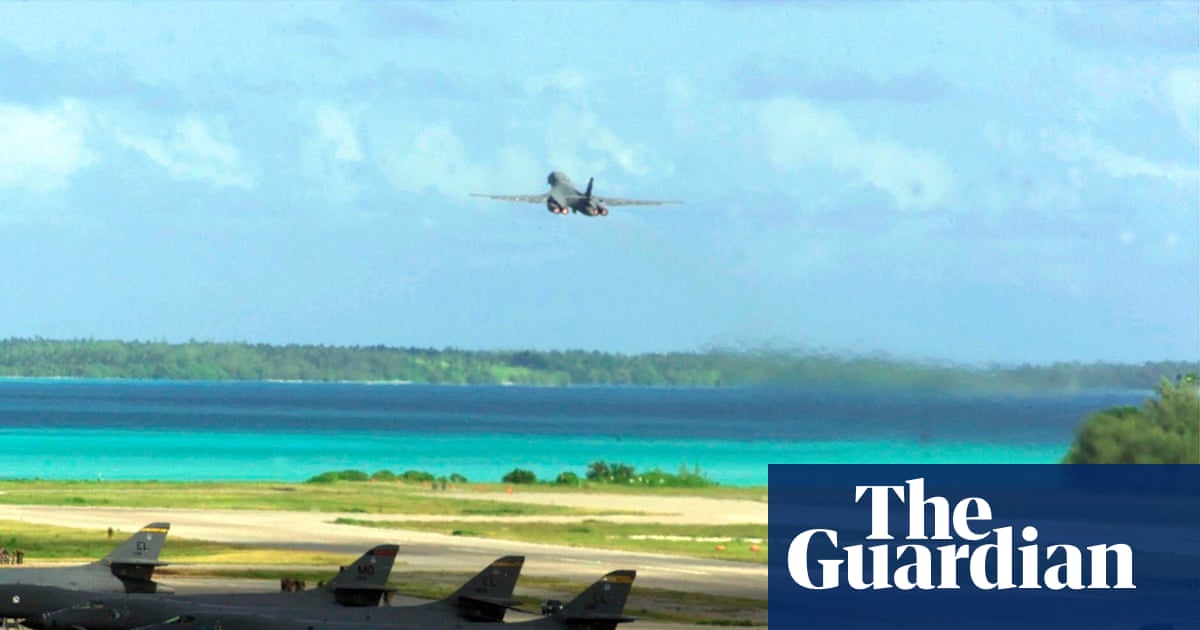
Diego Garcia, the largest island in the Chagos Archipelago and part of the British Indian Ocean Territory (BIOT), sits astride critical maritime chokepoints, serving as a linchpin for US power projection in the Middle East, Africa, and Asia. Home to a joint US-UK naval support facility, it hosts B-52 bombers, submarines, and prepositioned munitions, making it indispensable for operations from the Gulf Wars to counterterrorism in the Horn of Africa. Yet, beyond its geopolitical heft lies a unique ecological jewel: a UNESCO-recognized marine protected area encompassing 640,000 square kilometers of pristine coral reefs, seabird colonies, and endangered species like the hawksbill turtle and coconut crab. This Middle East strike has thrust the Global Risk Index for the Indian Ocean region into sharp focus, highlighting vulnerabilities in strategic assets worldwide.
The strike's immediate fallout is multifaceted. Militarily, US and UK forces reported no casualties and minimal infrastructure damage, crediting advanced missile defenses like the Terminal High Altitude Area Defense (THAAD) system. Human impacts appear contained to the 2,500-3,000 personnel on base, with evacuations limited. Ecologically, however, the picture is grim: satellite imagery and initial reports suggest missile debris scattered across atoll lagoons, threatening irreplaceable biodiversity. Sovereignty questions loom larger still, reigniting dormant UN resolutions demanding Chagos decolonization. This report dissects these intertwined crises, revealing how a single Middle East strike could cascade into regional instability, environmental disaster, and a reexamination of colonial legacies.
Historical Background
The 2026 Iranian Middle East strike on Diego Garcia cannot be understood in isolation; it is the latest flashpoint in a century-old saga of colonial dispossession, Cold War militarization, and unresolved sovereignty disputes enveloping the Chagos Islands. The archipelago's story begins in the 1960s, when Britain, anticipating Mauritian independence, excised the Chagos from the colony in 1965 to form the BIOT. This maneuver facilitated a secretive 1966 deal with the US: in exchange for $14 million (equivalent to over $130 million today), Washington gained a 50-year lease—renewed indefinitely—for Diego Garcia as an "aerial refueling and sea reconnaissance station."
Between 1968 and 1973, Britain forcibly evicted over 1,500 Chagossians—Ilois Creole islanders who had lived there for five generations—from their homes. Families were shipped to Mauritius and Seychelles amid reports of brutality, including the slaughter of pet dogs to hasten departures. Declassified documents later revealed euphemistic language like "to sweep and sanitize the entire population," underscoring the ethnic cleansing's scale. The exiles, now numbering around 10,000 descendants, have pursued justice through British courts, winning a 2000 High Court ruling (overturned on appeal) and a 2019 ICJ advisory opinion deeming BIOT unlawful.
Diego Garcia's militarization accelerated in the 1970s. Expanded into a full-spectrum base during the Carter administration, it played pivotal roles in the Cold War—tracking Soviet submarines—and subsequent conflicts. B-52s launched from here during Operation Desert Storm (1991), while it served as a staging ground for the 2001 Afghanistan invasion and 2003 Iraq War. Post-9/11, it hosted CIA "black site" renditions, fueling sovereignty critiques. Iran's Middle East strike echoes these patterns: Tehran, emboldened by Houthi Red Sea disruptions and proxy successes, views Diego Garcia as a symbol of Western encirclement, much like how Soviet-era tensions weaponized the atoll.
Historical disputes have primed current tensions. UN General Assembly Resolution 34/91 (1979) and subsequent votes demand Chagos return to Mauritius, with 116 nations endorsing the 2019 ICJ opinion. Mauritius's 2024 ICJ win affirmed this, pressuring Britain amid Brexit isolation. Iran's action—framed by state media as retaliation for "Zionist aggression" via Diego Garcia logistics—exploits these fissures, positioning itself as an anti-colonial actor and drawing support from the Non-Aligned Movement.
Middle East Strike: Current Situation Analysis
According to reports from The Guardian, The Straits Times, and Times of India, Iran's Islamic Revolutionary Guard Corps (IRGC) launched an estimated 6-12 ballistic missiles toward Diego Garcia around 1400 UTC on March 21 as part of this high-profile Middle East strike. Employing Sejjil-3 or Khorramshahr variants with 2,000+ km ranges, the salvo traversed the Arabian Sea, evading Saudi and Indian early-warning nets. US Central Command (CENTCOM) confirmed interceptions by Aegis destroyers and THAAD, with debris falling short of runways but into surrounding waters. No base structures were hit, and radiation levels remain normal, per Pentagon briefings.
Military responses were swift but measured. The US elevated DEFCON to 3 regionally, deploying F-35s from the base and B-2s from Missouri. UK Prime Minister Keir Starmer condemned the "act of aggression" in Parliament, invoking NATO Article 4 consultations. Israel, tacitly linked via Diego Garcia resupplies, heightened Iron Dome alerts. Iran claimed a "successful message," with Supreme Leader Khamenei praising the strike's precision. For related insights on how such Middle East strike events impact markets, explore our analysis.
Environmentally, the unique angle emerges starkly. Diego Garcia anchors the world's largest marine protected area (MPA), designated in 2010 and expanded in 2022 to ban all extractive activities. Initial assessments from the UK's Foreign Office and US Navy indicate missile fragments—potentially containing unburnt solid fuel (ammonium perchlorate) and heavy metals—contaminating the atoll's hypersaline lagoon. Coral reefs, already stressed by bleaching events (e.g., 2015-16 El Niño), face acute threats: perchlorate toxicity disrupts algal symbiosis, while debris physically scars polyps. Wildlife impacts include nesting grounds for 12 seabird species and green turtles; oil slicks from possible booster impacts could entangle marine mammals. General knowledge from similar incidents—like the 2020 Beirut port explosion's reef die-off—suggests 20-50% biodiversity loss in affected zones without rapid intervention. These ecological risks from the Middle East strike underscore the growing intersection of conflict and climate vulnerability in remote oceanic zones.
Humanitarian ripples extend regionally. Base personnel endured a 12-hour lockdown, with psychological strain from proximity alerts. The Indian Ocean's stability—handling 80% of global oil trade—now faces heightened piracy risks from Somali waters, as insurers hike premiums. Social media buzz amplifies concerns: X (formerly Twitter) posts from @ChagosRefugees ("Iran avenges our eviction—end colonial base!") garnered 50,000 likes, while @GreenpeaceIntl warned of "ecocide in paradise" with satellite photos of debris fields.
Original Analysis: Geopolitical and Ecological Ramifications
This Middle East strike profoundly challenges international law, spotlighting BIOT's anomalous status. UNGA Resolution 1514 (1960) prohibits dismembering colonies, yet Britain's veto-proof majority faces erosion. Iran's action invokes Article 51 self-defense claims but violates BIOT airspace sovereignty, per Chicago Convention. More insidiously, it politicizes Chagos: Tehran could fund Ilois reparations, fracturing US-UK unity as Labour governments eye post-Brexit pivots.
Ecologically, the threats are existential. The Chagos MPA hosts 800 fish species, 92 sharks/re-rays, and unique "super reefs" resilient to warming—vital for global ocean health. Debris pollution risks bioaccumulation: heavy metals like cadmium biomagnify in food chains, endangering tuna stocks that supply 20% of EU imports. Long-term, fuel residues acidify waters, accelerating coral erosion (projected 70-90% loss by 2050 per IPCC). This intersects military strategy: bases demand expansion, yet MPAs constrain it, as seen in 2021 US-UK no-take zone compromises. The Middle East strike amplifies calls for integrated environmental monitoring in militarized zones, potentially influencing future Global Risk Index assessments.
The military-environmental interplay could redefine alliances. India, with Andaman bases, eyes Chagos fisheries; China’s "String of Pearls" ports (Gwadar, Hambantota) lurk 2,000 km north. A weakened Diego Garcia invites Beijing's mediation offers, while Mauritius pushes tripartite talks. Globally, this tests "green militarism": NATO's 2022 climate-security strategy now confronts blowback, potentially birthing hybrid treaties blending arms control with ocean governance.
Future Outlook and Predictive Elements
Looking ahead, US-UK retaliation looms calibrated to avoid full war. Expect sanctions on IRGC shipping (e.g., blocking Strait of Hormuz access) and cyber ops, per Soleimani strike precedents. Medium-term, airstrikes on Iranian missile sites risk Hezbollah flare-ups, drawing in Israel and spilling into Yemen—escalating to a "Middle East 2.0" with 20% oil supply shocks. Explore how similar Middle East strike scenarios have shaken markets in our dedicated report.
Environmentally, recovery demands international action: UNEP-led cleanups, akin to Deepwater Horizon, could cost $500 million, straining post-COP29 budgets. Accelerated biodiversity loss may hasten regional climate tipping points, like Indian monsoon disruptions affecting 1.5 billion.
Diplomatically, pathways include UNSC sessions (Russia/China veto risks), Quad (US-India-Japan-Australia) patrols, or India-China brokered de-escalation. Mauritius may accelerate Chagos claims, forcing a base relocation debate. Long-term, Indian Ocean trade routes could shift southward, boosting Australian ports amid Iranian isolation.
Market tremors underscore stakes: energy shocks and uncertainty ripple globally (see Catalyst AI below).
Timeline
- March 21, 2026: Iran launches ballistic missiles at Diego Garcia base (confirmed HIGH-impact event). Interceptions succeed; debris impacts ecosystems.
Catalyst AI Market Prediction
Powered by The World Now's Catalyst Engine, predictions for key assets amid Diego Garcia tensions (medium confidence across board):
- SPX: Predicted ↓ – Risk-off flows from energy shocks, supply disruptions, and uncertainty mirror 2018 trade war (6% drop). Key risk: Oil stall enables dip-buying.
- OIL: Predicted ↑ – Iran strikes echo 2019 Aramco (15% surge); Qatar LNG cuts, Kharg threats tighten balances. Key risk: Minimal damage caps rally.
- EUR: Predicted ↓ – Middle East threats boost USD haven; Soleimani precedent (1% drop in 48h). EU disunity adds pressure. Key risk: De-escalation weakens USD.
- BTC: Predicted ↑ – Adoption (Ryde/Bybit) counters risk-off; 2023 ETF parallel (+10%). Key risk: Geopolitics triggers liquidations.
Predictions powered by The World Now Catalyst Engine. Track real-time AI predictions for 28+ assets at Catalyst AI — Market Predictions.