Iranian Ship Struck Near Strait of Hormuz Killing One as Saudi Pipeline Shuts
An unidentified projectile struck an Iranian commercial vessel near the Strait of Hormuz on Sunday, killing one crew member and injuring three others, as Saudi Arabia temporarily shut its East-West oil pipeline after a drone attack originating from Iraq.
Attack on Iranian Vessel in Strait of Hormuz
An Iranian commercial vessel came under attack on Sunday near the Strait of Hormuz when an unidentified projectile struck the ship close to Qeshm island. [3] One crew member died and three others sustained injuries in the incident. [3] Iranian authorities confirmed the strike on the vessel off the southern coast without providing additional details on the weapon or the perpetrator. [4] The United Kingdom Maritime Trade Operations reported separately that a projectile hit a vessel passing through the strait, after which a fire broke out and local authorities evacuated the crew. [4] UKMTO did not identify the type of weapon used or assign responsibility for the attack. [3] No group or entity claimed responsibility for the strike in the immediate aftermath. [3] The US military also issued no immediate public statement on the event. [3] The attack occurred amid a broader pattern of incidents affecting commercial shipping in the region, where both Iran and the United States have previously conducted military actions that disrupted vessel movements. [3]
Saudi Pipeline Drone Strike and Iraqi Response
Satellite image shows Iranian commercial vessel struck near Strait of Hormuz. — Source: newsmax
A drone attack on Friday night targeted Saudi Arabia’s East-West pipeline, prompting Baghdad and Riyadh to trace the launch origin to Iraq. [1] Iraqi authorities closed three border crossings with Iran after determining that the drones originated from Missan province. [1] Officials discovered drone launchers near the al-Shib border crossing in that province. [1] Iraq’s government dismissed the military commander in Missan province following the determination. [1] Baghdad cited the need to reorganize operations and strengthen intelligence to prevent further violations when announcing the closures. [1] On Sunday, Iraqi authorities released a gradual reopening timeline spanning Sunday through Thursday for the three crossings at Shalamsheh in Basra, al-Shib in Missan, and al-Mandali in Diyala. [1] Shalamsheh and al-Shib reopened to passengers on Sunday, though trade remained suspended at those points. [1] No group claimed responsibility for the pipeline attack. [1] An alliance of Iran-backed Iraqi armed factions stated that they had not struck the Saudi pipeline. [1] Riyadh had previously accused Iraqi groups of targeting its oil infrastructure in earlier incidents. [1] In July, the United States and Saudi Arabia conducted strikes on Iran-backed militants in Iraq in response to attacks on US forces and Saudi oil facilities. [1]
Disruption to Global Energy Shipping Routes
Traffic through the Strait of Hormuz fell sharply to about seven passages on 10 September from a pre-conflict average of 125 per day. [3] Some vessels with deactivated tracking systems were not included in those counts. [3] The strait serves as one of the world’s primary energy transit routes, connecting the Persian Gulf to the Gulf of Oman and previously carrying roughly one-fifth of global oil supplies. [3] Saudi Arabia temporarily closed its 1,200-kilometer East-West pipeline after the Friday drone attack, removing an alternative route that had carried 4-5 million barrels per day. [3] The pipeline had allowed Saudi crude to reach the Red Sea without transiting the strait and had accounted for 4 percent to 5 percent of global supply during the preceding six months. [4] Satellite images showed black smoke rising from an area of the pipeline south of Medina following the attack. [4] The closure compounded existing disruptions to oil supplies and contributed to Brent crude prices surging back above $100 a barrel. [4] Houthi forces in Yemen advanced along the Red Sea and seized the strategic island of Perim on Friday in the Bab el-Mandeb strait. [4] Houthi-run Al Masirah TV reported that Saudi Arabia carried out three airstrikes on the al-Rubaie area in Taiz province in southwestern Yemen on Sunday. [4] Saudi Civil Defence stated that a Houthi projectile injured two people and damaged several buildings, including a mosque, in the Jazan region on Saturday. [4] The Houthis reported 129 Saudi airstrikes over the preceding 48 hours. [4]
Iran's Conditions for Reopening the Strait
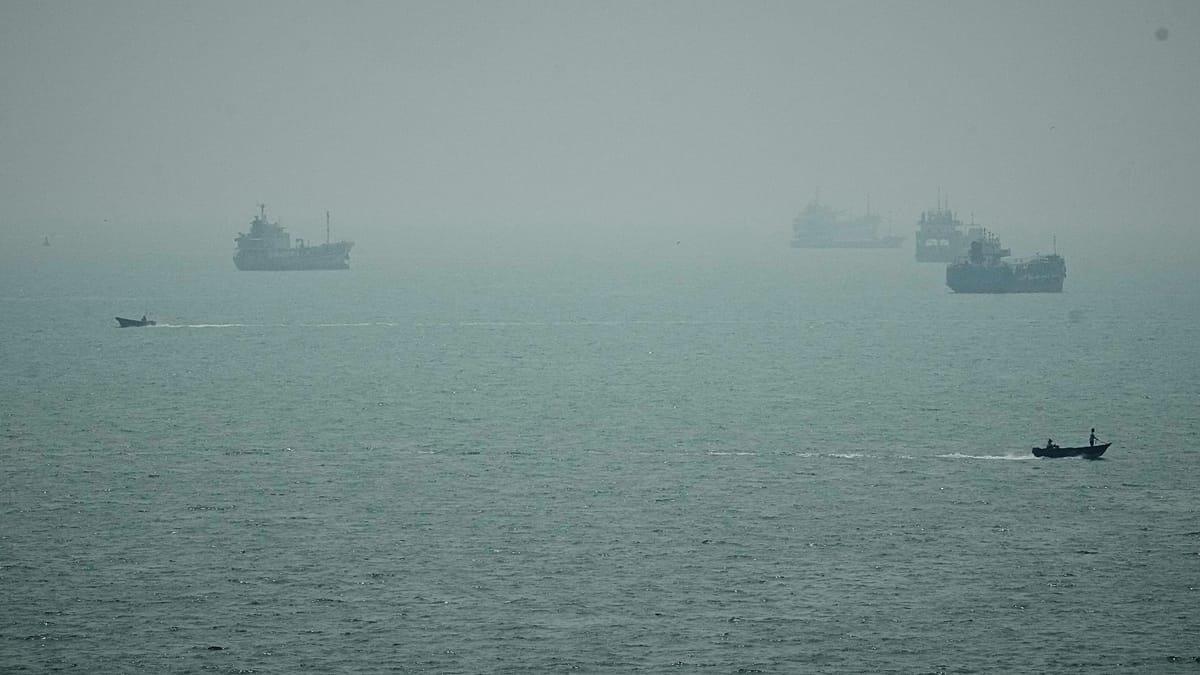
An Iranian commercial vessel was struck by a projectile near the Strait of Hormuz. — Source: gdelt
Iranian officials stated that reopening the Strait of Hormuz would depend on seven conditions conveyed to the United States. [4] Those conditions include recognition of Iran’s control over the strait and the right to collect fees from passing ships. [3] The United States and Oman have rejected these demands. [3] Iran’s Foreign Ministry announced on Friday that the country would attend a meeting with Gulf Arab states in Oman on Monday to discuss the future of shipping through the strait. [4] A senior Iranian official told Reuters that the meeting, initiated by Oman, was not expected to produce a signed agreement. [4] Ebrahim Azizi, head of the Iranian parliament’s national security committee, posted on X on Saturday that dialogue and negotiation would serve no purpose as long as the American side does not accept all of Iran’s conditions. [4] An agreement on routes through the strait between Iran and Oman was scheduled for presentation at the Monday meeting. [4] Ships had enjoyed free and open passage through the strait before the conflict began. [4]
Escalating Regional Attacks and US Involvement
US officials linked satellite imagery supplied by Chinese entities to an Iranian missile strike in Jordan that killed three American troops and wounded four others in July. [2] The finding was reported by The Wall Street Journal. [2] Saudi Arabia’s de facto ruler, Crown Prince Mohammed bin Salman, telephoned US President Donald Trump on Thursday to request US military assistance against the Houthis. [4] Three sources told Reuters that the prince received a response indicating Washington would not intervene directly for now but would provide intelligence support. [4] Trump confirmed on Saturday that he had spoken with the crown prince and noted that the Houthis had also contacted his administration to request that Washington avoid direct involvement. [4] Ongoing attacks in the widening Middle East conflict have raised concerns about further increases in energy prices. [4]
Outlook for Maritime Security Talks
The Monday meeting in Oman between Iran and Gulf states will address issues including the strait but carries limited expectations for a formal outcome. [4] Iranian parliamentary statements emphasized that dialogue remains ineffective without full US acceptance of Iran’s conditions. [4] The strait continues to function as a critical global energy chokepoint whose prolonged closure affects multiple oil and gas exporters in the Gulf. [3] Regional actors have continued exchanges of strikes, including Houthi actions and Saudi responses, while broader efforts to stabilize maritime routes remain under discussion. [4]
What to watch next: The Monday meeting in Oman between Iran and Gulf states, the gradual reopening of Iraqi border crossings through Thursday, and any further statements on responsibility for the pipeline and vessel incidents.