
Iran War May End Pretty Soon Says Trump as Hormuz Deal Nears
US President Donald Trump stated he expects the Iran war to end "pretty soon" as Iran and Oman finalize a deal to reopen the Strait of Hormuz, while the conflict has widened with escalated Houthi attacks, a new defense pact among Turkey, Saudi Arabia and Pakistan, and reported US munitions shortages limiting military options.
Trump Predicts Imminent End to Iran War
US President Donald Trump says he expects the war on Iran to end "pretty soon" as Iran and Oman reportedly are finalising a deal to reopen the Strait of Hormuz. [3] Trump says he thinks the war with Iran will end ‘pretty soon’. [4] Trump authorized but later canceled what he called "the largest attack since World War II" while awaiting Hormuz negotiations. [5] The discussion occurred during a meeting in Camp David in the week prior amid concerns over the capacity of US forces to sustain the conflict. [5] Although the US government has signed new contracts to increase production of strategic weapons such as Patriot missiles, replenishing the stocks is expected to take years. [5]
Regional Defense Pact Signed
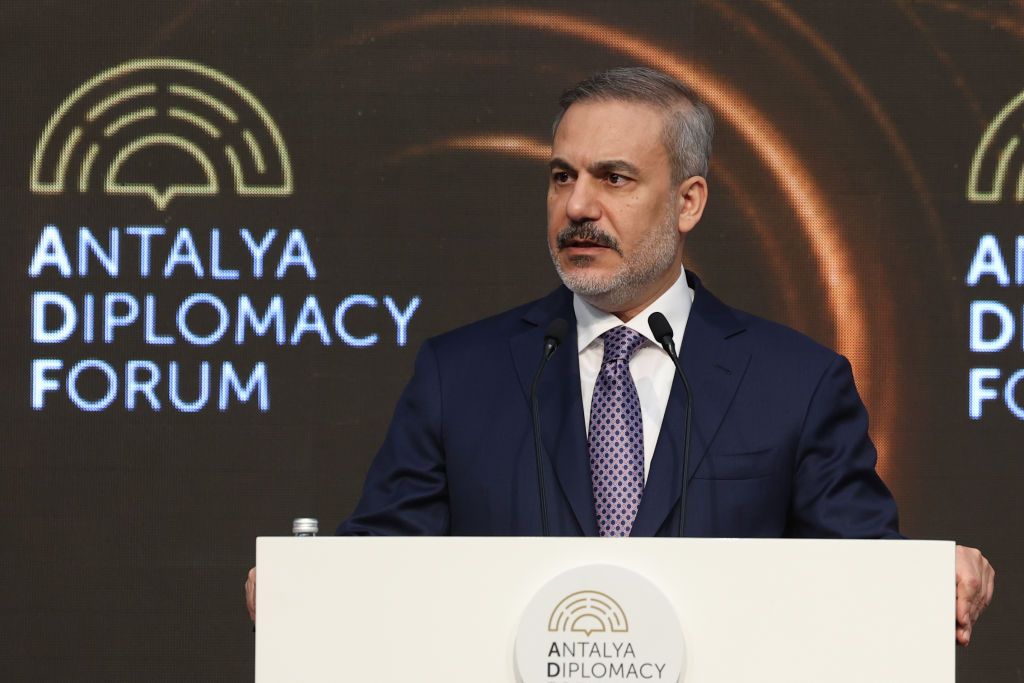
Turkey, Saudi Arabia and Pakistan signed the 'Mecca Defence Pact' to deepen security cooperation amid regional tensions. [3] The three countries signed a joint defence agreement on Friday as they sought to deepen security cooperation amid heightened military tensions and conflicts in the region. [3]

Iran and Oman officials finalize deal to reopen Strait of Hormuz amid ongoing conflict. — Source: jerusalempost
Houthi Attacks Escalate as Saudis Prepare
Yemeni forces and Houthis are escalating attacks with multiple deaths reported, as Saudis brace for a major assault. [2] Yemeni forces and Houthis are upping their attacks, with multiple deaths reported along the Yemeni forces yesterday and overnight. [3] Israeli strikes continue on Gaza and southern Lebanon. [3]
Shift to Striking Critical Infrastructure
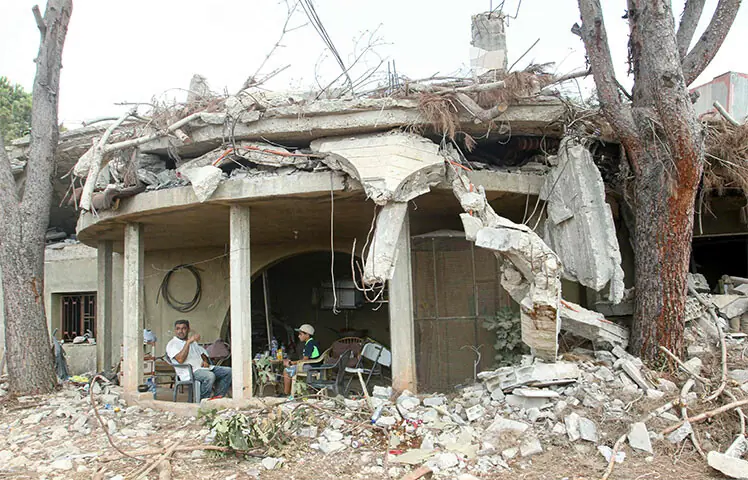
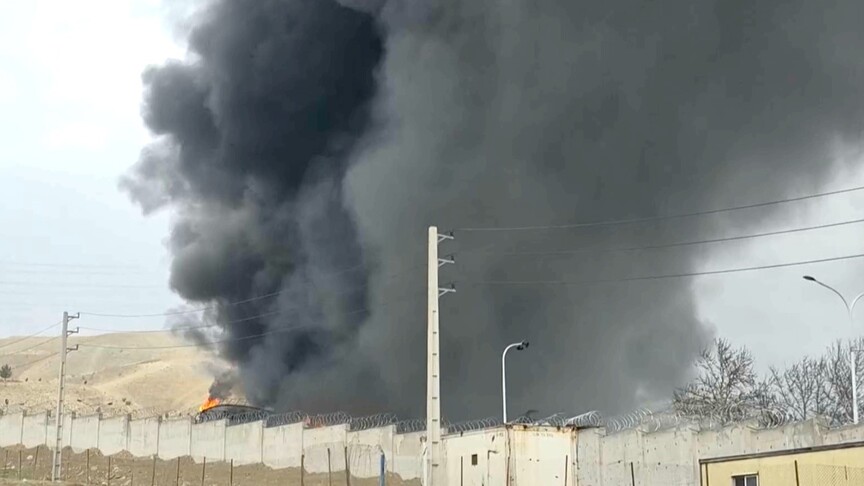
The conflict has expanded from military targets to critical infrastructure including power plants, pipelines, AI data centers and desalination facilities. [1] From power plants and pipelines to AI data centers and desalination facilities, the conflict is reshaping what counts as a military target. [1]

US President Donald Trump speaks during a meeting at Camp David. — Source: jerusalempost
US Faces Munitions Shortages
US munitions stocks of precision missiles, long-range missiles, Patriot and THAAD interceptors have been heavily depleted, with over 850 Tomahawk cruise missiles, more than 1,000 interceptors and over 1,300 ballistic missiles used in the first month alone. [5] The lack of precision munitions, especially long-range missiles and air defense interceptors, has begun to restrict US military options against Iran. [5] The depletion of arsenals was one of the factors that led Trump to back away from the idea of carrying out a new large-scale offensive against Iranian targets. [5] Replenishing US munitions stocks is expected to take years despite new defense contracts. [5] Trump believed the problem of weapons stocks had already been solved and questioned Hegseth about the situation. [5] The White House denied the version published by The Washington Post. [5] The Pentagon spokesperson Sean Parnell also rejected the information, stating that Hegseth never deceived the president about the situation of military stocks and classifying the allegations of internal disagreements as fictitious. [5] On Thursday, 6, Trump also denied that the United States faces a shortage of munitions. [5]
Broader Strategic Implications
The reduction in stocks also affects other strategic scenarios for Washington. [5] The shortage of interceptors compromises the ability of the United States to support allies and respond simultaneously to different conflict fronts, including the war in Ukraine, which also depends on this type of armament to reinforce its air defense. [5] The limitation of munitions led American military personnel to review the criteria for the use of interceptors, evaluating with greater rigor which threats justify the use of these systems given the difficulty of replenishment. [5] In a Senate hearing held in July, Hegseth avoided detailing the conversations held with Trump about the war, but acknowledged the need to reinforce the military budget. [5] The package still faces resistance in Congress. [5] The proposal is part of a record defense budget of US$ 1.5 trillion for the next fiscal year, but remains stalled due to the lack of agreement between Republicans and Democrats on spending levels. [5]
What to watch next: The Hormuz deal nearing final sign off, continued Houthi and Yemeni attacks, and congressional action on the additional US$ 67 billion request for military costs and arsenal replenishment.