Iran Tensions Rise With Hormuz Tanker Warning After Doha Talks
Iran and the United States concluded indirect talks in Doha as mediators work to advance a permanent end to the war that began with U.S.-Israeli strikes in February, while Iran issued new warnings about oil tanker routes in the Strait of Hormuz amid rising Iran tensions ahead of Supreme Leader Ayatollah Ali Khamenei's funeral. [1][2]
Doha Talks Yield Positive Progress
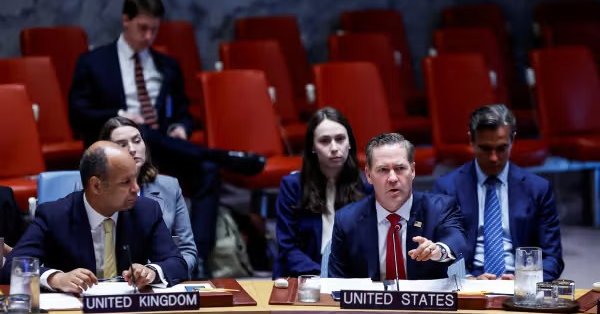
Iran and the United States concluded a round of indirect talks in Doha, with mediators reporting positive progress on issues related to the 14-point Memorandum of Understanding. [1][2] Pakistani Foreign Ministry spokesperson Tahir Andrabi stated that Pakistan hoped the next round of talks would be scheduled as soon as possible after Khamenei's funeral. [2] Qatari officials confirmed that the parties had agreed to continue discussions, with the next meeting to be scheduled at the earliest possible time after the funeral processions of the former Iranian Supreme Leader. [3] The next indirect U.S.-Iran talks will come after the Iranian supreme leader's funeral. [1] Diplomatic efforts continued in Doha on July 1, when Qatar and Pakistan held separate meetings with U.S. and Iranian negotiators. [3]
Iran Issues Strait of Hormuz Warning
Iran’s joint military command warned on Thursday that all oil tankers moving through the Strait of Hormuz must use its approved routes or face a “forceful response”. [2] The statement from the Khatam al-Anbiya military command said any failure to comply, deviation from the designated route, or disregard for the navigation protocols of the Islamic Republic of Iran in the Strait of Hormuz will be met with an immediate and forceful response from the armed forces, endangering the security of the violating vessels. [2] It also said that interference by US forces in the strait will be met with a rapid and decisive reaction. [2] The US military's Central Command had put out a statement about a meeting with officials from Mideast nations in Bahrain that said leaders underscored their shared commitment to the free flow of commerce through the strait. [2] Iran and the United States agreed as part of an interim deal to allow ships to pass without paying charges for 60 days, but Tehran insisted it must control the routes of the vessels and later charge fees for passage. [2]
Strait Traffic Rebounds Amid Instability
At least 258 ships transited the waterway last week, up from 138 ships the previous week, according to marine data and analysis company Lloyd’s List Intelligence. [2] Traffic in the strait has slowed somewhat since the strikes and remains far below levels seen before the war, when about 130 vessels passed through daily. [2] Richard Meade, editor-in-chief at Lloyd’s, said on Thursday during a webinar that Iran's attacks on Jun 25 and 27 seem to have been forgotten. [2] He added that routes are being chosen on an hour-by-hour basis and they are contingent on shifting political approvals and real-time security assessments. [2] Nothing about this situation is stable. [2]
Mojtaba Khamenei Skips Father's Funeral
Iran's new Supreme Leader Mojtaba Khamenei will not attend the funeral ceremonies for his father, former Supreme Leader Ali Khamenei, due to security concerns. [3] Ayatollah Hakim Elahi, the current leader's representative in India, said the decision was prompted by Israeli threats and surveillance concerns that would make any public appearance dangerous. [3] Iranian authorities are holding funeral ceremonies for former Supreme Leader Ali Khamenei from July 4 to July 9 across locations in Iran and Iraq. [3] The weeklong official funeral is expected to start on Saturday. [2] Iranian foreign minister Seyed Abbas Araghchi issued a sharp warning to Washington after Israeli defence minister Israel Katz reportedly said that Iran's Supreme Leader Mojtaba Khamenei was marked for death. [3]
Background on Ceasefire and 14-Point Deal
In June, Washington and Tehran agreed to a memorandum of understanding, brokered by Qatar and Pakistan, which included a 60-day ceasefire pausing the war that broke out with U.S.-Israeli strikes in late February, as well as the reopening of the blockaded Strait of Hormuz. [1] The 14-point deal also set a timeline for talks to permanently end the war and settle issues like arrangements for Hormuz, reconstruction funding for Iran and the future of the Islamic republic’s nuclear program. [1] On Wednesday, Iranian foreign minister Seyed Abbas Araghchi said the US had committed itself under the terms of the 14-point Memorandum of Understanding that ended hostilities in Middle East, including restraining Israel. [3] The longest-serving Iranian leader Khamenei was killed in an airstrike on February 28 in Donald Trump's Operation Epic Fury, the opening day of the US-Israel war with Iran. [3]
Local Impact in Bandar Abbas
The Strait of Hormuz has been partially reopened since June as part of the US-Iran ceasefire agreement. [4] Two container ships seized by the IRGC in April, the MSC Francesca and the Epaminondas, have not been released despite the ceasefire. [4] On Khushnoodi Street, behind Bandar Abbas's main university, an apartment block is in ruins after being hit on 26 March by an Israeli strike. [4] Iranian flags fly from the shattered façade of the building where three people were killed. [4] According to the Red Crescent, 261 people, including civilians and military personnel, have been killed in Hormuzgan province, of which Bandar Abbas is the capital. [4] There were at least 96 separate US strikes in and around Bandar Abbas between 28 February and when the ceasefire came into effect on 8 April. [4]
What to watch next: The next round of talks is expected after Khamenei's weeklong funeral starting Saturday, with positive progress reported from the Doha meetings. [2][3]